The European Union has approved a €90 billion loan for Ukraine — equivalent to approximately $105 billion — and simultaneously unveiled its twentieth consecutive round of sanctions against Russia, marking one of the bloc’s most significant acts of collective support since Moscow launched its full-scale invasion in 2022.
EU foreign policy chief Kaja Kallas announced the end of a prolonged deadlock that had threatened to delay the financial lifeline for Kyiv. The breakthrough followed a diplomatic resolution over the Druzhba pipeline, the Soviet-era artery that carries Russian crude oil westward into Europe. Ukraine had halted flows through the pipeline, triggering fierce objections from Hungary and Slovakia, both of which depend on the route for their energy supplies. Once Kyiv restored those flows, both countries withdrew their opposition and allowed the loan to proceed.
Hungarian Prime Minister Viktor Orban, who had wielded the pipeline dispute as leverage to pressure Ukraine, suffered a crushing electoral defeat this month, further diminishing his ability to obstruct EU consensus. His departure from a position of domestic strength removes one of the most persistent obstacles to unified European action on Ukraine.
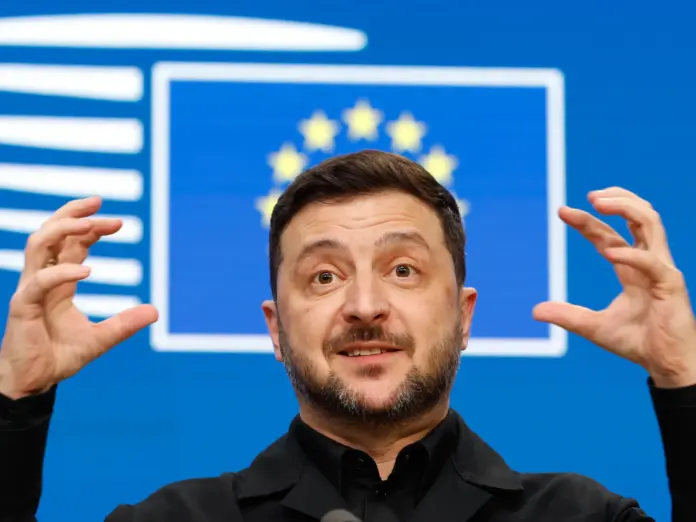
President Volodymyr Zelenskyy welcomed the approval, urging EU partners to disburse the first tranche of the loan by May or June. The full package is designed to be distributed over two years, providing Kyiv with a sustained financial foundation as it continues to resist Russian forces more than four years into the conflict.
The timing carries particular weight given a sharp shift in Washington’s posture. The United States has largely curtailed its financial support to Kyiv and moved to ease sanctions on Russian oil exports, placing greater pressure on European capitals to fill the gap. The EU loan and accompanying sanctions signal that the bloc intends to do precisely that.
All 27 EU member states signed off on the new sanctions package, which targets Russia’s energy, banking, and trade sectors. Among the most notable measures are new restrictions on Moscow’s so-called shadow fleet — a network of ageing tankers used to circumvent Western oil-export restrictions — as well as curbs on Russian cryptocurrency traders. The EU stopped short, however, of imposing a full maritime service ban on vessels carrying Russian crude, a step some member states had pushed for but which proved too divisive to achieve consensus.
In a move described as unprecedented in scope, the EU announced it would halt sales of certain categories of machinery to Kyrgyzstan, citing evidence that goods were being routed through the Central Asian nation to reach Russia in violation of existing sanctions. It is the first time the bloc has deployed a mechanism to suspend entire export categories to a specific third country as an anti-circumvention measure, signalling a more aggressive approach to enforcement.
The combined financial and punitive package reflects a broader European calculation: that sustaining Ukraine economically and tightening the economic noose around Moscow are inseparable objectives. With the war entering its fifth year and no ceasefire in sight, the EU’s willingness to commit to a multi-year loan — and to keep ratcheting up sanctions pressure — underscores the bloc’s long-term strategic bet on Ukrainian resilience.
The loan approval and the twentieth sanctions round together represent the most coordinated European response in months, achieved despite the internal divisions that have repeatedly slowed EU decision-making on Ukraine. Whether the financial injection arrives in time to stabilise Kyiv’s budget ahead of what is expected to be another gruelling summer of fighting will depend on how quickly the disbursement machinery can be set in motion.