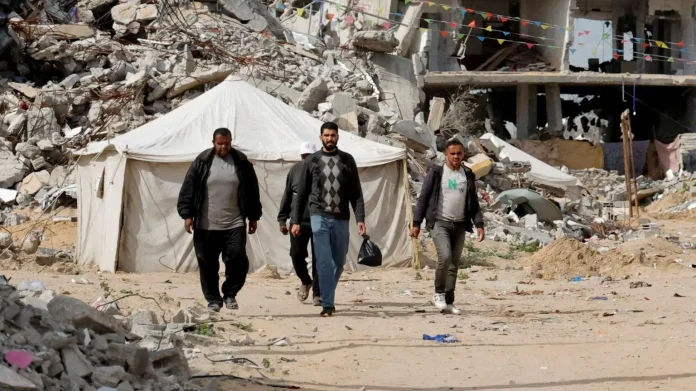
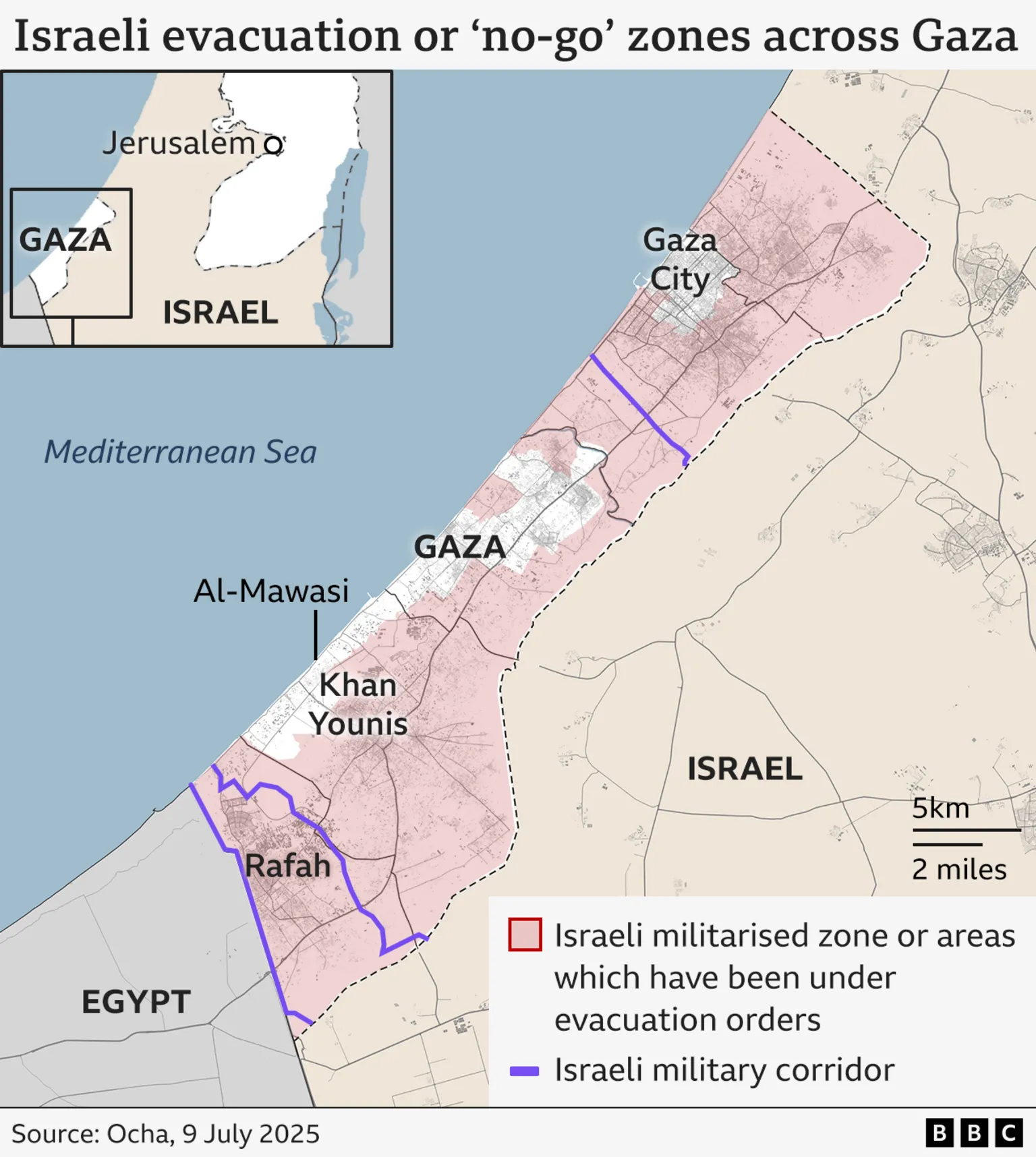
For those in Gaza, a potential 60-day truce between Israel and Hamas could provide a vital opportunity to bring in much-needed supplies, such as food, water, and medicine, following strict Israeli restrictions on aid. However, Israel’s defense minister, Israel Katz, views a two-month military halt as a chance to establish a “humanitarian city” in Rafah’s ruins to accommodate nearly the entire Gazan population, excluding armed group members. Entry would require security screenings, and departure would not be allowed. The plan has faced widespread criticism, with human rights advocates and legal experts labeling it as akin to a “concentration camp.” It remains uncertain if this proposal is a definitive government strategy or a negotiation tactic to pressure Hamas during ceasefire discussions.
Amid the lack of a formal plan for Gaza post-conflict, this idea is currently filling the strategic gap. Katz shared with Israeli journalists that the proposed camp would initially shelter around 600,000 Palestinians, eventually expanding to house 2.1 million. The camp, according to Katz, would be secured by the Israel Defense Forces from afar, while international organizations managed operations, and four aid hubs set up in the region. Katz also reiterated his aim to promote Palestinian migration from Gaza to other nations, but the proposal has not found favor among other senior Israeli leaders.
Reports suggest the plan has even sparked disputes between the prime minister and the IDF chief. It is reported that Lt. Gen. Eyal Zamir clarified the army wouldn’t forcibly relocate civilians, as Katz’s plan demands.
Tensions between Zamir and Prime Minister Netanyahu reportedly flared during a recent war cabinet session. Political analyst Tal Schneider highlighted Zamir’s strong position due to the circumstances of his appointment. The military’s rank and file also express concerns. IDF reservist Yotam Vilk, refusing further service after extensive combat in Gaza, calls the civilian relocation a war crime and genocide form, and is advocating for ending the war to ensure the release of captives held by Hamas.

International law experts in Israel have collectively condemned the proposal as a war crime, urging its withdrawal. The plan has sparked significant opposition among Palestinians, with Gazans outspokenly rejecting it, stressing their right to remain on their land. Public backing for Katz’s plan remains unclear, but surveys suggest considerable Israeli public support for Palestinian expulsion from Gaza. Yet, prominent far-right ministers like Itamar Ben-Gvir and Bezalel Smotrich haven’t publicly endorsed the camp proposal.
Analyst Tal Schneider speculates they may be waiting for further developments. Criticism from outside Israel has been widespread. UK Middle East Minister, Hamish Falconer, publicly denounced the plan, emphasizing civilian return and peace processes. British human rights lawyer Baroness Helena Kennedy KC labeled the proposal near-genocidal due to its implications for concentration-style camps.
Despite Israel’s firm denial of targeting civilians or committing genocide, concerns persist as the camp concept continues to impact ceasefire negotiations, alarming the Hamas delegation. Elsewhere, the Gaza conflict and its associated humanitarian crises continue, with facilities facing critical shortages and violence affecting civilian areas.