Kyiv Strike Threat — A wave of diplomatic fury swept across Europe on Tuesday as Belgium, France, Germany, the Netherlands, Norway, and the European Union each summoned Russian ambassadors to their respective foreign ministries, demanding an explanation for Moscow’s extraordinary warning that foreigners should evacuate Kyiv before a series of planned military strikes.
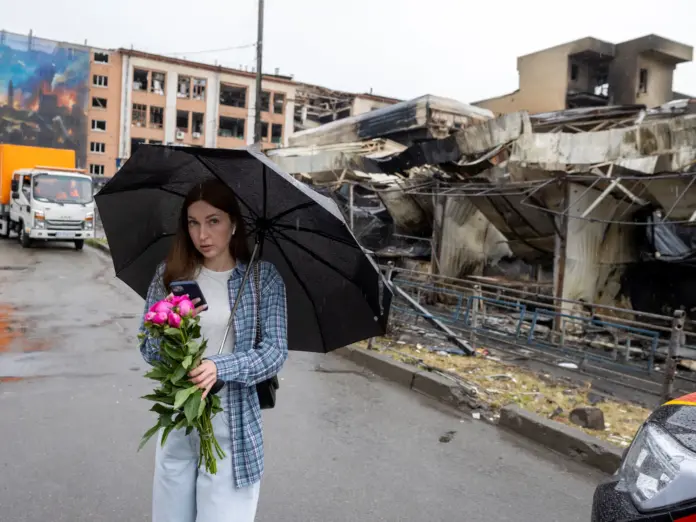
Russia’s Ministry of Defence issued the warning on Monday, announcing intentions to launch ‘systematic strikes’ against defence industrial facilities in the Ukrainian capital. The statement sent shockwaves through Western chancelleries, which condemned the move as a deliberate attempt to intimidate diplomatic missions and foreign nationals sheltering under the protections of international law.
Belgian Foreign Minister Maxim Prevot was among the most forceful in his condemnation, declaring that threatening embassies constitutes a flagrant violation of both international law and the Vienna Convention. Brussels and Paris jointly characterised Moscow’s announcement as ‘unacceptable,’ a position echoed by EU foreign policy officials who are scheduled to convene Thursday to discuss how Europe should approach any prospective future dialogue with the Kremlin.
Recommended Reading
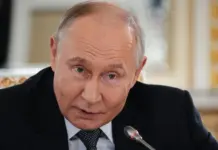
The diplomatic confrontation carries particular weight given that Vladimir Putin announced on Wednesday his willingness to engage in negotiations with European leaders — a signal that sits in stark tension with his military’s simultaneous threats against a capital city hosting dozens of foreign diplomatic missions.
Russia justified the planned strikes as retaliation for a Ukrainian drone attack on a student dormitory in Starobilsk, located in the occupied Luhansk region. Ukraine’s military flatly rejected that characterisation, stating its forces had targeted an elite drone command unit operating from the site, not civilian infrastructure.
The war of words coincided with a dramatic escalation on the battlefield. On Sunday, Russia launched 30 ballistic missiles at Ukraine in a single massive strike — Ukraine’s air force managed to intercept just 11 of them. President Volodymyr Zelenskyy seized on the figures to press US President Donald Trump directly, urging Washington to accelerate the delivery of air defence systems and interceptor missiles. Zelenskyy described ballistic missiles as Moscow’s ‘last major advantage on the battlefield’ and confirmed Ukraine stands ready to purchase Patriot systems and the interceptors needed to operate them.
On the ground, Russian forces continued to press forward. Troops seized the village of Hraniv in Ukraine’s northeastern Kharkiv region and the village of Vozdvyzhivka in the southeastern Zaporizhia region, extending Moscow’s territorial gains across two separate fronts.
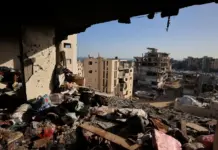
Civilian suffering mounted in parallel. In the Kherson region, Russian shelling struck a playground in the city’s Korabelny district, killing one man and wounding a mother and her two young daughters. A separate drone strike on a civilian vehicle in Kherson’s Dniprovsky district left one man seriously injured, while two more civilians were wounded in a drone attack on the village of Komyshany.
Kyiv Strike Threat: The Wider European Impact
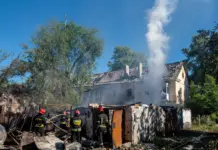
Further north, Russian strikes on Pavlohrad in the Dnipropetrovsk region damaged six homes and ignited a fire at a private residence. Six people were wounded across the Nikopol and Synelnykove districts in the same region. In the Sumy region, shelling across 20 separate settlements wounded a police officer and a 55-year-old woman.
Russia was not entirely insulated from the violence. One person was injured after a drone struck a vehicle in the Belgorod region, and two people were wounded in a missile attack on the city of Taganrog.
The surge in hostilities follows the rapid collapse of a fragile three-day ceasefire agreed at the start of May, timed to coincide with Russia’s commemorations of victory over Nazi Germany in 1945. Fighting resumed almost immediately after the truce expired, with both sides accusing the other of violations — a pattern that has come to define the conflict’s fitful and largely unsuccessful attempts at de-escalation.
As EU foreign ministers prepare to meet Thursday, the central question confronting European capitals is whether Putin’s stated openness to talks represents a genuine diplomatic opening or a tactical manoeuvre designed to fracture Western unity while Russian forces continue their advance. The summoning of ambassadors across the continent signals that, for now, European governments are in no mood to reward threats against their diplomatic personnel with concessions at the negotiating table.