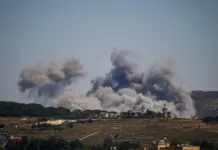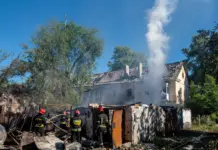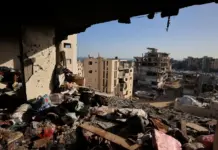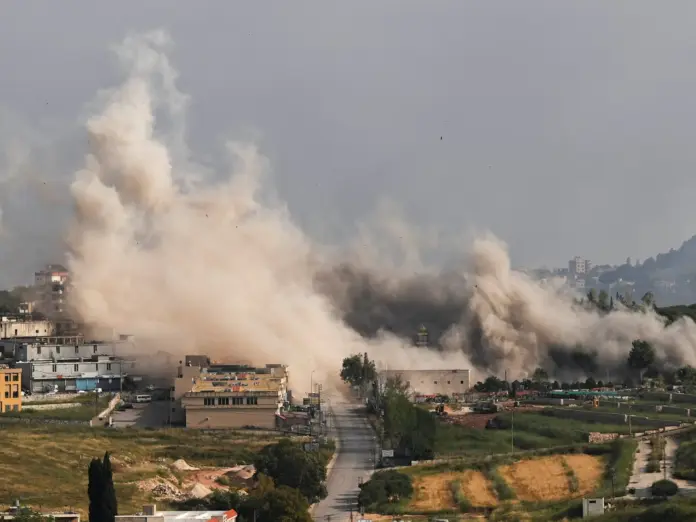
BEIRUT/TEHRAN — Israeli strikes killed at least 31 people and wounded 40 others across southern Lebanon on Tuesday, as Prime Minister Benjamin Netanyahu declared that Israeli forces were deepening their ground operations and seizing territory in an intensifying campaign against Hezbollah.
Israeli Strikes Lebanon — The bombardment extended well beyond Lebanon’s south, with massive strikes hitting eastern Lebanon including areas near the Qaraoun Dam in the Bekaa Valley. Israeli forces simultaneously issued forced displacement orders for dozens of towns and villages across both southern and eastern Lebanon, compounding a humanitarian crisis that has already displaced hundreds of thousands of civilians.
Netanyahu, in remarks that signalled no imminent halt to the campaign, said Israeli forces were intensifying efforts against Hezbollah drone operations and pledged that fighting would continue until the full security of Israeli citizens was guaranteed. "We are deepening operations inside Lebanon and seizing territory," Netanyahu said, framing the escalation as a necessary defensive measure.
Recommended Reading
The Lebanese offensive is unfolding alongside a separate but interconnected crisis involving Iran and the United States. Iranian officials on Tuesday condemned US strikes carried out the previous day in Hormozgan province, near the strategically vital Strait of Hormuz, calling them violations of an existing ceasefire. Washington pushed back, characterising the strikes as defensive operations targeting missile sites and vessels attempting to lay mines in the waterway.
Despite the fresh military exchange, US Secretary of State Marco Rubio insisted a peace agreement with Iran remained within reach. His comments came even as US warplanes remained stationed at Israeli airports — Ben Gurion and Ramon — in what Israel’s Kan broadcaster described as an unprecedented deployment of American fighter jets and refuelling aircraft. The military presence has begun affecting civilian aviation capacity at both facilities.
China called on all parties to honour the ceasefire and pursue diplomatic solutions, adding an international dimension to pressure on both Washington and Tehran to de-escalate.
Inside Iran, the government appeared to be managing multiple simultaneous pressures. Internet access began gradually returning to the country following what the digital monitoring organisation NetBlocks described as the longest nationwide online outage in Iran’s history. The blackout had drawn widespread international criticism and raised concerns about the government’s efforts to control information flows during a period of acute military and diplomatic tension.
On the diplomatic front, Iran is pushing for the release of $24 billion in frozen assets as part of ongoing negotiations. Half of that sum is expected to be unlocked following the signing of an initial agreement, a development that could provide Tehran with significant financial relief amid the economic strain of prolonged sanctions and conflict.
Israeli Strikes Lebanon: Regional Implications
Iran’s Supreme Leader Mojtaba Khamenei, in a message timed to coincide with Eid al-Adha, issued a pointed warning to Gulf states against hosting US military bases — a signal that Tehran views American regional positioning as a direct threat and intends to leverage its influence over neighbouring governments accordingly.
The warning drew attention in Washington, where Democratic Senator Cory Booker levelled sharp criticism at President Donald Trump‘s handling of the Iran file. Booker argued that the administration’s approach had paradoxically strengthened Tehran’s strategic position, granting Iran greater leverage over the Strait of Hormuz — through which a significant portion of the world’s oil supply passes — rather than diminishing it.
The overlapping crises in Lebanon and the Persian Gulf reflect a Middle East in which multiple conflict threads are tightening simultaneously. Israel’s ground push into Lebanese territory, combined with the US military footprint at Israeli airports and ongoing strikes against Iranian assets, has created a volatile environment in which a miscalculation by any party could rapidly expand the scope of hostilities.
For Lebanese civilians, the immediate reality is one of displacement and death. The combination of air strikes, ground advances, and forced evacuation orders has left communities across the south and the Bekaa Valley with little choice but to flee, adding to the enormous toll the conflict has already exacted on Lebanon’s fragile infrastructure and population.