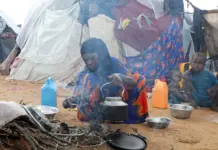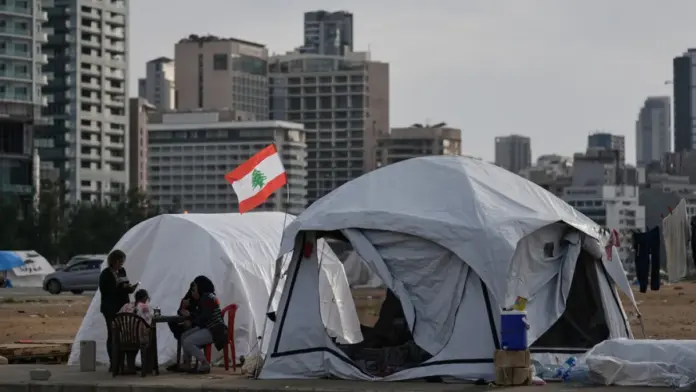
Lebanon Israeli Occupation — Lebanon marked the 26th anniversary of its liberation from Israeli occupation on Sunday under a bitter irony: Israeli forces are once again on Lebanese soil, having reinvaded the country in March 2025 in a campaign that has killed thousands, shattered the economy, and driven more than 1.2 million people from their homes.
Liberation Day — commemorating Israel’s withdrawal on May 25, 2000, after an 18-year occupation — passed without celebration in official circles. Prime Minister Nawaf Salam declared the government would hold no festivities until Israel completely withdraws from Lebanese territory. The day itself was marked by Israeli air raids that killed three people in southern Lebanon and forced evacuation orders for 10 towns and villages. Strikes hit homes near the port city of Tyre and eight other communities across the south.
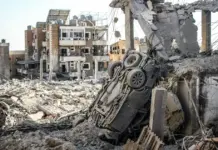
The current conflict has its immediate roots in a Hezbollah rocket barrage on March 2, launched in retaliation for the killing of Iranian Supreme Leader Ayatollah Ali Khamenei — the first such attack by the group in more than a year. Israel’s military response has been overwhelming. Since that date, Lebanese health authorities have recorded 3,151 deaths. Entire towns and villages across the south have been devastated, and the majority of the displaced have fled from southern Lebanon and Beirut’s southern suburbs.
Recommended Reading
![Plumes of smoke billow from southern Lebanon following Israeli strikes, as seen from Nabatieh, Lebanon, May 25, 2026. [Stringer/Reuters]](https://world-tension.s3.us-east-2.amazonaws.com/articles/1125/69a5dfc07f1f4cb7a3df402f6fc25b2e.webp)
A ceasefire had been agreed between Israel and Hezbollah in November 2024, and in early 2025 the Israeli military pulled back from all but five positions in south Lebanon. That fragile arrangement collapsed with the March escalation. US President Donald Trump announced a new ceasefire on April 16, extended into early July, days after a separate ceasefire between the United States and Iran. The Lebanon truce is designed to fold into a broader US-Iran settlement, with Tehran reportedly making a Lebanese ceasefire a condition of any wider agreement with Washington and Jerusalem.
Yet the political architecture underpinning any lasting peace remains deeply contested. Lebanese President Joseph Aoun is engaged in direct talks with Israel — a posture that has drawn sharp criticism from Hezbollah’s Secretary-General Naim Qassem, who insists that any negotiations must proceed indirectly through intermediaries. Qassem went further, suggesting the Lebanese government should resign if it cannot protect national sovereignty. The US State Department swiftly condemned that statement, reflecting Washington’s dual role as both military partner to Israel and diplomatic broker in Beirut.
Washington is simultaneously pressing Lebanon’s government to disarm Hezbollah, a demand that cuts to the heart of the country’s internal tensions. China, Saudi Arabia, Türkiye, Pakistan, and Russia have all pushed for an end to the fighting, adding to the chorus of international pressure on Israeli Prime Minister Benjamin Netanyahu, who is widely believed to favour continuing military operations.
The current conflict is the latest chapter in a cycle of violence stretching back decades. Israel first attacked pro-Palestinian forces in Lebanon in the 1970s, before Hezbollah even existed. It invaded in 1978 and again in 1982, when Israeli forces reached Beirut in a campaign to expel the PLO. Iran began backing Hezbollah after that 1982 invasion, gradually transforming Lebanon into a front line in the broader confrontation between Tehran and Jerusalem. Hezbollah became the central pillar of Iran’s so-called Axis of Resistance — a role that has made Lebanese civilians perpetual collateral in a conflict they did not choose.
Israel’s 2006 war against Hezbollah introduced what analysts describe as an urban annihilation doctrine, applied with devastating effect against Beirut’s southern suburb of Dahiyeh and later replicated in Gaza. The same approach has been visible in the current campaign, with systematic strikes on residential areas accompanied by daily forced evacuation orders that have emptied swathes of the south.
Lebanon Israeli Occupation: Regional Implications
Hezbollah, though badly battered, has adapted. The group has re-emerged as a leaner, more agile fighting force and has deployed fibre optic drones capable of evading Israeli electronic jamming — a tactical evolution that has complicated Israeli military planning. Syria’s collapse as a logistical corridor between Iran and Hezbollah has, however, severed a critical supply line, adding strategic uncertainty to both sides’ calculations.
Lebanon’s economy, already in ruins before the latest escalation, has been further shattered. The Palestinian question — unresolved for 78 years and the original driver of regional instability — continues to animate the conflict, ensuring that any ceasefire, however durable it appears, rests on foundations that regional and global powers have so far proven unwilling or unable to address.
As Liberation Day passed under the shadow of fresh occupation, Salam’s refusal to celebrate captured the national mood with precision: for Lebanon, liberation remains unfinished business.