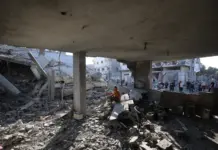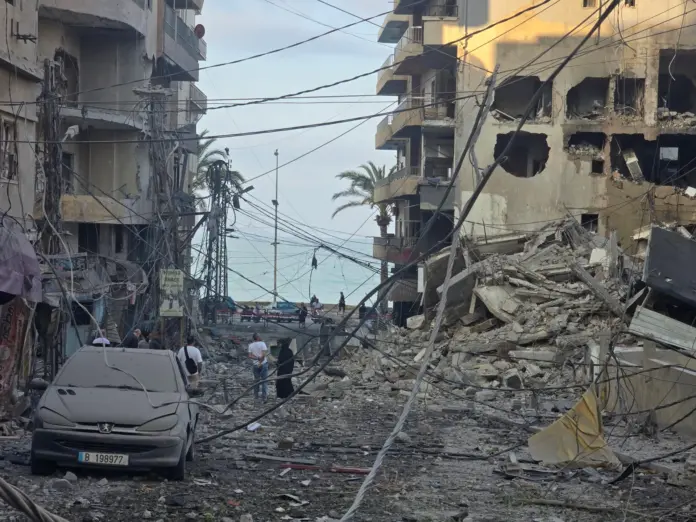
Israel Lebanon Strikes — Israeli forces unleashed a new wave of air strikes across Lebanon on Saturday, killing at least 10 people and striking multiple locations in the country’s south and east in a sharp escalation that has rendered a U.S.-brokered ceasefire effectively meaningless.
Five separate strikes hit the Nabi Sreij area on the outskirts of Brital shortly before midnight, marking the first attacks on that zone since April 17 — a 36-day pause that ended abruptly. Large explosions also rocked Yohmor al-Shaqif in the Nabatieh district and the town of Taybeh in the Marjayoun district, with strikes additionally recorded near the Syrian border and across several villages throughout southern Lebanon.
The renewed bombardment follows a ceasefire announced by U.S. President Donald Trump on April 16, an agreement that has failed to halt the fighting. Israeli military spokesman Avichay Adraee has continued issuing Arabic-language displacement warnings to Lebanese civilians, including a forced evacuation order for the village of Burj Rahal that has been in effect since Friday night. Similar warnings were issued for areas around Tyre and Zqouq al-Mufdi, with Israel designating a 500-metre perimeter around Tyre as an active danger zone.
Recommended Reading
The human cost of the campaign has been staggering. More than 3,100 people have been killed in Lebanon since Israeli forces escalated their offensive on March 2. Lebanese Health Ministry statistics released Friday paint a particularly grim picture of civilian suffering: more than 210 children have been killed, nearly 300 women have lost their lives, and 123 medical workers have died — a figure that underscores the mounting toll on Lebanon’s already fragile healthcare infrastructure.
That infrastructure suffered another severe blow on Thursday, when an Israeli strike near Tebnine Hospital in southern Lebanon caused damage across all three floors of the facility. The attack struck the emergency room, the intensive care unit, and the surgical ward, while ambulances parked outside the building were also destroyed. The strike on a functioning medical facility drew immediate concern from humanitarian observers, who have warned that the systematic degradation of Lebanon’s health system is leaving civilians without access to critical care during an active conflict.
The pattern of strikes suggests a deliberate and expanding geographic footprint. Beyond the concentrated attacks in the south, Israeli forces have targeted areas stretching toward the Syrian border, broadening the operational scope of a campaign that began with a stated focus on Hezbollah infrastructure. The resumption of strikes in previously quiet zones like Nabi Sreij signals that no area of Lebanon can be considered beyond reach.
Displacement warnings issued by the Israeli military have forced tens of thousands of Lebanese civilians to flee their homes, compounding a humanitarian crisis that aid organisations have struggled to address. The 500-metre exclusion zone around Tyre — one of Lebanon’s most historically significant coastal cities — has effectively rendered large sections of the area uninhabitable for residents who have not yet evacuated.
Israel Lebanon Strikes: Regional Implications
The collapse of the April 16 ceasefire arrangement has raised urgent questions about Washington’s ability to enforce diplomatic agreements in the region. Despite Trump’s announcement, no mechanism appears to have been established to monitor or guarantee compliance, and Israeli operations have continued with little interruption. Lebanese officials have repeatedly called for international intervention to halt the strikes, while the United Nations has warned that the scale of civilian casualties may constitute violations of international humanitarian law.
With the death toll climbing and critical civilian infrastructure under sustained attack, the prospect of a durable halt to hostilities appears increasingly remote. The strikes on Saturday represent not an isolated escalation but the continuation of a campaign that has reshaped the security landscape of southern Lebanon and pushed the country deeper into crisis.