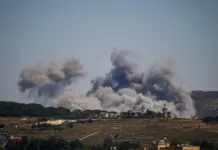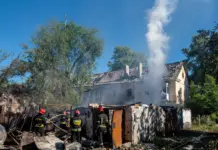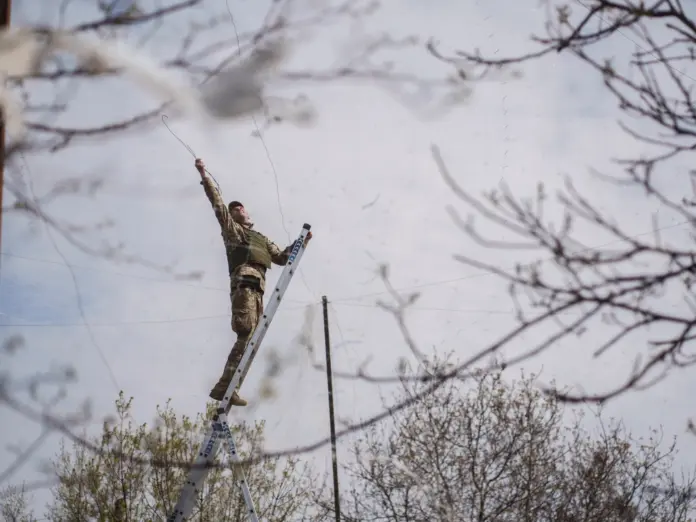
Moscow Drone Strike — A drone strike on Moscow killed at least three people on Sunday, including an Indian citizen, marking one of the deadliest attacks on the Russian capital since the full-scale invasion of Ukraine began in 2022. The strike rattled a city whose residents had largely felt insulated from the war’s violence — a sense of security that is rapidly eroding.
The Russian Ministry of Defence claimed its air defences intercepted more than 1,000 drones within a single 24-hour period, a figure that, if accurate, reflects the dramatically escalating tempo of aerial warfare. Ukraine has significantly expanded its drone production and deep-strike capabilities over the past year, and has used those assets to compromise Russian oil exports as well as to strike targets deep inside Russian territory. Russia, for its part, has more than doubled the volume of drones and cruise missiles it can deploy annually.
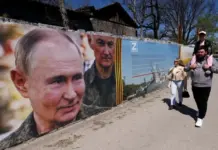
The weekend’s violence cut sharply against a fragile diplomatic moment. Just days earlier, during Moscow‘s Victory Day parade on May 9, President Vladimir Putin declared the war in Ukraine may soon be ‘coming to an end’ and expressed willingness to meet Ukrainian President Volodymyr Zelenskyy in a neutral country to sign peace accords. That overture now appears suspended. Kremlin spokesman Dmitry Peskov told reporters bluntly: ‘The peace process is on pause.’
Recommended Reading
A Russian assault on Kyiv killed 24 people in the same period, as the Ukrainian capital continued to absorb frequent bombardment. The parallel strikes — on Moscow and Kyiv — illustrated the symmetry of destruction that has defined a conflict now stretching beyond four years and claiming hundreds of thousands of lives.
The fundamental obstacle to any settlement remains unchanged. Putin has insisted that peace is contingent on Ukraine formally relinquishing all territory Russia claims, and warned in December that those territories would be seized by force if necessary. Zelenskyy, however, is constitutionally barred from ceding any Ukrainian land. He has instead proposed a ceasefire along current front lines, with territorial disputes to be resolved through subsequent diplomacy. He has also offered to abandon Ukraine’s bid for NATO membership in exchange for concrete security guarantees from Western allies — a significant concession that has yet to unlock a breakthrough.
Russian troops have still not fully consolidated control over the Donbas region of eastern Ukraine, and sources close to the Russian government have indicated that the Kremlin is deliberately prolonging negotiations to entrench battlefield gains before any agreement is reached.
US President Donald Trump, who pledged to end the fighting within 24 hours of beginning his second term in January, brokered a three-day ceasefire in May. The pause proved short-lived. Trump’s administration has remained engaged, but the gap between the two sides’ positions has resisted American pressure.
Moscow Drone Strike: The Wider European Impact
European diplomacy has also intensified. European Council President Antonio Costa signalled in early May that the EU was prepared to engage directly with the Kremlin. Putin has suggested that former German Chancellor Gerhard Schroeder serve as a European Union representative in any formal talks — a proposal that has drawn scepticism given Schroeder’s longstanding personal ties to Moscow. Meanwhile, Hungarian Prime Minister Viktor Orban, who had served as an informal back-channel between European capitals and the Kremlin, was recently voted out of office, removing one of Russia’s most sympathetic interlocutors within the EU.
The drone strike on Moscow carries symbolic weight beyond its immediate casualties. For much of the war, ordinary Muscovites experienced the conflict as a distant abstraction — visible on state television but absent from daily life. Attacks reaching the capital challenge that narrative and may increase domestic pressure on the Kremlin, even as Putin’s government shows no sign of moderating its territorial ambitions.
The war, which entered its fourth year following Russia’s full-scale invasion in February 2022, has reshaped European security, strained global energy markets, and consumed vast quantities of Western military aid. With peace talks formally suspended and aerial exchanges intensifying on both sides, the path toward any negotiated end remains as uncertain as at any point in the conflict’s history.