Nato Airspace Breach — A Romanian F-16 fighter jet shot down a drone over central Estonia on Tuesday, the latest in a series of unmanned aerial incursions that have rattled NATO’s eastern flank and deepened tensions between Russia, Ukraine, and the Baltic states.
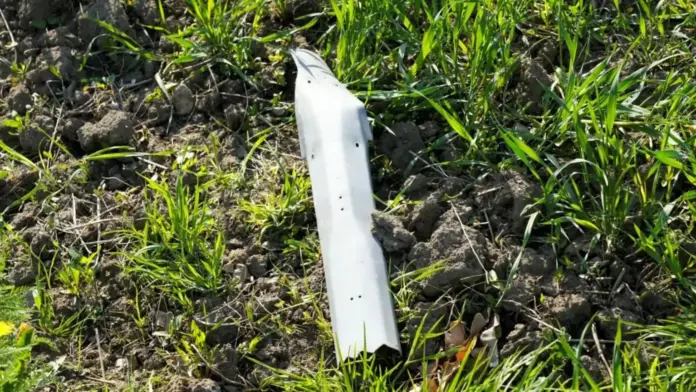
The drone was intercepted shortly after midday local time — approximately 09:00 GMT — in a corridor between Lake Võrtsjärv and the town of Põltsamaa. Its debris came to rest in a marshy, forested area roughly 30 metres from the nearest residential building. No injuries or structural damage were reported.
The Romanian aircraft was participating in NATO’s Baltic air policing mission, a rotational alliance operation that has taken on heightened significance since Russia’s full-scale invasion of Ukraine in 2022. Latvian authorities detected the errant drone first and passed early warning information to Estonian counterparts, allowing the projectile to be identified as a potential threat before it crossed into Estonian airspace.
Recommended Reading
Estonian Defence Minister Hanno Pevkur said Tallinn suspects the drone was a Ukrainian weapon that had been knocked off its intended trajectory by Russian electronic jamming. He spoke directly with his Ukrainian counterpart in the immediate aftermath of the incident. Ukraine apologised to Estonia and the other Baltic states, acknowledging the unintended nature of the incursion while squarely blaming Moscow for deliberately redirecting Ukrainian drones that had been launched against military targets inside Russia.
Kyiv’s Foreign Ministry spokesman Heorhii Tykhyi denied any Ukrainian military personnel had been deployed at Baltic military bases to conduct strikes against Russia — a claim advanced by Russia’s foreign intelligence agency, the SVR, which alleged Ukraine was planning to use Estonian, Latvian, and Lithuanian territory as launchpads for attacks on Russian soil. Latvia dismissed the SVR assertion as disinformation. Tallinn, Riga, and Vilnius have all categorically denied accusations from Moscow that they are permitting Ukraine to exploit their air corridors to strike targets inside Russia.
Russia has offered no comment on Tuesday’s incident, maintaining a pattern of silence on a string of recent drone overflights affecting all three Baltic states.
The episode arrives at a moment of acute political sensitivity in the region. Latvian Prime Minister Evika Silina resigned last week following a domestic political crisis triggered by earlier drone incursions over Latvian territory. Earlier this month, two Ukrainian drones struck an empty oil storage facility in Latvia — an incident Kyiv also attributed to Russian jamming interference. A comparable dual incursion over Estonia and Latvia was recorded in March, underscoring the frequency with which the phenomenon is now occurring.
Nato Airspace Breach: The Wider European Impact
Ukraine has significantly intensified its drone and missile campaign against targets inside Russia in recent months, with oil and gas infrastructure near the Baltic region among the priority objectives. That escalation has increased the volume of projectiles in contested airspace and, Ukrainian officials argue, given Russian electronic warfare operators more opportunities to redirect incoming weapons toward unintended destinations.
The broader pattern is not confined to the Baltic states. More than a dozen drones entered Polish airspace last year, prompting NATO members to accelerate the repositioning of troops and fighter aircraft further east. The alliance’s eastern posture has been under continuous review since President Vladimir Putin ordered the full-scale invasion of Ukraine in February 2022.
Tuesday’s shootdown illustrates both the effectiveness of NATO’s rapid-response air policing architecture and the increasingly complex threat environment it must navigate — one in which the alliance’s own partners may inadvertently become the source of airspace violations, even as adversarial jamming complicates attribution and response. For the Baltic states, geographically exposed and historically wary of Russian intentions, each incident carries weight that extends well beyond the immediate tactical details.