Iran Hormuz Tolls — Iran is poised to unveil a sweeping plan to regulate — and monetise — maritime traffic through the Strait of Hormuz, one of the world’s most critical oil shipping lanes, in a move that threatens to dramatically escalate tensions with the United States and its allies. Tehran has declared the strait open to all nations except its adversaries, and is demanding Washington lift what it describes as an illegal blockade on Iranian ships and vessels.
The announcement comes as US President Donald Trump issued a stark warning to Tehran, stating Iran would face a ‘very bad time’ if a peace agreement is not reached in the near term. The US military has already redirected 78 commercial ships and disabled four vessels as part of its ongoing blockade of Iranian ports — a pressure campaign that has significantly strained bilateral relations and rattled global energy markets.
Iranian Parliament Speaker Mohammed Bagher Ghalibaf framed the standoff in sweeping historical terms, declaring that the world ‘stands at the cusp of a new order.’ Iran’s negotiating position remains hardened by a cluster of unresolved demands: the fate of its nuclear programme, its stockpile of highly enriched uranium, the removal of international sanctions, the release of frozen assets, and the question of war reparations.
Recommended Reading
Pakistan’s Interior Minister Mohsin Naqvi made a surprise visit to Tehran, holding talks with his Iranian counterpart on regional stability and bilateral cooperation — a signal that neighbouring states are actively seeking to manage the fallout from the deepening US-Iran confrontation.
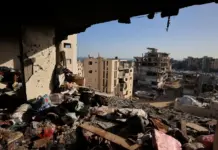
Meanwhile, Israeli military operations continued to exact a heavy toll across multiple fronts. In Gaza, strikes on Saturday killed at least 11 Palestinians and wounded more than 60 others. Hamas confirmed the death of Izz al-Din al-Haddad, the commander of its military wing, the Qassam Brigades, killed in an Israeli strike on Friday — a significant blow to the organisation’s military leadership.
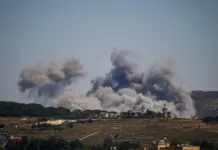
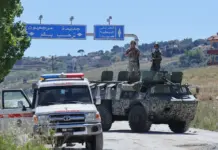
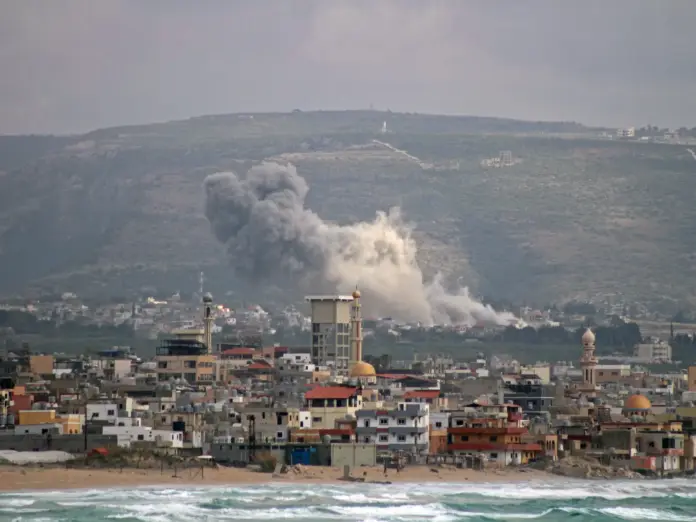
In Lebanon, Israel says it has struck more than 100 sites across the south over the past two days, with more than 30 separate attacks involving air strikes and artillery shelling. The bombardment has forced thousands of civilians to flee southward toward Beirut. Despite this, Israel and Lebanon agreed to extend a fragile ceasefire arrangement by an additional 45 days, though the agreement is under severe strain.
Negotiations between Lebanese officials and their Israeli counterparts in Washington, DC have stalled over the central question of Hezbollah disarmament. Israel and the United States are pressing for immediate disarmament, while Lebanese officials argue the process must be gradual and long-term. Complicating the political calculus, a majority of Lebanon’s Shia population — Hezbollah’s core constituency — are reported to oppose the group’s decision to draw them into the conflict.
The United Kingdom has also deepened its military footprint in the region, deploying a new Advanced Precision Kill Weapon System (APKWS) aboard Royal Air Force Typhoon fighter jets operating in the Middle East, underscoring the growing involvement of Western powers in the theatre.
Iran Hormuz Tolls: Regional Implications
In the occupied West Bank, the village of Yanoun has become a stark emblem of accelerating settler expansion. Farmer Rashid Murrar is among those forced from his home by Israeli settlers, who have now erected a gate blocking Palestinians from returning to the village. Once home to more than 200 residents, Yanoun was largely emptied last year. More than 16 square kilometres of surrounding land have come under settler control — a pattern human rights observers say is being replicated across the West Bank.
The crisis has reverberated internationally. In Berlin, German police used force against demonstrators at a rally marking the 78th anniversary of the Palestinian Nakba, with officers striking protesters and deploying pepper spray to disperse the crowd.
The convergence of Iran’s maritime brinkmanship, Israel’s multi-front military campaigns, and the collapse of diplomatic momentum paints a volatile picture across the broader Middle East. With no ceasefire holding firmly in Gaza, Lebanon’s truce under pressure, and the Strait of Hormuz potentially becoming a new flashpoint, the region faces one of its most complex and dangerous periods in recent memory.