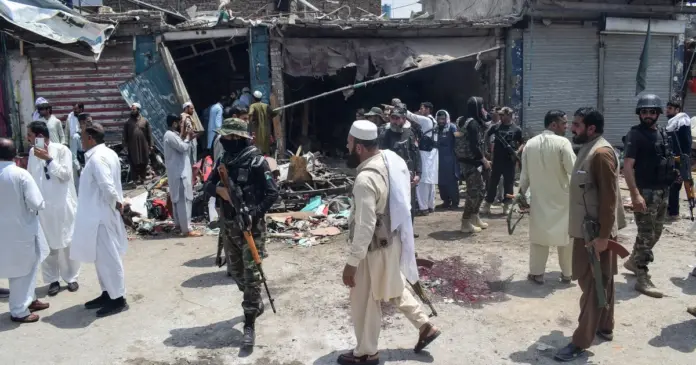
Ttp Suicide Bombing — A suicide bomber drove an explosives-laden vehicle into the gate of a military compound in Pakistan’s Bajaur district on Thursday, killing at least eight soldiers and wounding approximately 35 security personnel in one of the most devastating attacks on Pakistani forces in recent months.
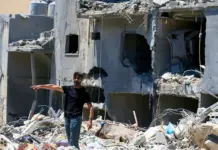
The Tehrik-i-Taliban Pakistan (TTP), also known as the Pakistan Taliban, claimed responsibility for the assault on the compound, which sits on the rugged, mountainous border with Afghanistan. The blast was so powerful that it was felt at markets more than 20 kilometres from the site, and most of the outpost’s structures were either destroyed or reduced to charred ruins. At least 10 attackers were killed in the operation.
The Bajaur strike was not an isolated incident. In the days preceding Thursday’s bombing, a string of deadly attacks struck the same volatile border region. A car bomb targeting a police post killed more than a dozen people, while a separate explosion at a local market left at least nine dead. In Bajaur’s Inayat Killi area, a mortar shell landed inside a camp, wounding three security personnel. Combined, more than 20 people have been killed across these incidents in just a matter of days.
Recommended Reading
The surge in violence underscores the deepening instability along one of the world’s most contested frontiers. The TTP, which seeks to overthrow the Pakistani government, operates primarily from bases inside Afghanistan, launching cross-border attacks with increasing frequency and lethality. Islamabad has repeatedly accused Kabul of harbouring the group, a charge the Afghan Taliban administration — which returned to power in 2021 — consistently denies.
Tensions between the two neighbours have been building for months. Cross-border clashes escalated sharply from February, prompting Pakistan’s defence minister to declare what he described as an ‘open war’ with Afghanistan. A pause in hostilities was agreed to in March, but sporadic violence resumed shortly afterward, rendering the truce largely symbolic.
Diplomatic efforts have so far failed to produce a durable resolution. Last month, Islamabad and Kabul participated in China-brokered discussions aimed at avoiding further escalation, and both sides agreed in principle to de-escalate. However, no formal agreement or ceasefire has emerged from those talks, leaving the border region in a state of chronic insecurity.
The human cost of the conflict has been staggering, particularly for Afghan civilians caught in the crossfire. In the first three months of 2026 alone, at least 372 Afghan civilians were killed and nearly 400 more were injured as a result of the cross-border fighting — figures that have drawn alarm from humanitarian observers monitoring the region.
Ttp Suicide Bombing: Regional Security Implications
Thursday’s attack in Bajaur represents a stark illustration of the TTP’s continued operational capacity despite sustained Pakistani military pressure. The group’s ability to execute a complex vehicle-borne assault on a fortified security compound — destroying most of its structures and inflicting significant casualties — signals that counterterrorism efforts along the border have yet to degrade the organisation’s strike capability in any meaningful way.
For Pakistan, the attack deepens a security dilemma that has no easy resolution. Military operations inside its own territory have displaced communities and strained resources, while diplomatic overtures toward Kabul have yielded little in the way of concrete action against TTP leadership sheltering on Afghan soil. China’s involvement as a mediator reflects Beijing’s broader interest in regional stability, particularly given its economic investments in Pakistan under the China-Pakistan Economic Corridor, but even that leverage has not translated into a binding framework to halt the violence.
With the border region now recording some of its deadliest weeks in recent memory, pressure is mounting on both governments to move beyond statements of intent and toward enforceable arrangements that can protect civilian and military lives on both sides of the frontier.