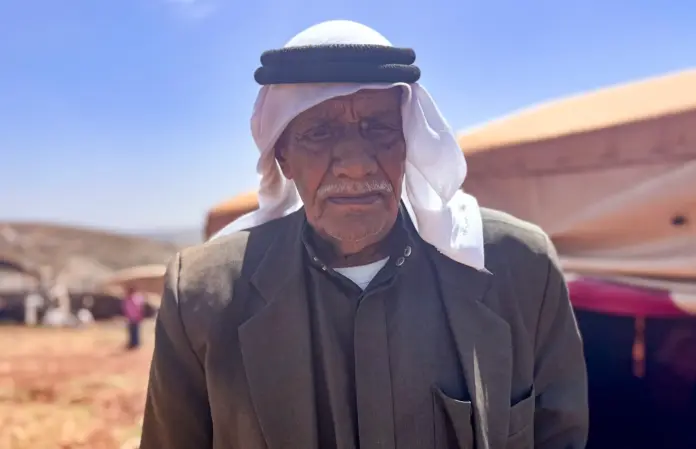
West Bank Bedouin Displacement — For Abu Najjeh, the mukhtar of the former Bedouin community of Ein Samiya in the occupied West Bank, the morning began with news that had become grimly familiar: settlers had stormed through the nearby village of Jiljilyya, stealing hundreds of sheep and two tractors from a member of his extended family. By the time the violence subsided, a 16-year-old boy from his clan lay dead.
Yousef Kaabneh, shot and killed by settlers that morning, was not simply a casualty of a single day’s violence. He was the product of a family history defined by expulsion — a teenager who had already been forcibly displaced from Wadi as-Seeq in 2023, and whose family had relocated to Jiljilyya specifically hoping that life under Palestinian Authority administration would offer some measure of safety. It did not.
The Kaabneh clan traces its roots to the Jahalin Bedouin of the Bir al-Saba area in the Naqab Desert. In 1948, Zionist paramilitary and later military forces expelled them from their homes during the mass displacement Palestinians call the Nakba — commemorated each year on May 15, when an estimated 750,000 Palestinians were driven from their land. Nearly two decades later, in September 1967, Israeli forces gave the family just 24 hours to leave the West Bank after capturing the territory in war, expelling them toward al-Muarrajat.
Recommended Reading
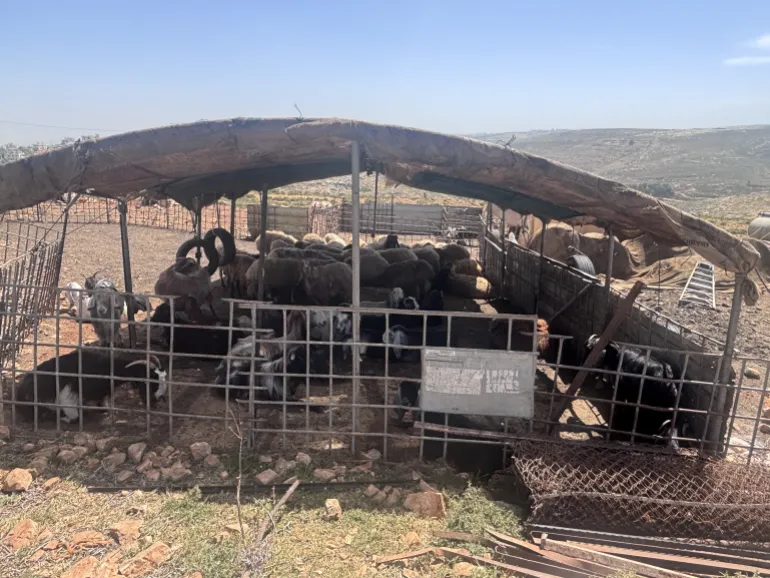
Around 1980, Abu Najjeh’s community settled in the hills east of Ramallah near a natural spring, establishing what would become Ein Samiya. For more than four decades, the community built a life there. At its peak, the community’s livestock flock numbered around 2,500 animals — the economic backbone of Bedouin pastoral existence.
That stability began to unravel around 2019, when a settler outpost appeared near Ein Samiya. By 2021, settler harassment had moved from grazing lands directly into the community’s residential area. Settlers blocked access to the spring that had sustained the community for generations and placed spikes on the road. Livestock were stolen and poisoned. The flock, once numbering 2,500 animals, collapsed to fewer than 500. In May 2023 — months before the October 7 Hamas attack on Israel — the Ein Samiya community was forcibly displaced for the seventh time in its history.
Most families relocated to Khirbet Abu Falah in Area B of the West Bank, hoping the move would bring respite. It did not last. New illegal outposts appeared near Khirbet Abu Falah, and attacks resumed. During Ramadan 2025, the community was forced to leave again. Abu Najjeh’s eight married sons scattered to different locations, the family fractured once more across a landscape that offers diminishing refuge.
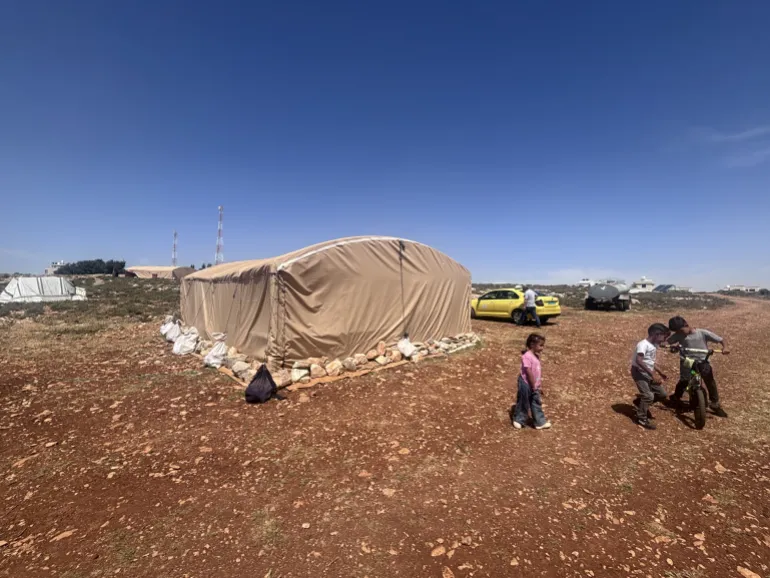
Those who remain in the Rammun area face punishing economic conditions. Water costs 250 shekels — roughly $86 — per tank, an enormous burden for communities whose livelihoods have already been systematically dismantled.
The violence that killed Yousef Kaabneh was part of a broader rampage. Dozens of settlers tore through Jiljilyya, Sinjil, and Abwein — all located in Area A of the West Bank, territory nominally under full Palestinian Authority control. The brazenness of the incursion reflected a pattern that humanitarian organisations have documented with increasing alarm.
West Bank Bedouin Displacement: Regional Implications
The UN Office for the Coordination of Humanitarian Affairs reports that between January 2023 and May 4, 2026, more than 5,900 people from 117 communities experienced full or partial displacement as a direct result of settler attacks. Forty-five Palestinian Bedouin communities have been completely erased in that period. In 2026 alone, approximately 2,000 Palestinians have been driven from their homes. Settler attacks and Israeli military raids have killed at least 1,090 Palestinians since October 2023.
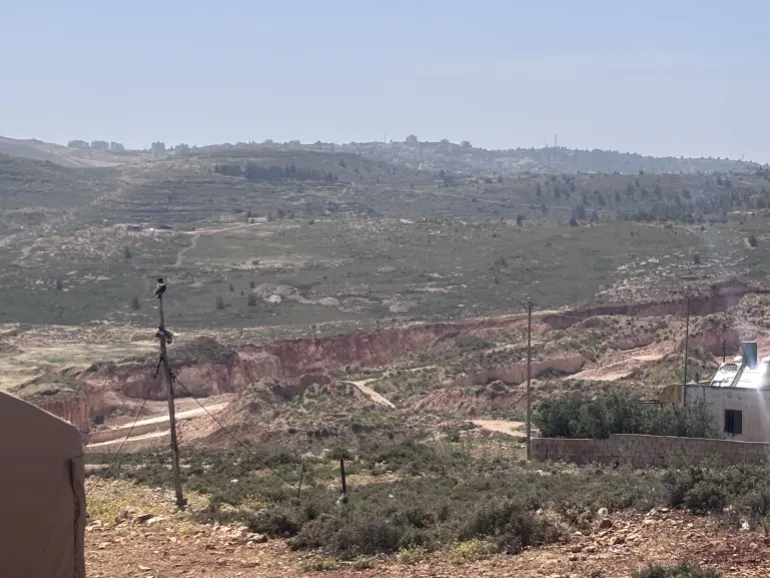
The displacement of dozens of Palestinian Bedouin communities since October 7, 2023 has accelerated a process that predates the current conflict by decades. For families like the Kaabneh clan, the arithmetic of dispossession is stark: seven displacements across three generations, a flock reduced to a fraction of its former size, and a 16-year-old killed in a village where his family had sought sanctuary.
Abu Najjeh’s community arrived near Ein Samiya’s spring seeking permanence after generations of upheaval. What they found instead was a pattern that has repeated with each passing decade — a temporary foothold, the arrival of a settler outpost, escalating harassment, and ultimately, another forced departure. The spring that once sustained them is now inaccessible. The hills east of Ramallah that sheltered them for 40 years belong, in practice, to someone else.