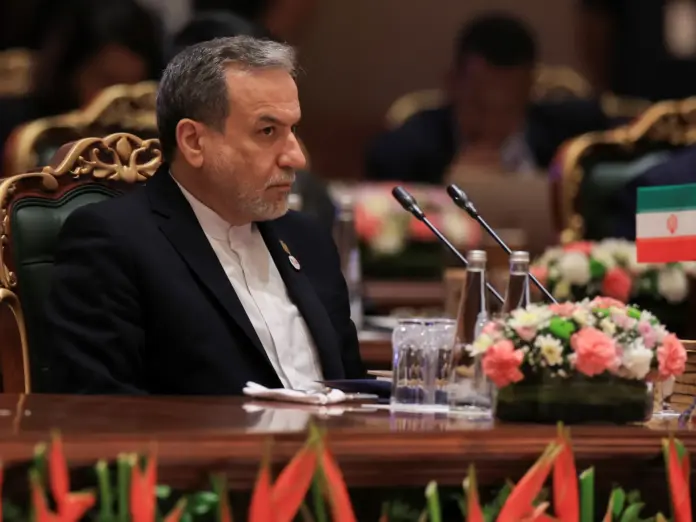
Iran Brics Summit — Iranian Foreign Minister Abbas Araghchi arrived at the BRICS foreign ministers’ summit in New Delhi with an urgent agenda: persuade the bloc’s members to formally condemn what Tehran characterises as unlawful military aggression by the United States and Israel. The two-day gathering brought together the top diplomats of a grouping that now spans Brazil, Russia, India, China, South Africa, Egypt, Ethiopia, Indonesia, Iran, and the UAE — a coalition whose internal contradictions were thrown into sharp relief by the conflict now reshaping the Middle East.
Araghchi declared that Iran stood as a "victim of illegal expansionism and warmongering" and urged fellow BRICS+ nations to resist what he called "Western hegemony and the sense of impunity that the US believes it is entitled to." The war between Iran and the US-Israeli alliance, which erupted at the end of February, has since drawn in Gulf states and destabilised critical maritime corridors.
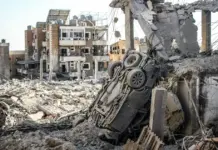
In a significant escalation of diplomatic tensions within the bloc itself, Araghchi on Thursday directly accused the United Arab Emirates — a fellow BRICS+ member — of active participation in military operations against Iran. Tehran has launched retaliatory strikes on US military sites and assets across Gulf states, including the UAE, in response to the broader campaign against Iranian territory. The accusation places New Delhi in an acutely uncomfortable position, hosting two nations now openly at odds within the same multilateral forum.
Recommended Reading
Iran’s Deputy Foreign Minister for Legal and International Affairs, Kazem Gharibabadi, added further texture to the bloc’s internal divisions, revealing that one unnamed member state had pushed for language in any joint statement that would condemn Iran. Because BRICS operates strictly on consensus before releasing communiqués, the prospect of a unified declaration on the conflict appeared remote. Araghchi, for his part, sought to reassure commercial shipping interests, insisting that the Strait of Hormuz "is open for all" vessels that cooperate with Iran’s navy — a statement that underscored rather than resolved the anxiety gripping global energy markets.
The stakes for India are considerable. As the world’s third-largest oil buyer, India ordinarily sources roughly half of its crude through the Strait of Hormuz, the narrow chokepoint through which approximately 20 percent of global oil supplies pass in peacetime. The country is also heavily dependent on Middle Eastern fertiliser imports. Disruptions to Gulf shipping lanes are already driving volatility in oil and gas markets, and the pressure on New Delhi to navigate the crisis without alienating any major partner is immense.
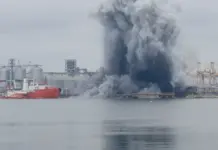
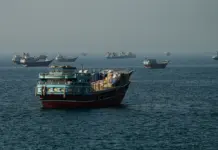
That pressure was made viscerally apparent on Wednesday when an Indian-flagged vessel was attacked off the coast of Oman. All crew members were rescued safely by Omani authorities, but India’s Ministry of External Affairs wasted no time in condemning the incident as "unacceptable." The attack added a direct national security dimension to what had previously been, for India, primarily an economic concern. Foreign Minister Subrahmanyam Jaishankar is navigating the summit against this backdrop, balancing India’s strategic autonomy doctrine with the practical reality that the country’s energy security is acutely exposed to the conflict’s trajectory.
Iran Brics Summit: Regional Implications
The timing of the New Delhi meeting carries additional weight. India is scheduled to host a full BRICS leaders’ summit later this year, an event that was always going to test the bloc’s cohesion given its increasingly diverse membership. The war in the Gulf has accelerated those centrifugal pressures. A grouping that was designed to project an alternative to Western-led global governance now finds itself hosting a direct confrontation between two of its own members, while a third — India — watches its energy lifeline come under threat.
Araghchi’s appeal to BRICS solidarity framed the conflict in explicitly ideological terms, casting Iran’s position as emblematic of a broader struggle against a unipolar world order. Whether that framing resonates with partners like India, which has cultivated close ties with both Washington and Moscow, or Indonesia, which has historically championed non-alignment, remains to be seen. The consensus requirement for joint statements means that even a watered-down declaration will require buy-in from nations with sharply divergent interests — a diplomatic challenge that the New Delhi summit has so far struggled to resolve.