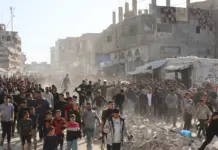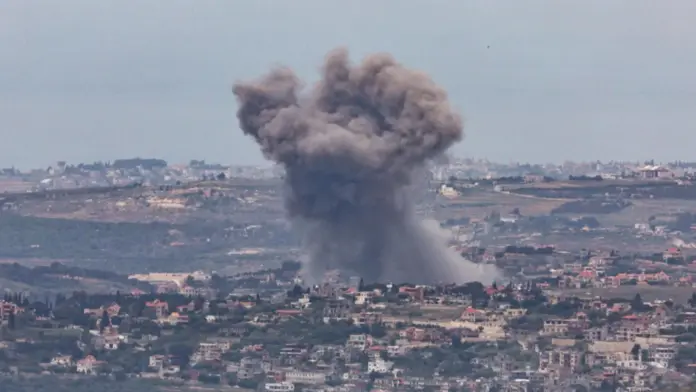
BEIRUT — Israeli air strikes killed at least 10 people across southern Lebanon, including two paramedics who died while responding to an earlier attack, deepening a humanitarian crisis that has persisted despite a nominally active ceasefire agreement.
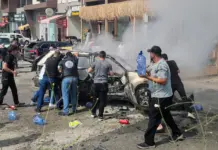
Lebanon Ceasefire Unravels — The deadliest single incident struck a residential building in Kfar Dounine overnight, killing six people and wounding seven others. Hours later, on Tuesday afternoon, an Israeli strike hit the city of Nabatieh as Lebanese Civil Defense personnel were attending to a casualty from a prior attack in the area. The two paramedics killed were identified as Hussein Jaber and Ahmad Noura. A third colleague sustained injuries in the same strike.
Lebanese President Joseph Aoun expressed sadness and regret over the deaths of the two emergency workers. The country’s health ministry went further, accusing Israeli forces of deliberately targeting the paramedics — a charge that, if substantiated, would constitute a serious violation of international humanitarian law protecting medical personnel in conflict zones.
Recommended Reading
The ministry’s figures paint a grim picture of the toll on Lebanon’s medical infrastructure. Since the war began, 108 emergency medical services and healthcare workers have been killed, and more than 140 Israeli attacks on ambulances and medical facilities have been recorded.
Elsewhere on Tuesday, an Israeli drone strike in the Tayr Debba area killed a Syrian man who was riding a motorcycle with his wife. The woman was wounded in the attack. The Israeli military said it struck a suspect who had just attempted, unsuccessfully, to fire a surface-to-air missile at one of its aircraft.
Hezbollah also remained active, launching explosive-laden drones toward Israeli troops operating in southern Lebanon without causing casualties. The group said it targeted Israeli positions in Naqoura, Bayada, and Houla, and also struck a soldier at Kibbutz Manara in northern Israel.
The continuing bloodshed underscores the fragility of a ceasefire brokered by the United States and agreed upon by Israeli and Lebanese governments in April. Despite the deal, at least 380 people have been killed in Lebanon since it came into force. Israeli authorities have reported 18 soldiers and four civilians killed on their side over the same period.
Lebanon Ceasefire Unravels: Regional Implications
The overall death toll in Lebanon since the conflict began stands at a minimum of 2,869, according to the Lebanese health ministry. The war erupted on 2 March, two days after a joint US-Israeli military operation against Iran. Hezbollah’s subsequent rocket fire drew a sweeping Israeli response — widespread air strikes followed by a ground invasion of southern Lebanon.
Against this backdrop of persistent violence, Israeli and Lebanese officials are expected to meet in Washington on Thursday in an effort to chart a path toward ending the conflict. The talks carry significant weight: each day of continued strikes erodes confidence in any diplomatic framework and raises the human cost of a war that has already devastated communities on both sides of the border.
The killing of paramedics Jaber and Noura adds to a pattern of attacks on medical responders that international humanitarian organisations have repeatedly condemned. Emergency workers in active conflict zones are afforded specific protections under the Geneva Conventions, and the Lebanese health ministry’s accusation of deliberate targeting — if proven — would represent a grave breach of those obligations. With diplomats preparing to convene in Washington, the deaths of two men who drove toward danger to save lives may become one of the starkest symbols of how far the ceasefire has fallen short.