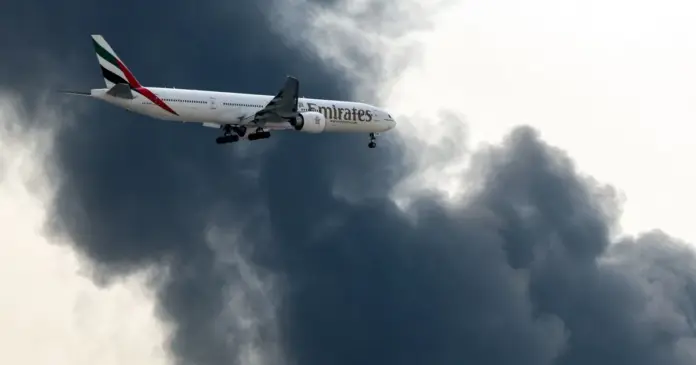
Iran Uae Hostile Base — Iran has officially recast the United Arab Emirates as a ‘hostile base’, abandoning the diplomatic language of neighbourly relations in a stark signal of how dramatically ties between the two Gulf powers have deteriorated. Ali Khezrian, a member of Iran’s parliamentary national security commission, announced the reclassification as Iranian military commanders issued a series of pointed warnings directly targeting Emirati leadership.
The Khatam al-Anbiya Central Headquarters of the Iranian armed forces referenced the UAE explicitly in statements issued this month, while a joint command led by generals of the Islamic Revolutionary Guard Corps (IRGC) addressed Emirati leaders directly just a week ago. In those communications, the IRGC asserted that the UAE’s port of Fujairah — a critical commercial hub — sits within a stretch of the Strait of Hormuz over which Iran claims maritime control. Fujairah was struck earlier this month in an attack Iran denied carrying out.
The confrontation has been building for weeks. Since the start of the war on February 28, the UAE has absorbed some of the heaviest Iranian attacks directed at any Arab state outside Israel. Iran launched missiles and drones predominantly against the UAE, followed by Bahrain, Kuwait, Qatar, and Saudi Arabia — notably not targeting Israel directly in those salvos.
Recommended Reading
The origins of the current crisis trace in part to an alleged strike on Iran’s Qeshm Island, where Israeli media reported that UAE fighter jets attacked a water desalination facility just over a week after the war began. Senior UAE official Ali al-Nuaimi dismissed those reports as ‘fake news.’ The IRGC, however, cited the Qeshm strike as justification for launching precision-guided missiles at the Juffair base in Bahrain.
Further complicating the picture, on the morning of April 8 — hours after US President Donald Trump announced a ceasefire — Iranian media reported explosions at the oil refinery on Lavan Island and in Siri. Both Israel and the United States denied involvement. Iranian state broadcaster IRIB had earlier shown wreckage of a Chinese-made Wing Loong drone, and an image circulated in IRGC Telegram channels purportedly showed a French-made Mirage 2000-9 — operated by the UAE Air Force — flying over southern Iran. State-linked Iranian media attributed the April 8 strikes to UAE Mirage fighters, though the UAE has offered no official comment on the alleged attacks. Separately, a video released by Syria’s President Ahmed al-Sharaa late last month showed F-16E warplanes with national markings and tail numbers stripped.
The UAE’s pivot toward a security posture aligned with Israel and the United States has accelerated sharply. Israel has deployed its Iron Dome missile defence technology along with dozens of troops to the UAE during the current conflict. Elbit Systems, Israel’s major weapons manufacturer, established a UAE subsidiary following the signing of the Abraham Accords in 2020 — the normalisation agreement the UAE signed alongside Bahrain and Morocco. US Ambassador Mike Huckabee stated in Tel Aviv on Tuesday that the deployment of advanced radars and missile batteries to the UAE reflects an ‘extraordinary relationship’ built on the foundations of those accords.
The United States maintains a substantial military footprint in the region through al-Dhafra airbase, located just outside Abu Dhabi, which houses thousands of troops and advanced military equipment. Anwar Gargash, an adviser to the UAE’s president, argued on March 17 that Iranian attacks on Arab neighbours would only deepen ties between Israel and states that have normalised relations with it — a warning that appears to be bearing out in real time.
Iran Uae Hostile Base: Regional Implications
On the economic front, the UAE has moved aggressively to sever financial and commercial links with Iran. Emirati authorities have terminated visas for Iranians who had lived in the country for years and shut down Iranian businesses, trade routes, currency exchange networks, and institutions — measures that strike at the extensive informal economic ties the two countries have long maintained.
Underlying the military and diplomatic rupture is a territorial dispute that stretches back more than five decades. The UAE has never recognised Iran’s control over the islands of Greater Tunb, Lesser Tunb, and Abu Musa, which Iranian forces seized in 1971. That unresolved grievance now sits at the heart of a confrontation that threatens to redraw the security architecture of the entire Gulf region.