Kuwait City — Kuwait has arrested four senior officers it identifies as members of Iran’s Islamic Revolutionary Guard Corps (IRGC) after the men allegedly attempted to infiltrate Bubiyan Island by sea on May 1, in what Kuwaiti authorities are calling a deliberate act of aggression against the country’s sovereignty.
Irgc Bubiyan Island — The four men were apprehended aboard a fishing boat that Kuwait says was specially chartered for hostile purposes. During the confrontation, gunfire wounded one Kuwaiti service member. Two additional members of the group — identified as navy Captain Mansour Qambari and boat captain Abdulali Kazem Siamari — escaped during the clash and remain at large.
The arrested individuals were named as Colonels Amir Hussein Abd Mohammed Zara’i and Abdulsamad Yadallah Qanwati, Captain Ahmed Jamshid Gholam Reza Zulfiqari, and First Lieutenant Mohammed Hussein Sehrab Faroughi Rad. All four admitted to being tasked by the IRGC with carrying out the infiltration, according to Kuwait’s Ministry of Interior, which announced the arrests on X on Tuesday.
Recommended Reading
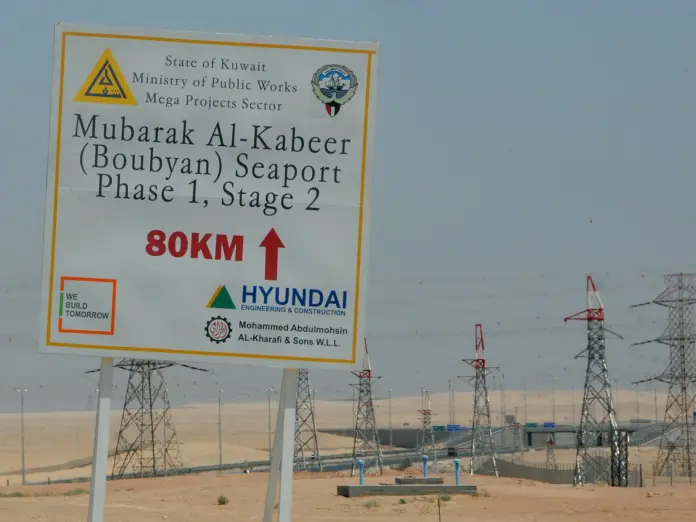
Bubiyan is Kuwait’s largest island, positioned at the northern tip of the Gulf near the Iraqi border. Its strategic importance is considerable — the island sits adjacent to key shipping lanes and lies close to Kuwait’s northern oilfields and military installations, making any hostile incursion there a matter of acute national security concern.
Kuwait’s Ministry of Foreign Affairs condemned the operation as a flagrant violation of Kuwaiti sovereignty. The deputy foreign minister summoned Iran’s ambassador to receive a formal protest note, and Kuwait explicitly reserved its right to self-defence under Article 51 of the United Nations Charter — language that signals Kuwaiti officials view the incident as a potential act of war.
Regional solidarity followed swiftly. Kuwait’s foreign minister received a phone call from his Bahraini counterpart, who condemned the infiltration attempt and expressed support for Kuwait’s position.
The Bubiyan incident does not stand in isolation. Earlier in the same week, Kuwait reported intercepting hostile drones in its airspace. In April, strikes struck Kuwait’s Mina al-Ahmadi oil refinery and a power and desalination plant — both attacks attributed by Kuwait to Iran. A further attack on March 30 targeted another Kuwaiti power and desalination facility, killing an Indian national; Kuwait attributed that strike to Tehran as well.
The targeting of desalination infrastructure carries particular weight in Kuwait, a nation almost entirely dependent on desalinated water for its population’s daily needs. Repeated strikes on such facilities represent not merely military provocations but direct threats to civilian welfare.
Irgc Bubiyan Island: Regional Implications
Tehran denied responsibility for the earlier infrastructure strikes, attributing them instead to Israel. Iran has not issued an immediate public response to Kuwait’s latest accusations regarding the Bubiyan infiltration attempt. The geographic proximity of the two countries — Kuwait lies approximately 80 kilometres from Iran’s coastline — means that maritime incursions can be executed with minimal warning time.
The cumulative pattern of incidents — drone interceptions, refinery strikes, attacks on civilian infrastructure, and now an alleged armed sea infiltration by uniformed IRGC personnel — suggests a sustained campaign of pressure against Kuwait. Whether the arrests of four named officers will prompt a formal diplomatic rupture or further escalation remains to be seen, but Kuwait’s invocation of UN Charter self-defence provisions signals that officials in Kuwait City are treating the situation with the utmost gravity.
Iran’s silence in the immediate aftermath of the arrests leaves the diplomatic temperature unresolved. The international community will be watching closely to see whether Tehran acknowledges the identities of the detained men or maintains its posture of denial.