Israel-Hezbollah Ceasefire — A ceasefire between Israel and Hezbollah that officially took effect on April 16 has broken down almost immediately, with Israeli forces striking targets across Lebanon — including Beirut’s southern suburbs — and Hezbollah launching 24 attacks on Israeli military positions within a single 24-hour period, underscoring the profound fragility of any agreement between the two sides.
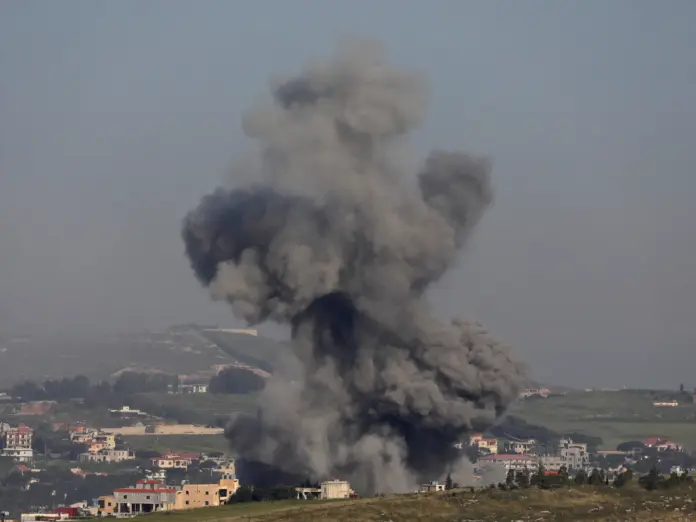
The truce, which followed six weeks of intense combat, was violated by Israeli forces the very day after it came into force, according to Lebanon’s army. On Sunday alone, Israeli attacks killed 51 people across the country, among them two medical workers. An air strike on the town of Abba killed two people and wounded five, while Israeli warplanes conducted repeated raids on Kfar Remman, returning for a second strike in less than an hour. The Israeli military also issued fresh evacuation warnings for residents of nine areas in southern Lebanon.
The human cost of the conflict since March 2 — when Israel launched its war on Lebanon — has been staggering. At least 2,846 people have been killed and more than one million displaced. Israel’s offensive has encompassed a major ground invasion and the occupation of southern Lebanon, with the country’s military repeatedly insisting it targets only Hezbollah infrastructure. The United Nations has documented a particularly alarming toll on Lebanon’s healthcare system: at least 103 medical workers killed and 230 injured in more than 130 Israeli strikes since the war began.
Recommended Reading
Hezbollah, for its part, has not stood down. The group announced it carried out 24 operations over a 24-hour period targeting Israeli troop concentrations, Merkava tanks, bulldozers, military equipment and newly established command centres along the border. The attacks employed a range of weaponry, including explosive drones, rocket barrages, artillery shelling and guided missiles. Hezbollah also released footage purportedly showing a first-person-view drone striking an Iron Dome battery on the northern border. Three Israeli soldiers were wounded in a booby-trap drone explosion in southern Lebanon, and one Israeli soldier was killed by a Hezbollah drone launched near the Lebanese border.
Of particular concern to Israeli defence planners is Hezbollah’s reported use of fibre optic threads to guide its FPV drones, a technology that allows the group to circumvent Israeli wireless jamming systems. The tactic represents a significant tactical evolution and complicates Israel’s ability to neutralise the drone threat electronically.
This is not the first ceasefire to collapse. A previous truce had nominally been in effect since November 27, 2024, yet the United Nations counted more than 10,000 Israeli violations of that agreement. The current breakdown follows the same pattern, with Israel bombing Beirut’s southern suburbs for the first time since the latest ceasefire was declared. Hezbollah politician Ali Fayyad signalled the group’s scepticism on April 17, stating it would approach the ceasefire with caution and vigilance.
The roots of the current conflict stretch back to October 2023, when Hezbollah began firing rockets into Israel in solidarity with Palestinians in Gaza. That earlier phase of fighting killed at least 3,768 Lebanese and displaced 1.2 million people. The Lebanese government, seeking to distance itself from Hezbollah’s military operations, outlawed the group’s armed wing at the start of the latest conflict. In January, Israel warned that Hezbollah still maintained a presence close to the border and was rebuilding its military capabilities faster than the Lebanese army was dismantling them — a claim that has shaped Israel’s continued military posture.
Israel-Hezbollah Ceasefire: Regional Implications
Israel has consistently maintained that any durable ceasefire requires the full disarmament of Hezbollah, a condition the group has rejected. Diplomatic efforts to bridge the gap are nonetheless advancing. The US State Department has scheduled two days of intensive talks between the Israeli and Lebanese governments on May 14 and 15. Lebanon’s President Joseph Aoun received former Ambassador Simon Karam on May 8; Karam will lead the Lebanese delegation in those negotiations. Hezbollah has been excluded from the talks and has publicly protested their convening, a sign that any agreement reached will face immediate resistance from the group that remains the dominant armed force in southern Lebanon.
With nearly 3,000 dead, a healthcare system under systematic assault and a ceasefire that has failed to hold even in its opening hours, the prospects for a sustainable end to hostilities remain deeply uncertain.