Gulf Drone Strikes — A drone struck a cargo ship arriving from Abu Dhabi in Qatari territorial waters on Sunday, sparking a fire northeast of the port of Mesaieed in one of several aerial incidents that have shaken the Persian Gulf and cast a shadow over a fragile ceasefire between the United States, Israel, and Iran.
The United Kingdom Maritime Trade Operations confirmed that a bulk carrier was hit by an unknown projectile, causing a small fire that was subsequently extinguished. No casualties were reported. Hours earlier, Kuwait detected a number of hostile drones in its airspace at dawn, while the UAE Defence Ministry announced it had intercepted two Iranian drones. Iran’s Islamic Revolutionary Guard Corps denied responsibility for any attack on the UAE.
The flare-up comes less than two weeks after a ceasefire between the US, Israel, and Iran took effect on April 8 — an agreement the Trump administration insists remains in force despite the renewed hostilities. The incidents follow a series of escalatory moves on both sides: the United States struck two Iranian oil tankers on Friday, asserting they were attempting to breach a US blockade of Iranian ports, while the UAE reported coming under attack from Iranian missiles and drones on Tuesday.
Recommended Reading
The Strait of Hormuz, the narrow chokepoint through which a fifth of globally traded oil passed before the war, sits at the centre of the standoff. Iran is currently restricting traffic through the waterway, a move that has rattled energy markets and alarmed Gulf states dependent on unimpeded maritime commerce. The IRGC Navy has issued explicit warnings that any further strikes on Iranian oil tankers or commercial vessels will trigger a heavy assault on US bases and ships across the region.
Diplomatic channels remain active but strained. Qatar’s Prime Minister Sheikh Mohammed bin Abdulrahman bin Jassim Al Thani met with US Secretary of State Marc Rubio in Doha on Saturday before holding a phone call with Iranian Foreign Minister Abbas Araghchi on Sunday. Sheikh Mohammed delivered a pointed message to Tehran: using the Strait of Hormuz as a pressure card would only deepen the crisis engulfing the Gulf.
Iran is currently weighing a 14-point proposal from Washington. President Donald Trump has threatened to resume US bombardment if Tehran refuses to accept a deal, which would require reopening the Strait of Hormuz and rolling back Iran’s nuclear programme. Frozen Iranian assets and the question of war reparations remain the principal sticking points blocking an agreement.
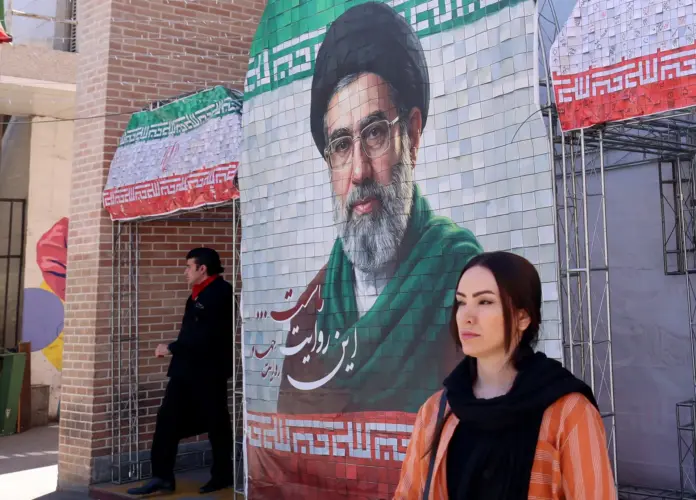
Iranian officials have adopted a defiant but cautious public posture. Ebrahim Rezaei, spokesperson for the Iranian parliament’s foreign policy and security committee, declared that Tehran’s restraint is over. Iranian President Masoud Pezeshkian, however, sought to frame the ongoing negotiations differently, insisting that engaging with the United States does not constitute surrender.
Gulf Drone Strikes: Regional Implications
The contradictory signals from Tehran — diplomatic engagement on one hand, drone operations and maritime restrictions on the other — reflect the internal tensions within the Iranian leadership as it navigates intense military and economic pressure. The IRGC’s public threats stand in direct contrast to the foreign ministry’s continued participation in talks brokered through Qatari and other intermediaries.
For Gulf states, the situation presents an acute dilemma. The UAE and Kuwait, both of which reported attacks or incursions on their territory and airspace, find themselves caught between a US military posture that has escalated sharply and an Iranian neighbour with the capability and apparent willingness to strike regional targets. Qatar, which hosts the largest US military base in the Middle East, is simultaneously serving as a key diplomatic conduit between Washington and Tehran.
The coming days are likely to prove critical. With Iran deliberating over Washington’s 14-point framework and Trump maintaining his threat of renewed bombardment, the window for a negotiated resolution remains open — but the drone strikes and maritime incidents signal that the military situation on the ground could outpace the diplomats working to contain it.