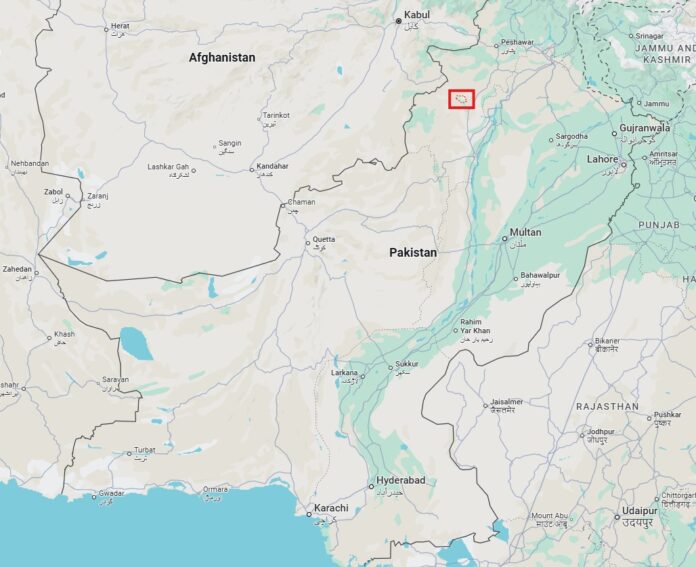
Bannu, Khyber Pakhtunkhwa — A suicide bomber and several fighters detonated an explosives-laden vehicle near a security post in Bannu late Saturday, killing at least three police officers in one of the most brazen attacks to strike this volatile district bordering Afghanistan in recent months.
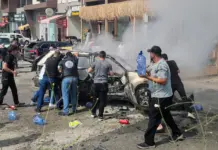
Bannu Car Bombing — Multiple explosions rocked the area, reducing the security post to rubble and sending shockwaves through nearby civilian neighbourhoods. Two civilians sustained injuries in the blasts. As officers rushed to the scene to provide backup, they were met with a coordinated ambush — a tactical pattern that has become a grim signature of militant operations in the region. Police sources confirmed that the attackers also deployed drones during the assault, marking a significant escalation in the sophistication of the strike.
A state of emergency was declared at government hospitals across Bannu, with ambulances from rescue agencies and civil hospitals dispatched to the site. The full scale of structural damage to surrounding civilian areas remained under assessment as emergency crews worked through the night.
Recommended Reading
No group immediately claimed responsibility for the attack. However, Tehrik-e-Taliban Pakistan — the Pakistani Taliban, commonly known as the TTP — along with allied militant factions, has carried out similar operations in Khyber Pakhtunkhwa in the past. The TTP, while a distinct organisation from the Afghan Taliban, maintains ideological alignment with the movement that seized power in Kabul in 2021.
The bombing comes against a backdrop of sharply deteriorating security dynamics along the Pakistan-Afghanistan frontier. In February, the two countries experienced their worst outbreak of direct fighting in years, prompting Islamabad to launch air strikes inside Afghan territory against what Pakistani officials described as militant strongholds. The intensity of that confrontation has since subsided, with only sporadic skirmishes continuing along the border — but no formal ceasefire has been brokered between the two governments.
The fundamental dispute driving that tension remains unresolved. Pakistan holds Kabul responsible for providing sanctuary to armed groups that use Afghan soil to plan and execute attacks inside Pakistan. The Afghan Taliban administration has consistently rejected those accusations, characterising militancy within Pakistan as an internal matter for Islamabad to address.
Bannu district sits at the geographic and strategic heart of this unresolved conflict. Its proximity to the Afghan border has long made it a flashpoint for militant activity, and Saturday’s attack — combining a vehicle-borne explosive device, a follow-on ambush, and drone deployment — underscores the growing operational capability of groups operating in the area.
Bannu Car Bombing: Regional Security Implications
Security forces have intensified operations across Khyber Pakhtunkhwa in recent years in response to a resurgence of TTP-linked violence, but attacks on police and military installations have continued with troubling regularity. The use of drones in Saturday’s assault signals a potential new dimension to that threat, one that security analysts have warned could complicate conventional counter-insurgency responses.
Investigations into the Bannu bombing are ongoing. Pakistani authorities have not yet issued a formal statement attributing responsibility, and the search for those who planned and executed the attack is expected to intensify in the coming days.