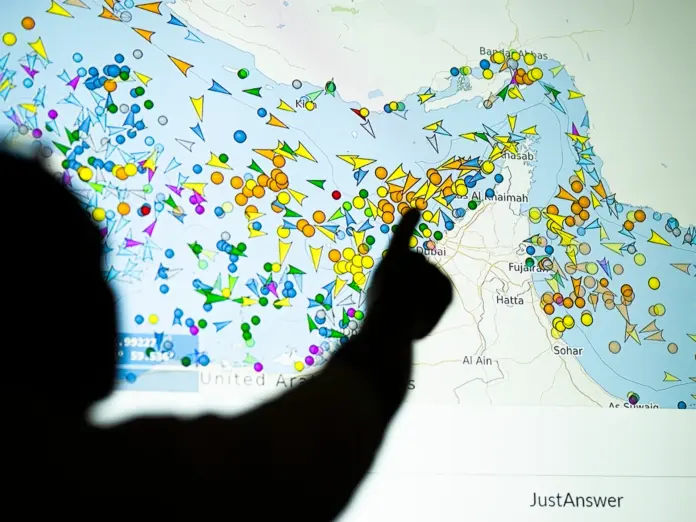
Iran Hormuz Blockade — Senior Iranian officials have dramatically elevated their rhetoric over the Strait of Hormuz, with one adviser comparing the country’s control of the critical waterway to the destructive power of a nuclear weapon, as Washington and Tehran simultaneously exchange draft texts toward a possible diplomatic agreement.
Mohamad Mohkber, a senior adviser to Supreme Leader Mojtaba Khamenei and former first vice president under the late Ebrahim Raisi, told state media on Friday that Iran’s dominance over the strait represents "a capability on the level of an atomic bomb." The statement was among the most pointed in a chorus of warnings from Tehran’s political establishment in recent days.
Current First Vice President Mohammad Reza Aref struck a similar tone on Thursday, asserting that Iran’s ability to control the strait would serve as a direct counterbalance to US sanctions targeting the country’s oil exports. Meanwhile, a television host on the Ofogh channel, Hossein Hosseini, drew a historical parallel between the strait and the Battle of Uhud pass near Medina — a narrow chokepoint that proved strategically decisive roughly 1,400 years ago.
Recommended Reading
The warnings carry historical precedent. The late former President Akbar Hashemi Rafsanjani, who died in 2017, once declared that Iran would close the Strait of Hormuz if the Persian Gulf became unusable for Iranian interests. That threat now appears to be undergoing a deliberate revival as leverage in the current standoff.
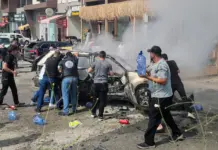
The rhetoric is not purely rhetorical. The Islamic Revolutionary Guard Corps and US warships have exchanged fire over transit rights in the strait in recent days, a development that underscores how quickly the diplomatic and military dimensions of the crisis are converging. Washington continues to enforce a naval blockade of Iranian ports and is reportedly weighing an expansion of its so-called "Project Freedom" operations in the region.
Against this volatile backdrop, diplomatic channels remain open — if contested. Draft agreement texts are being passed between Washington and Tehran through intermediaries, and a ceasefire between the parties was reached last month. Foreign Minister Abbas Araghchi travelled to China for high-level meetings last week, signalling that Tehran is actively managing its international relationships as talks proceed.
Yet the Iranian negotiating process is showing visible fractures. Mahmoud Nabavian, who was among dozens of team members participating in talks with the US held in Pakistan in April, has publicly called for Araghchi’s removal from the negotiation process. Mohammad Bagher Ghalibaf currently leads the Iranian negotiating team.
Parliamentary voices are adding further complexity. Ali Khezrian, a Tehran representative and member of the national security commission, stated flatly on Friday that Iran has not engaged in nuclear negotiations — a characterisation that appears to conflict with the documented exchange of agreement texts. Foreign Ministry spokesperson Esmaeil Baghaei confirmed on Saturday that Tehran is reviewing Washington’s latest proposal, but was emphatic that Iran does not operate according to American-imposed deadlines or timelines for its responses.
Iran Hormuz Blockade: Regional Implications
The diplomatic impasse has deep roots. The 2015 Joint Comprehensive Plan of Action, which curtailed Iran’s nuclear programme in exchange for sanctions relief, was unilaterally abandoned by US President Donald Trump in 2018. Efforts to revive or replace that framework have repeatedly stalled, and the current round of indirect talks represents one of the most significant attempts at engagement since the deal’s collapse.
Pro-establishment foreign policy analyst Mahdi Kharratiyan is among those watching the internal Iranian debate closely, as hardliners and pragmatists contest the terms and even the legitimacy of ongoing engagement with Washington. The outcome of that internal struggle may prove as consequential as any exchange of texts between the two governments.
With naval incidents multiplying in the strait, sanctions tightening, and Iran’s leadership sending conflicting signals, the coming weeks will test whether the diplomatic track can survive the pressure being applied from both sides.