Iraq Iran Sanctions Evasion — The United States Treasury Department has sanctioned Iraq’s Deputy Oil Minister Ali Maarij al-Bahadly, accusing him of playing a central role in a scheme that diverts Iraqi oil infrastructure to help Iran circumvent American sanctions and generate hard currency for its cash-strapped government.
Treasury Secretary Scott Bessent accused the Iranian regime of pillaging resources that rightfully belong to the Iraqi people, framing the sanctions as a defence of Iraqi sovereignty as much as a strike against Tehran’s finances. The designations, announced Thursday, also targeted senior figures within two prominent pro-Iran militia organisations operating inside Iraq.
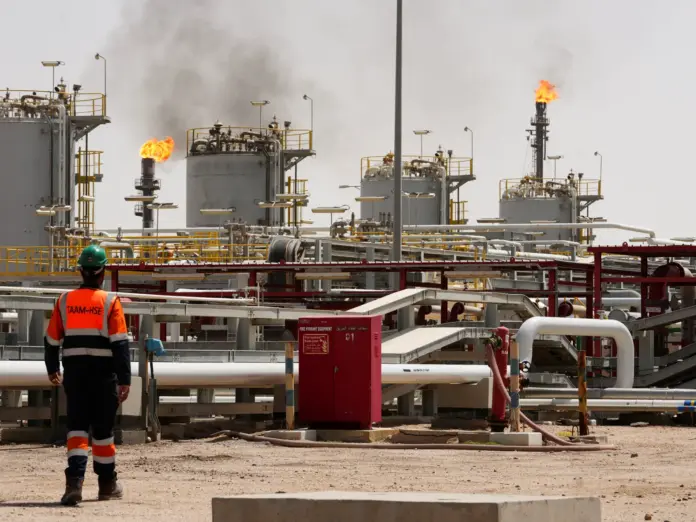
Al-Bahadly, who has served as Deputy Oil Minister since 2024, brings considerable institutional knowledge to the role. He previously chaired the Iraqi parliament’s oil and gas committee and held positions including head of the licensing and contracts office and acting minister within the oil ministry. The Treasury alleges he was instrumental in diverting Iraqi oil products to benefit an Iran-affiliated smuggler who relabelled Iranian crude as Iraqi in origin, allowing Tehran to sell its oil on international markets while evading the sanctions regime.
Recommended Reading
The mechanics of the alleged network are well-documented by analysts. Experts estimated in late 2024 that Iran generates at least $1 billion annually from operations that funnel Iranian fuel through Iraqi asphalt plants, blend it with genuine Iraqi oil, and export the mixture as a purely Iraqi product. Iran also obtains hard currency through legitimate exports to Iraq, bypassing restrictions on its banking system. Oil accounts for roughly 80 percent of Iranian exports and contributes approximately a quarter of the Iranian state budget, making these smuggling routes a critical financial artery for the government in Tehran.
Iraq’s own Oil Minister, Hayan Abdel-Ghani, acknowledged the problem as far back as March, stating that Iranian oil tankers had used forged Iraqi documents in attempts to avoid American sanctions — a rare public admission of the scale of the issue from within the Baghdad government.
Three additional individuals were sanctioned alongside al-Bahadly. Mustafa Hashim Lazim al-Behadili, identified as a leader and economic official for the Iran-backed Asa’ib Ahl al-Haq movement, is accused of controlling oil smuggling financing and negotiating contracts directly with the Islamic Revolutionary Guard Corps’ Quds Force. Ahmed Khudair Maksus Maksus and Mohammed Issa Kadhim al-Shuwaili, both described as senior officials within the pro-Iran militia Kata’ib Sayyid al-Shuhada, face accusations of involvement in illicit weapons purchases. Neither Iraq nor Iran had issued a formal response to the designations at the time of publication.
The sanctions arrive against a backdrop of deepening American engagement with Iraqi politics. President Donald Trump warned earlier this year that Washington would withdraw support for Baghdad if the pro-Iranian politician Nouri al-Maliki became Iraq’s prime minister. Al-Maliki subsequently withdrew from contention. Trump has since expressed backing for the new Iraqi Prime Minister-designate Ali al-Zaidi, signalling a concerted effort to pull Baghdad’s political centre of gravity away from Tehran’s orbit.
Iraq Iran Sanctions Evasion: Regional Implications
The broader strategic context is significant. Washington and Tehran remain locked in a confrontation over control of the Strait of Hormuz, the narrow waterway through which a substantial share of the world’s seaborne oil exports pass. Any disruption to that chokepoint carries enormous consequences for global energy markets, lending urgency to American efforts to cut off Iran’s alternative revenue streams.
Iraq and Iran share deep historical and political ties. Many of Iraq’s current political leaders spent years in Iran before the 2003 overthrow of Saddam Hussein, and the governing Coordination Framework bloc in Baghdad maintains close alignment with Tehran. That relationship has long complicated American efforts to enforce sanctions on Iran without destabilising a country where the US also has significant strategic interests.
Trump first imposed sweeping oil sanctions on Iran in 2018 after withdrawing from the multinational nuclear agreement with Tehran. The current round of designations represents a continuation and escalation of that maximum-pressure strategy, now targeting not just Iranian actors but Iraqi officials and militia figures accused of enabling sanctions evasion from within a nominally allied state.