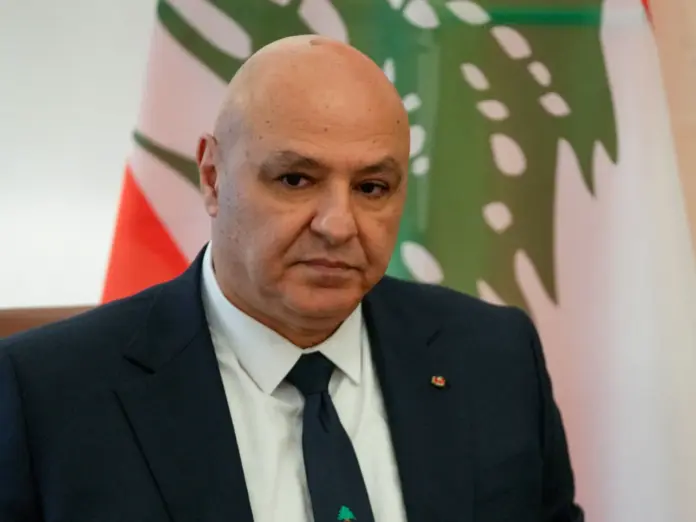
Lebanon Netanyahu Meeting — Lebanon’s President Joseph Aoun is navigating intense diplomatic pressure to hold a direct meeting with Israeli Prime Minister Benjamin Netanyahu, even as a fragile ceasefire teeters and Lebanese political leaders close ranks against any normalisation with Israel while fighting continues.
Aoun is scheduled to visit the White House in May, a trip that has become the focal point of US efforts to advance a broader security arrangement between Beirut and Tel Aviv. The two countries held their first direct negotiations in decades approximately one month before the planned visit — a significant, if limited, step. Those talks, however, were conducted between the Israeli and Lebanese ambassadors to the United States rather than senior officials, underscoring the cautious and constrained nature of the diplomatic opening.
Aoun has been unambiguous about his position. He stated publicly that now is not the right time to meet Netanyahu, insisting that a security agreement and a full end to Israeli attacks must precede any such encounter. His stance is echoed across Lebanon’s political establishment. Parliament Speaker Nabih Berri declared that negotiations with Israel cannot begin before the war ends, while Druze leader Walid Jumblatt said bluntly that Lebanon cannot negotiate while under fire.
Recommended Reading
The backdrop to these diplomatic manoeuvres is a conflict that has exacted a devastating toll. Israel launched its war on Lebanon in October 2023, the day after it began its campaign in Gaza. A ceasefire between Israel and Hezbollah was agreed in November 2024, but Israeli forces violated that agreement more than 10,000 times over the following 15 months.
The situation escalated sharply on March 2, when Hezbollah responded to Israeli attacks following the killing of Iranian Supreme Leader Ayatollah Ali Khamenei two days earlier. Since that date, Israeli strikes have killed almost 2,700 people in Lebanon, among them more than 100 healthcare workers. More than 1.2 million people have been displaced. A new ceasefire, announced by US President Donald Trump on April 16, is due to expire on May 17 — a deadline that lends the diplomatic calendar its current urgency.
Israel’s stated objective is the disarmament of Hezbollah, the Iranian-backed political and military organisation, arguing that such a step is essential to protect northern Israeli towns from future attacks. On March 2, the Lebanese government took the notable step of declaring Hezbollah’s military activities illegal — a significant political signal, though one that falls well short of the disarmament Israel demands. Hezbollah itself has consistently preferred indirect negotiations with Israel over direct talks.
The cultural temperature in Lebanon reflects the shifting political winds. A Lebanese television station broadcast a cartoon depicting Hezbollah fighters and the group’s leader, Naim Qassem, as characters from the mobile video game ‘Angry Birds’ — a piece of satire that would have been unthinkable in Lebanon’s recent past and that illustrates the erosion of Hezbollah’s domestic standing.
US Ambassador to Lebanon Michel Issa said he believed it would be beneficial for Aoun to lay out his terms directly to Netanyahu and for the Israeli leader to listen. Washington is clearly invested in using the White House visit as a catalyst. Yet analysts caution that Lebanon’s deep internal tensions make an Aoun-Netanyahu meeting in Washington highly unlikely in the near term.
Lebanon Netanyahu Meeting: Regional Implications
Saudi Arabia has also entered the diplomatic arena, with Saudi officials holding recent meetings with both Aoun and Berri in an effort to build consensus among Lebanese political figures. Riyadh has been working to align Lebanon with a broader Arab position that conditions any normalisation of relations with Israel on a clear and credible roadmap toward a Palestinian state — a framework that further complicates any bilateral Israeli-Lebanese breakthrough.
Israel’s conduct during its 2024 campaign drew additional criticism for what observers described as deliberate attempts to inflame sectarian divisions within Lebanon. The strategy, analysts noted, has had the paradoxical effect of pushing Lebanese factions toward a more unified, if fragile, front against Israeli pressure.
With the May 17 ceasefire expiry approaching and Aoun’s White House visit on the horizon, the coming weeks will test whether American diplomatic leverage can bridge a gap that Lebanon’s own leaders insist cannot be crossed under current conditions.