Adf Atrocities Congo — A major human rights investigation has exposed a pattern of brutal atrocities carried out by the Allied Democratic Forces (ADF) in eastern Democratic Republic of Congo, with the armed group accused of murder, mass abductions, sexual slavery, forced marriage and the deliberate targeting of civilians — including at a functioning hospital.
Amnesty International published the report on Monday under the title I'd Never Seen So Many Bodies: War Crimes by the Allied Democratic Forces in the eastern Democratic Republic of Congo. Researchers conducted interviews with 71 people across North Kivu province, including attack survivors, humanitarian workers and police officers, building a detailed account of systematic violence that has terrorised communities for years.
"Civilians in eastern DRC have suffered extensive brutality at the hands of ADF fighters," said Agnès Callamard, Amnesty International's Secretary General, whose organisation is now pressing Congolese authorities to act decisively to protect vulnerable populations.
Recommended Reading
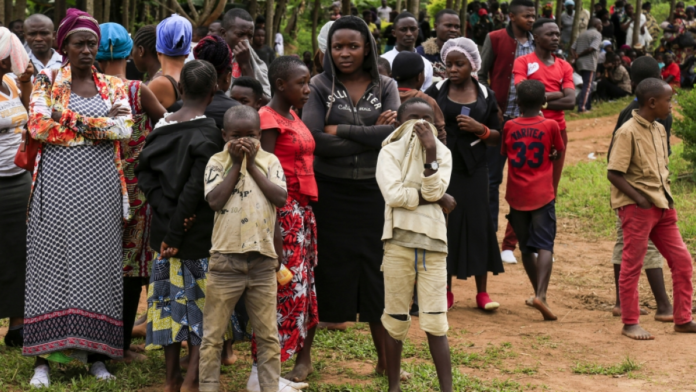
Among the most harrowing incidents documented was an attack on Ntoyo village in September 2025, in which ADF fighters disguised themselves as mourners attending a wake before turning on the gathered community. Armed with hammers, machetes, guns and axes, they killed more than 60 people. Two months later, fighters descended on Byambwe village, slaughtering at least 17 civilians and setting four wards of a church-run hospital on fire. One survivor described fighters who "shot anything that moved" inside the medical facility.
The report also documents 46 cases of abduction, with hostages subjected to torture, sexual slavery, forced labour and, in some instances, murder. Captives were forced to carry heavy loads for days on end, beaten repeatedly and given minimal food. Amnesty further recorded five women and two girls who had been forced into marriages with ADF fighters, compelled to convert to Islam under threat of death and subjected to ongoing sexual and physical violence.
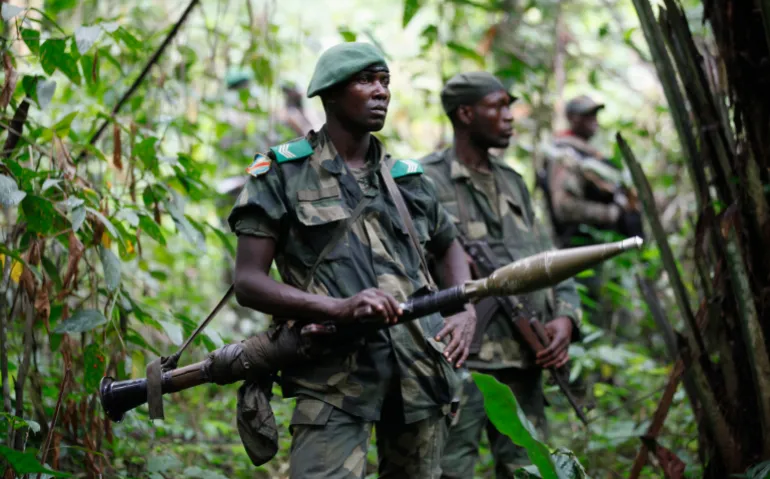
The ADF, which operates primarily in eastern DRC near the Ugandan border, has waged a years-long insurgency against the central government in Kinshasa. The group pledged allegiance to ISIS/ISIL — operating in the region as ISIS-Central Africa — in 2019, deepening international concern about its ideological alignment and operational reach. It has clashed repeatedly with the government's Armed Forces of the Democratic Republic of Congo (FARDC) and the United Nations stabilisation mission MONUSCO, though witnesses told Amnesty that security forces frequently arrived late to attack sites or failed to appear at all.
The humanitarian toll extends far beyond individual incidents. Repeated ADF offensives have driven mass displacement across parts of eastern DRC, severing communities from access to healthcare, food and education. The crisis is compounded by the parallel conflict involving the Rwanda-backed March 23 Movement (M23), which has further destabilised the region and deepened civilian suffering.
Adf Atrocities Congo: The Broader African Context
Amnesty International is urging the DRC government to overhaul its early warning systems to enable faster responses to attacks, and to collaborate with the UN and local communities on comprehensive civilian protection strategies. The organisation is also calling for the establishment of peace and reintegration programmes to help survivors and affected communities process trauma and rebuild.
The report arrives as eastern Congo remains one of the world's most acute humanitarian emergencies, with multiple armed groups operating across a vast and difficult terrain that has long challenged both national and international security efforts. The ADF's documented use of disguise, its targeting of hospitals and its systematic exploitation of abducted civilians mark it as one of the region's most dangerous non-state actors — and one that, Amnesty argues, demands an urgent and coordinated international response.