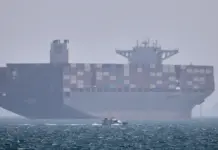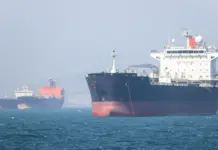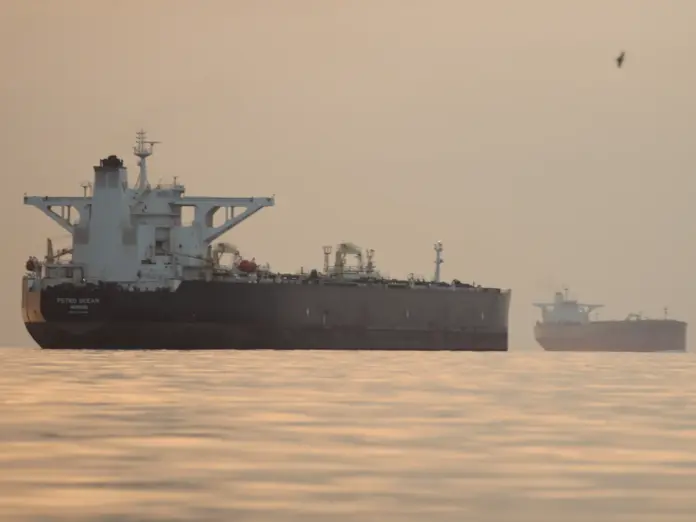
Iran Hormuz Blockade — President Donald Trump launched Project Freedom on Monday, ordering a large-scale US military escort operation to guide stranded commercial ships and oil tankers through the Strait of Hormuz, a move that drew an immediate threat from Tehran warning that American forces entering the waterway would be attacked.
The operation, announced at the request of countries whose vessels have been trapped in the strait, deploys 15,000 military personnel along with more than 100 land- and sea-based aircraft, warships, and drones under the command of US Central Command. Admiral Brad Cooper, CENTCOM’s commander, described the mission as essential to both regional security and the functioning of the global economy.
Trump stated that many of the stranded vessels are running critically low on food and supplies for their crews, and warned that any interference with the operation would be dealt with forcefully. The announcement marks a sharp reversal from his earlier posture: Trump had previously suggested he was comfortable with a status quo of competing blockades in the strait, arguing that the US siege was more effective than a bombing campaign.
Recommended Reading
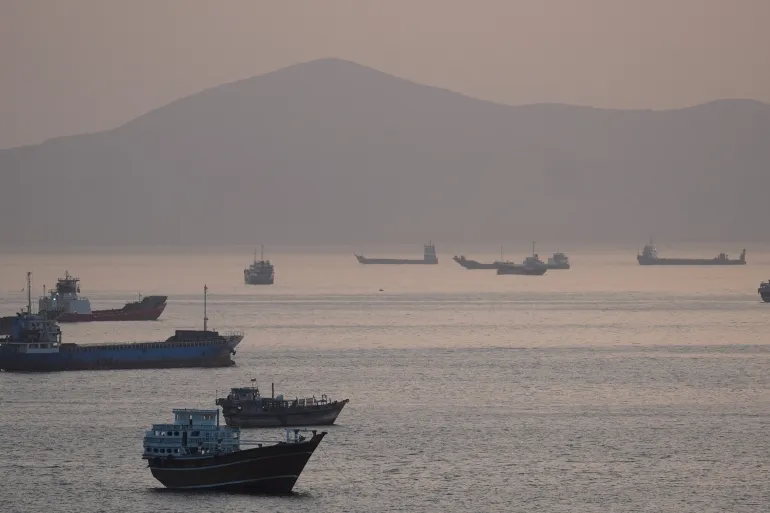
Iran responded swiftly and bluntly. Ali Abdollahi, head of Iran’s unified military command, issued a formal statement warning against any US entry into the strait. Iranian officials also instructed commercial ships and oil tankers to refrain from moving through the waterway unless they first coordinated with Iranian authorities, effectively asserting Tehran’s control over one of the world’s most critical maritime chokepoints.
Iranian officials framed the standoff in stark terms, stating that the war has fundamentally altered the situation in the Strait of Hormuz and that Iran intends to maintain control over the passage. Tehran views the US intervention as a violation of the ceasefire that came into effect on April 7, a position relayed from the Iranian capital.
Iran has been blocking nearly all non-Iranian shipping from the Gulf for more than two months, a blockade that has sent energy prices surging. The average price of petrol in the United States climbed to $4.44 per gallon, up from less than $3 before the conflict began, underscoring the economic pressure driving Washington’s decision to act.
The operation is not without its critics. Harlan Ullman, chairman of the Killowen Group and a former US naval officer, warned that Project Freedom carries serious escalation risks. Iran possesses large quantities of drones and small, fast craft that could significantly complicate any escort mission, he cautioned, raising the prospect of unpredictable engagements in a confined and heavily contested waterway.
Iran Hormuz Blockade: Regional Implications
The stakes extend well beyond the immediate military confrontation. The Strait of Hormuz serves as the transit point for roughly a fifth of the world’s oil supply, and a prolonged disruption has ripple effects across global energy markets, shipping insurance rates, and the broader international economy. Financial institutions have already flagged the uncertainty: major banks have cited Middle East instability as a key risk factor weighing on their outlooks.
The timing adds further complexity. The ceasefire between the US and Iran, which took hold less than a month ago, was widely seen as fragile. Project Freedom now tests whether that agreement can survive a direct confrontation over freedom of navigation — a principle Washington has long treated as non-negotiable. Trump’s warning that interference will be met with force leaves little diplomatic room for miscalculation on either side.
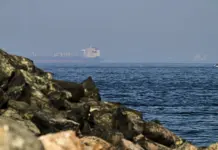
For the crews of the vessels currently stranded in the strait, the operation offers a potential lifeline. For the broader international community watching oil prices, shipping routes, and the durability of a tenuous ceasefire, the coming days in the Strait of Hormuz may prove decisive.