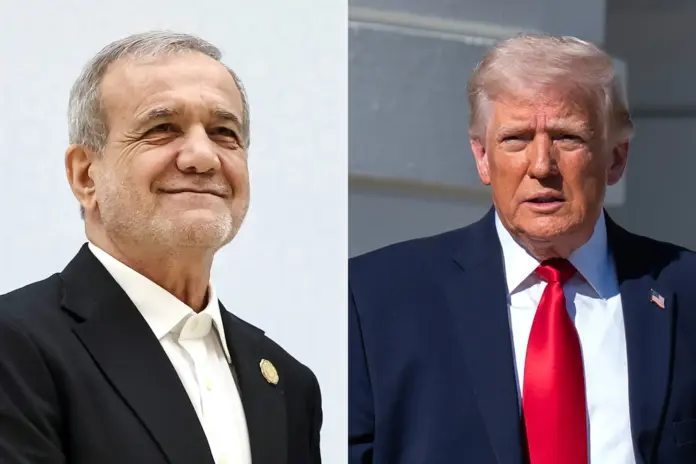
Iran has put forward a diplomatic proposal to reopen the Strait of Hormuz — the critical chokepoint through which one-fifth of the world’s oil and liquefied natural gas supplies flow in peacetime — in exchange for the United States lifting its naval blockade on Iranian ports and bringing the war to an end. The offer, transmitted to Washington through Pakistan, which has assumed the role of mediator, marks a significant, if contested, step toward ending a conflict that has killed thousands and sent global energy prices into turmoil.
The proposal also calls for postponing any discussions on Iran’s nuclear programme until after hostilities cease — a condition that has drawn immediate resistance from the Trump administration. President Donald Trump convened a meeting with senior security advisers on Monday to review the Iranian offer, and a US official indicated he was dissatisfied with the terms precisely because they excluded nuclear provisions. The administration subsequently signalled it would not accept the proposal in its current form.
Secretary of State Marco Rubio, speaking on Fox News, offered a measured but firm response. ‘It is better than what we thought they were going to submit,’ he said, while insisting that any final agreement must ‘definitively prevent’ Iran from ‘sprinting towards a nuclear weapon at any point.’ The dual message — cautious acknowledgement paired with a firm red line — reflects the administration’s difficult balancing act between ending a costly conflict and maintaining pressure on Tehran’s atomic ambitions.
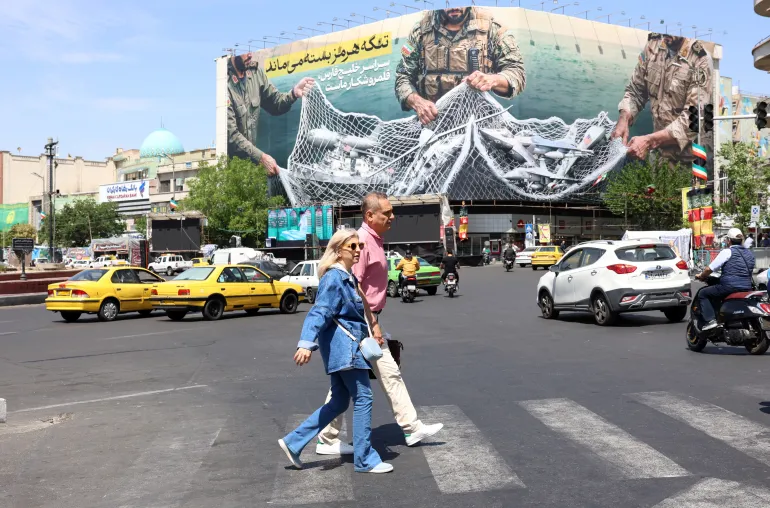
The backdrop to the proposal is a war that has reshaped the region’s strategic landscape. A ceasefire between the US-Israel alliance and Iran took effect on April 8, but days later, Trump announced a sweeping blockade on Iranian ports and vessels, dramatically escalating economic pressure on Tehran. Iran responded by effectively closing the Strait of Hormuz to commercial shipping, a move that has driven up global energy prices and disrupted supply chains worldwide. The waterway, which connects the Persian Gulf to the Arabian Sea, is among the most consequential maritime corridors on earth.
Iranian state media, citing the Fars News Agency, confirmed that messages exchanged through intermediaries addressed Tehran’s core red lines, including both nuclear issues and the status of the Strait. Amir Saeid Iravani, Iran’s envoy to the United Nations, has been a central figure in articulating Tehran’s position on the international stage.
Analysts are divided on what the proposal signals about Iran’s strategic calculus. Abas Aslani, a senior research fellow at the Centre for Middle East Strategic Studies, described the offer as reflecting an ‘altered’ approach — a deliberate departure from earlier frameworks that centred on nuclear compromises in exchange for sanctions relief. Iran, he suggested, is now seeking to decouple the nuclear file from the immediate crisis.
Negar Mortazavi, a senior fellow at the Center for International Policy and host of The Iran Podcast, offered historical context. She noted that Tehran successfully negotiated a landmark nuclear agreement with the Obama administration, a process that required two years of intensive diplomacy. Trump’s tolerance for protracted nuclear negotiations, she observed, has been ‘very short’ — both in the previous year and in the current period — raising questions about whether the two sides can bridge their differences before the situation deteriorates further.
International concern is mounting. German Chancellor Friedrich Merz, speaking on Monday, acknowledged that ‘the Iranians are negotiating very skilfully,’ a remark that underscored European unease about the trajectory of the conflict. Mohamed Elmasry, an analyst at the Doha Institute of Graduate Studies, was more blunt, stating that Europeans are losing patience with the ongoing crisis and its cascading economic consequences.
The closure of the Strait of Hormuz has reverberated far beyond the Gulf. Energy markets have been thrown into disarray, with the disruption compounding existing inflationary pressures across Europe, Asia, and the Americas. The waterway’s strategic importance cannot be overstated: in normal times, it serves as the primary export route for the majority of Gulf oil producers, making its closure one of the most consequential acts of economic warfare available to Tehran.
Whether Washington and Tehran can find a formula that satisfies both sides’ core demands remains deeply uncertain. The US insists that any deal address Iran’s nuclear programme in concrete terms; Iran insists that the nuclear question be set aside until the guns fall silent. Bridging that gap — with global energy markets hanging in the balance — will require a level of diplomatic creativity and political will that, so far, neither side has fully demonstrated.