More than 2,800 people are being held in Rapid Support Forces (RSF) detention facilities across el-Fasher in Sudan’s western Darfur region, the Sudan Doctors Network reported Monday, with detainees enduring what the organisation described as dire conditions marked by disease, torture, and ethnically motivated killings.
Among those held are 1,470 civilians, 907 military personnel, 370 women, and 426 children. Twenty doctors are also in custody — a loss that has created a critical shortage of medical personnel and supplies across the city. Detainees are confined in facilities including Shalla Prison, a children’s hospital repurposed for detention, and cargo containers.
A cholera outbreak has swept through the detention centres since early February, driven by poor sanitation, a lack of clean water, and widespread malnutrition. The Sudan Doctors Network says the RSF is committing severe violations inside these facilities, including killings during torture and interrogation sessions, as well as killings that appear to be motivated by ethnicity.
El-Fasher fell to the RSF in late October, ending its status as the last stronghold of Sudan’s Armed Forces (SAF) in Darfur. Its capture marked a significant strategic blow to the government military and deepened an already catastrophic humanitarian emergency across the region.
The revelations come months after UN-backed independent experts warned in February that the RSF had carried out what they described as a coordinated campaign of destruction targeting non-Arab communities in and around el-Fasher — a campaign they said bore the hallmarks of genocide. Those findings have intensified international alarm over the trajectory of Sudan’s civil war.
The conflict erupted in April 2023 when a long-simmering rivalry between Sudan’s de facto leader Abdel Fattah al-Burhan and RSF commander Mohamed Hamdan Dagalo, widely known as ‘Hemedti’, exploded into open warfare. In the nearly two years since, the fighting has killed hundreds of thousands of people and displaced millions more. The United Nations has designated the resulting humanitarian crisis as the worst in the world.
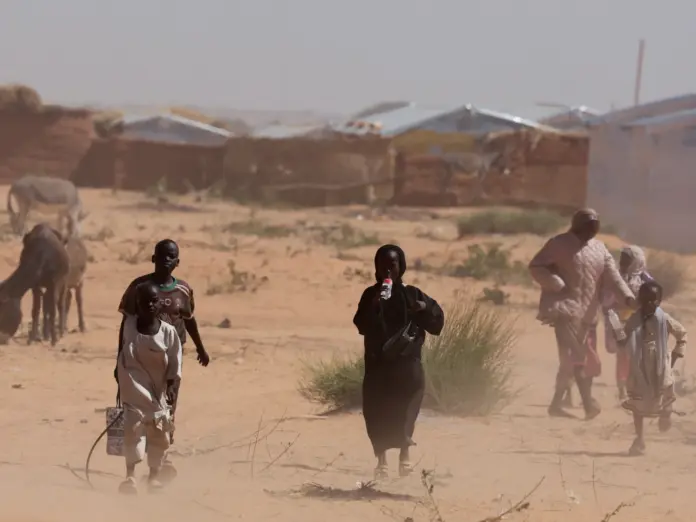
Violence is not confined to el-Fasher. A Sudanese army strike on the Hamidiyah camp for displaced people near Zalingei, the capital of Central Darfur state, killed six people and wounded dozens more. The camp shelters thousands of displaced civilians, the majority of them women and children, making the strike a further blow to a population already pushed to the margins of survival.
The detention of medical professionals has compounded the suffering of those still living in el-Fasher. With 20 doctors removed from service, the city’s capacity to treat the sick and wounded has collapsed at precisely the moment demand is highest. The Sudan Doctors Network called the medical situation critical, warning that the combination of disease outbreaks in detention facilities and the absence of qualified healthcare workers risks a broader public health catastrophe.
International pressure on the RSF has mounted steadily since the fall of el-Fasher, but concrete intervention has remained elusive. The scale of documented abuses — mass detention, torture, ethnically targeted killings, and the weaponisation of disease through deliberate deprivation — has led human rights observers to call for urgent accountability mechanisms. UN experts have already placed their findings on record; whether those findings translate into formal legal proceedings remains an open question.
Sudan’s civil war shows no sign of abating. With Darfur largely under RSF control and the humanitarian infrastructure of the region in ruins, the population of el-Fasher and surrounding areas faces a compounding crisis with few avenues for relief. Aid organisations have repeatedly warned that access to affected communities remains severely restricted, limiting the ability to document abuses or deliver assistance to those most in need.