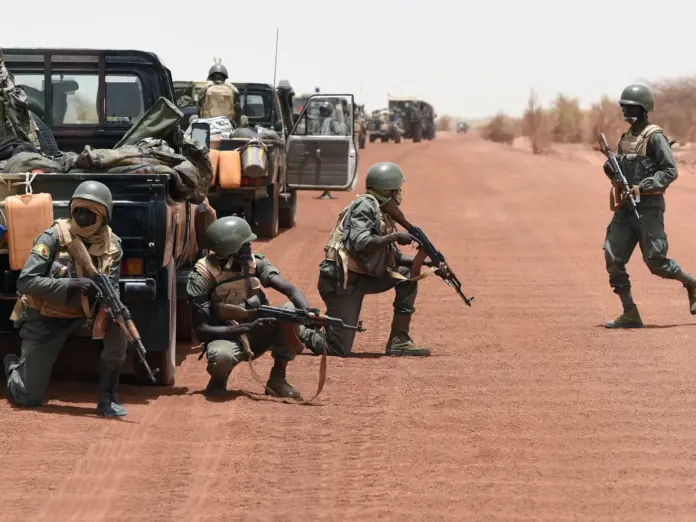
Mali’s military government faced its gravest security crisis in years over the weekend as Jama’at Nusrat al-Islam wal-Muslimin (JNIM) and the Azawad Liberation Front (FLA) launched simultaneous, coordinated attacks across the country — killing the defence minister, seizing the northern city of Kidal, and forcing Russian paramilitary forces into a humiliating retreat.
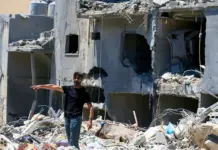
Defence Minister Sadio Camara was killed in what appeared to be a suicide truck bombing targeting his residence in Kati, a town on the outskirts of the capital Bamako that houses one of Mali’s most significant military installations. Explosions and sustained gunfire reverberated through multiple cities on Saturday, with strikes reported in Bamako itself, the central urban centres of Sevare and Mopti, and the northern cities of Gao and Kidal.
JNIM claimed responsibility for the coordinated assault, which it described as a broad offensive against military sites nationwide. The group simultaneously announced, in coordination with the FLA, the capture of Kidal — a Tuareg stronghold in the far north that has long served as an unofficial headquarters of the separatist movement. Fighting resumed in the city on Sunday as the full scale of the offensive became clear.
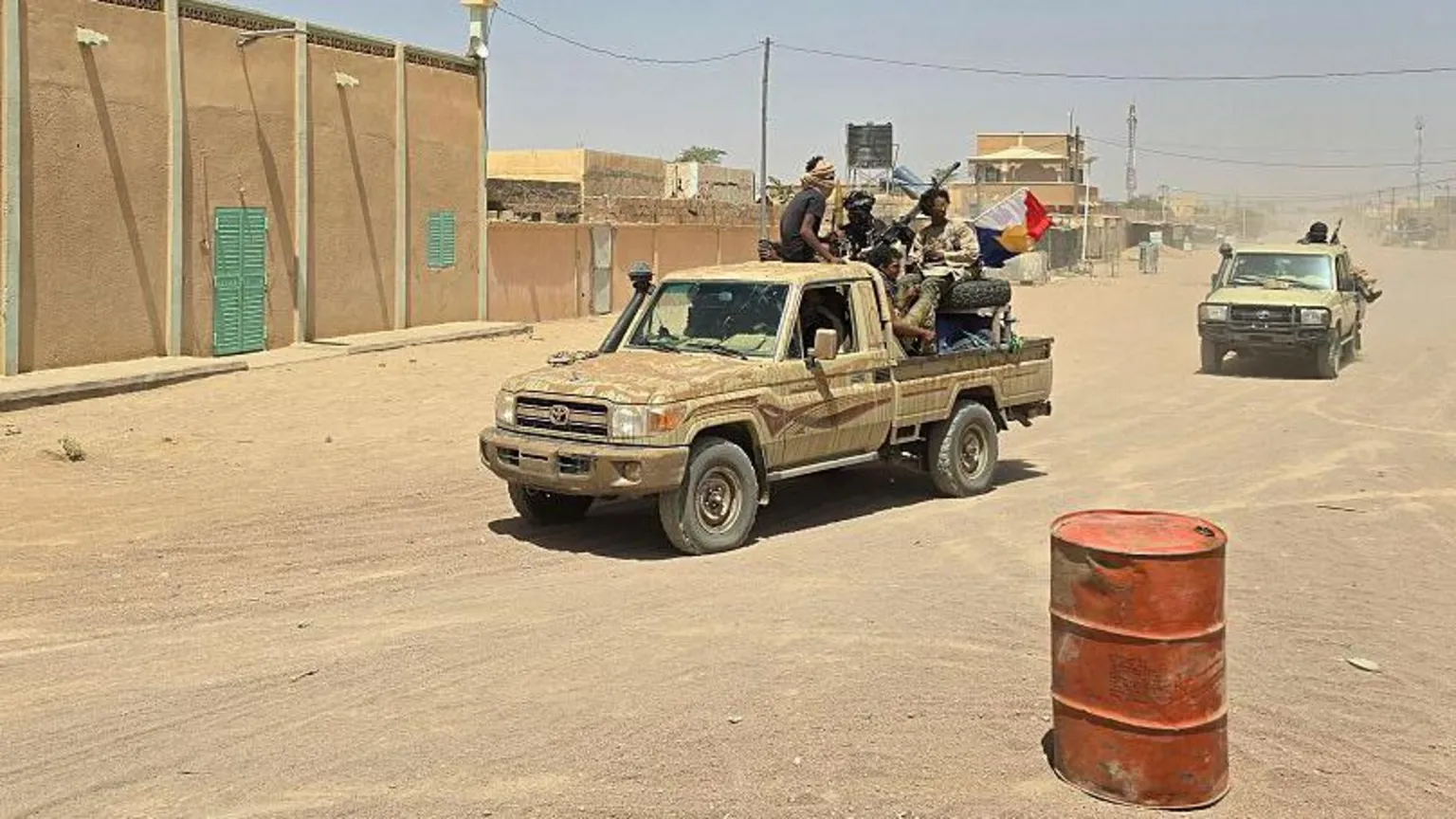
The Russia Africa Corps, the Kremlin-backed paramilitary force that replaced the Wagner Group in Mali, confirmed it had withdrawn from Kidal alongside Malian army units. The group announced the pullout via social media, stating that evacuated personnel included the wounded, and that heavy equipment had also been removed. FLA spokesman Mohamed Elmaouloud Ramadane said a negotiated agreement had been reached with the Africa Corps to ensure a safe withdrawal. The paramilitary force stressed that operations would continue in other parts of Mali.
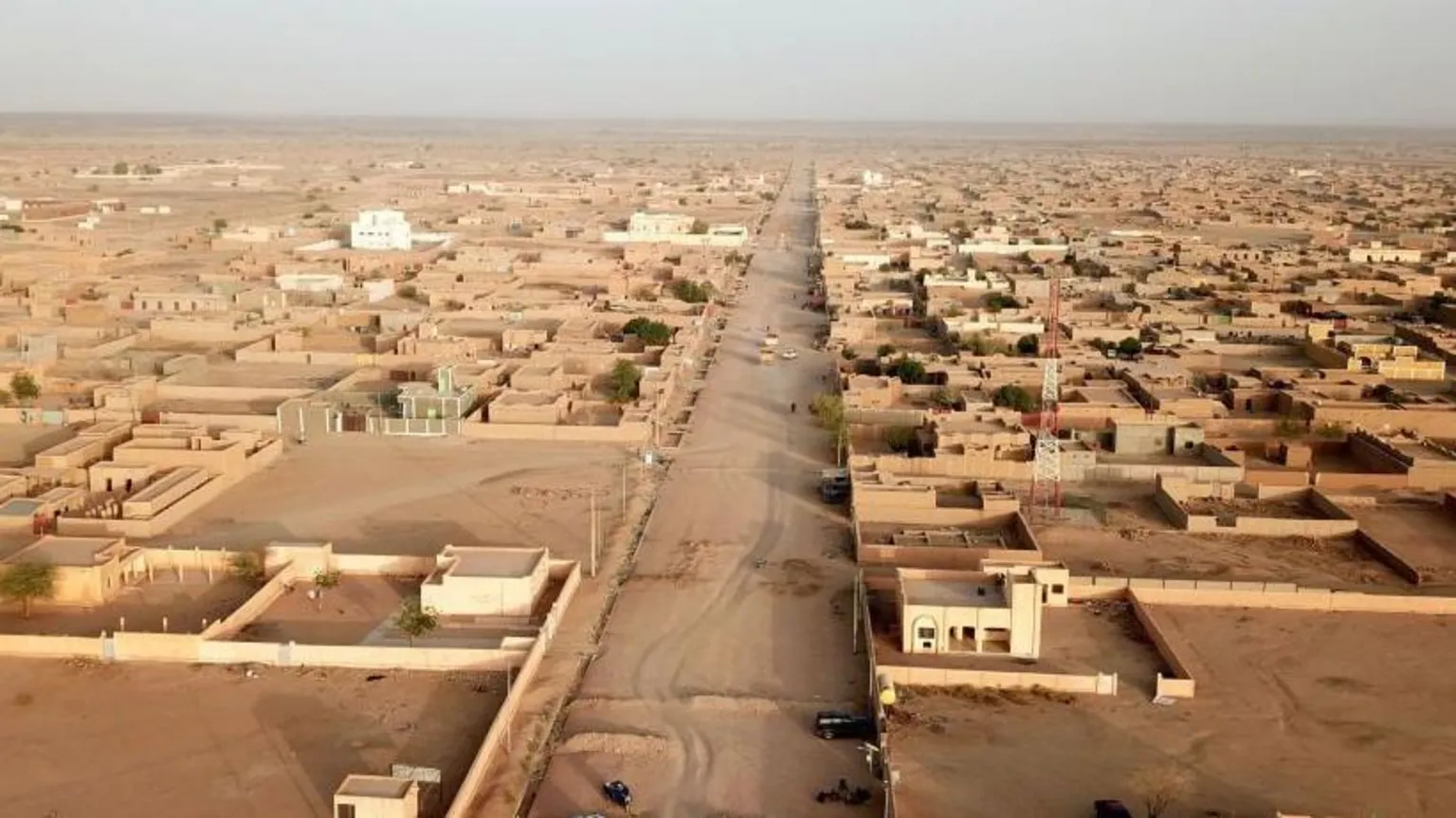
The loss of Kidal carries particular symbolic weight. Mali’s army, backed by Russian mercenaries, had seized the city from separatist forces only in late 2023 — a moment the military junta had celebrated as a landmark victory. Its recapture by the FLA within roughly a year underscores the fragility of those gains.
JNIM, formed in 2017 as a coalition uniting the Saharan branch of Al-Qaeda in the Islamic Maghreb (AQIM) with Malian armed factions including Ansar Dine, Al-Murabitun and Katiba Macina, commands an estimated 10,000 fighters under the leadership of Iyad Ag Ghali, who founded Ansar Dine in 2012. The group has steadily expanded its reach across the Sahel. In September 2024, it struck Bamako’s international airport and an elite police training academy, killing dozens. A month earlier, in October 2023, it had imposed a crippling economic blockade by sealing off key highways and targeting fuel tankers — a particularly damaging tactic for a landlocked nation dependent on fuel imports from Senegal and Ivory Coast.
The FLA, a Tuareg-dominated coalition of separatist forces established in 2024 and led by Alghabass Ag Intalla, seeks an independent state across the northern territories historically inhabited by ethnic Tuaregs. Despite a history of rivalry with JNIM — clashes between the two were reported as recently as 2019 and 2020 — the groups demonstrated a capacity for tactical alignment in July 2024, when they jointly ambushed a Malian army convoy near Tinzaouaten, inflicting casualties on both Malian and Russian personnel.
The attacks drew swift international condemnation. The African Union, the Organisation of Islamic Cooperation and the United States Bureau of African Affairs all denounced the violence.
Mali’s military ruler Assimi Goita, who came to power in a 2020 coup, has staked his government’s security strategy on the Russian partnership. After expelling French forces in 2023 — ending more than a decade of European military engagement — he invited Russian mercenaries in December 2021. Following the death of Wagner leader Yevgeny Prigozhin in 2023 and the subsequent absorption of most Wagner operations by the Russian defence ministry, the Africa Corps emerged as the operational successor. Overseen by Deputy Defence Minister Yunus-Bek Yevkurov and run operationally by GRU military intelligence figure Maj-Gen Andrey Averyanov, the force has been accused of widespread atrocities against civilians. Russia’s involvement has been rewarded with access to Mali’s considerable natural resources, including gold, diamonds and uranium.
The weekend’s events expose the limits of that arrangement. Mali, which along with Niger and Burkina Faso broke from the Economic Community of West African States (ECOWAS) to form the Alliance of Sahel States, now confronts a two-front insurgency with its most senior military official dead, its Russian partners in retreat, and a northern city once again beyond government control. Since 2012, when Tuareg rebels allied with jihadist groups to launch the rebellion that triggered the country’s first modern coup cycle, Mali has struggled to impose lasting order. That struggle, more than six decades after independence from France, appears far from over.