NEW YORK — The Treaty on the Non-Proliferation of Nuclear Weapons (NPT) review conference opened on April 27 in New York, bringing together all 191 state parties to assess the health of an accord that has underpinned global nuclear governance since entering into force in 1970. The gathering, held every five years, arrives at a moment of acute tension over Iran’s nuclear programme, the unresolved status of Israel’s nuclear capabilities, and the slow pace of disarmament among the five recognised nuclear-weapon states.
The NPT’s architecture rests on a foundational bargain: the United States, United Kingdom, France, China, and Russia — the five recognised nuclear-weapon states — committed to curbing the spread of nuclear arms and pursuing the eventual elimination of their own stockpiles. Non-nuclear-weapon states, in turn, agreed never to acquire such weapons, accepting oversight from the International Atomic Energy Agency (IAEA) in exchange for access to peaceful nuclear technology.
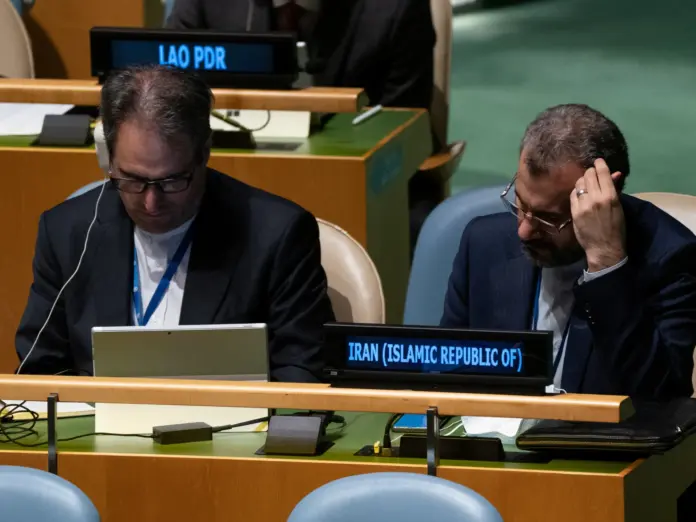
More than fifty years on, that bargain is under strain. Iran, a non-nuclear-weapon state party to the treaty, has become the conference’s most contentious flashpoint. The IAEA has raised serious concerns about unresolved safeguards issues, restricted access for inspectors, and uranium enrichment levels that exceed any plausible civilian requirement. Tehran, for its part, submitted working papers to the conference invoking Article IV of the NPT — the provision guaranteeing all signatories the right to develop peaceful nuclear technology — framing its programme as entirely lawful.
The evidentiary picture, however, is complicated. The IAEA has not established the existence of a structured nuclear weapons programme in Iran, a conclusion independently confirmed by United States intelligence assessments. Yet the gap between what Iran’s enrichment activities suggest and what it acknowledges remains a source of deep unease among Western delegations and regional neighbours alike.
Both the United States and Israel have conducted military strikes against Iranian targets, publicly justified in part by the imperative to prevent Tehran from acquiring nuclear weapons. Those actions have drawn sharp criticism from Iran and a number of non-aligned states, who argue they constitute violations of international law and undermine the diplomatic framework the NPT is meant to sustain.
Israel’s own nuclear status casts a long shadow over the proceedings. Widely regarded as an unofficial nuclear-armed state, Israel is not a party to the NPT and has never formally acknowledged possessing nuclear weapons — a posture of deliberate opacity that critics argue creates a fundamental imbalance in the Middle East’s security architecture. The promise of a Middle East free of nuclear weapons and other weapons of mass destruction, repeatedly affirmed in past NPT review cycles, remains entirely unfulfilled, a fact that non-nuclear states in the region continue to cite as evidence of the treaty’s selective application.
The conference also confronts the broader question of whether the nuclear-weapon states are honouring their disarmament commitments. Progress on that front has been negligible, and in some respects reversed, as modernisation programmes across multiple arsenals accelerate. For many non-nuclear-weapon states, the asymmetry between the obligations imposed on them and the inaction of the nuclear powers represents the treaty’s most corrosive long-term problem.
The IAEA’s dual role — promoting peaceful nuclear applications while enforcing safeguards — places it at the centre of the conference’s most difficult debates. The agency’s inability to fully verify Iran’s nuclear history, combined with Tehran’s restrictions on inspector access, has left a cloud of ambiguity that neither diplomacy nor pressure has yet managed to dispel.
With the review conference taking place on American soil, the United States faces particular scrutiny over its own record on disarmament and its willingness to press allies — Israel foremost among them — to accept the same nonproliferation standards applied to adversaries. The outcome of the New York gathering will offer a measure of whether the NPT, after more than half a century, retains the political authority to manage the world’s most dangerous weapons — or whether its credibility is eroding under the weight of unmet promises and double standards.