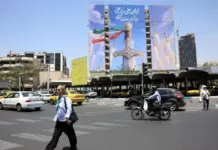
Ten years after world powers gathered to sign one of the most technically complex arms control agreements in modern history, the architecture of the Joint Comprehensive Plan of Action (JCPOA) lies in ruins — and Iran’s nuclear programme has advanced further than at any point before the deal was struck.
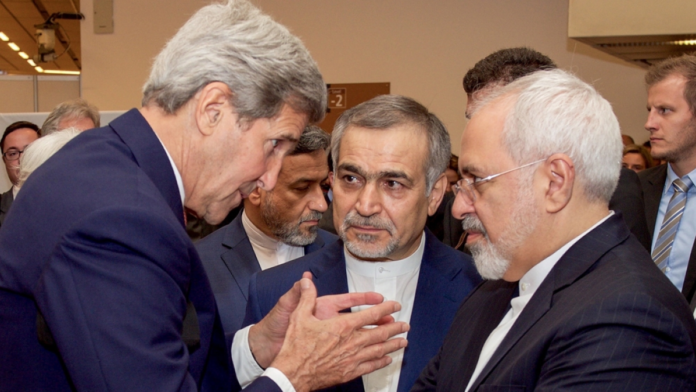
The JCPOA, reached on July 14, 2015, was the product of nearly two years of painstaking negotiations involving hundreds of technical and legal specialists. It brought together Iran, the European Union, and six major powers — China, France, Russia, the United Kingdom, the United States, and Germany — in a framework that imposed sweeping restrictions on Tehran’s nuclear activities in exchange for relief from crippling economic sanctions.
The agreement’s terms were stringent. Iran slashed its enriched uranium stockpile by approximately 98 percent, reducing it to less than 300 kilograms. Uranium enrichment was capped at 3.67 percent purity, a fraction of the 90 percent threshold required for weapons-grade material. The number of operational centrifuges was cut from roughly 20,000 to a maximum of 6,104, confined to just two facilities. Iran’s Arak heavy water reactor was redesigned to eliminate its capacity to produce plutonium. The International Atomic Energy Agency (IAEA) implemented one of the most intrusive inspection regimes it had ever deployed, and verified Iran’s compliance — including a full year after the deal began to unravel.
That unravelling began in 2018, when President Donald Trump withdrew the United States from the agreement during his first term, having repeatedly denounced it as "the worst deal ever." Washington reimposed sweeping economic sanctions under a policy Trump labelled "maximum pressure." By mid-2019, Tehran began incrementally breaching the deal’s limits, first on stockpile volumes, then on enrichment levels.
The consequences have been stark. By December 2024, the IAEA reported Iran was enriching uranium to 60 percent purity. By 2025, the agency estimated Iran held 440 kilograms of uranium enriched to that level. In November 2024, Tehran announced plans to activate new advanced centrifuges and install more than 6,000 additional units — a figure that would far exceed the JCPOA’s ceiling.
Despite the alarming trajectory, Tulsi Gabbard, the US Director of National Intelligence, testified before Congress in March 2025 that Washington’s assessment remains that Iran is not currently constructing a nuclear weapon. Iranian President Masoud Pezeshkian has insisted that Trump had no right to "deprive" Iran of what he described as its nuclear rights.
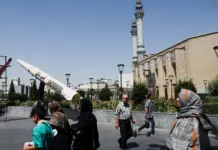
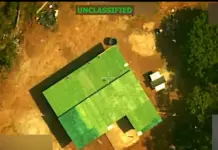
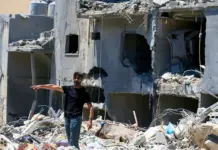
The diplomatic deadlock has been shadowed by open military conflict. A 12-day war between Iran and Israel in June of the previous year killed more than 1,000 people and included strikes on Iranian nuclear sites. During that conflict, several Iranian missiles penetrated Israel’s Iron Dome defence system. A subsequent and more intensive campaign launched on February 28 saw attacks on the Natanz enrichment facility, the Isfahan nuclear complex, the Arak heavy water reactor, and the Bushehr nuclear power plant — striking at the very infrastructure the JCPOA had sought to constrain through diplomacy.
The JCPOA’s critics had long pointed to its omissions. The agreement placed no limits on Iran’s ballistic missile development, though a United Nations resolution adopted alongside the deal in July 2015 stipulated that Iran could not conduct activity related to ballistic missiles designed to carry nuclear warheads. The US and Israel have also pressed Tehran to cease its support for Hezbollah in Lebanon, the Houthis in Yemen, and armed proxy groups operating in Iraq — demands that fall entirely outside the nuclear framework.
The trajectory from the JCPOA’s signing to the present day illustrates the fragility of multilateral arms control when political will fractures. A deal that took two years and hundreds of specialists to construct was dismantled by a single executive decision. What has followed — escalating enrichment, military strikes, and deepening regional instability — underscores the cost of that collapse, and the formidable obstacles facing any future attempt at a negotiated settlement.