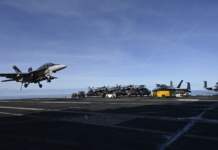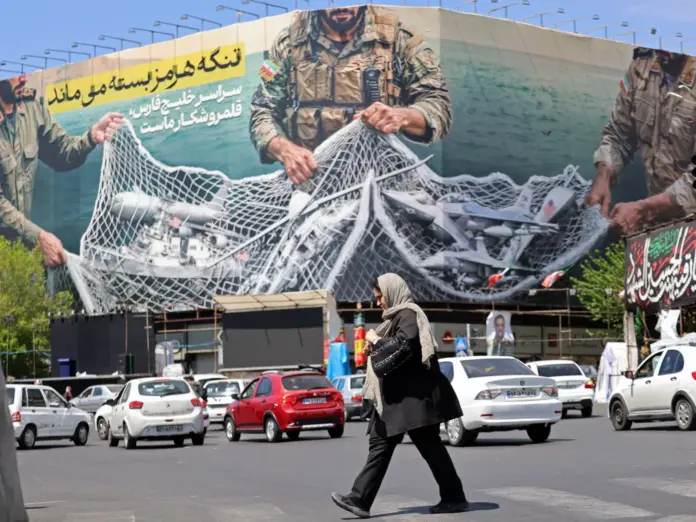
Iran and the United States are racing against a Wednesday ceasefire expiry with no deal in sight, as the Islamic Revolutionary Guard Corps reimposed restrictions on the Strait of Hormuz less than 24 hours after reopening it — ratcheting up pressure on already fragile diplomatic efforts.
Mohammad Bagher Ghalibaf, speaker of Iran’s parliament, acknowledged that the two sides had made some progress but remained far from any final agreement. He warned that Iranian forces stood fully prepared for the United States to resume hostilities at any moment, and dismissed Washington’s naval blockade of Iranian ports as "ignorant and foolish." Tehran’s position, he said, was unambiguous: if Iranian ships were barred from transiting the strait, no other nation’s vessels would be permitted through either.
The IRGC cited the ongoing US naval blockade of Iranian ports as the direct justification for reimposing the Hormuz restrictions — a move with immediate global consequences. Approximately 20 percent of all oil traded worldwide passes through the narrow waterway, making it one of the most strategically sensitive chokepoints on earth.
Iranian President Masoud Pezeshkian sharpened Tehran’s rhetorical posture, arguing that US President Donald Trump had no legitimate basis for denying Iran its nuclear rights. The statement underscored the depth of the ideological divide separating the two delegations, even as back-channel contacts reportedly continue.
Trump, for his part, struck a characteristically contradictory tone. He accused Iran of getting "a little cute" on the Strait of Hormuz and declared the United States would not be blackmailed, while simultaneously insisting that negotiations were "working out really well" and that American and Iranian officials remained in contact. He issued a stark ultimatum: if no deal was reached by Wednesday, the US would have to "start dropping bombs again."
The first formal round of talks concluded on April 12 in Islamabad without an agreement. The White House indicated a second round would likely also be held in the Pakistani capital, though the timing remains uncertain. Iran’s deputy foreign minister complicated the scheduling further on Saturday, stating that no date for new talks could be set until both sides agreed on a basic framework of understanding. He also accused Washington of maintaining a maximalist stance — a characterisation that aligns with broader Iranian complaints about the negotiating dynamic.
Abbas Aslani, a senior fellow at the Centre for Middle East Strategic Studies in Tehran, described the situation as a deliberate dual-track strategy by Washington — applying simultaneous pressure while keeping diplomatic channels nominally open. Analysts see no signs that the ceasefire will be extended, leaving both governments with little room to manoeuvre before the deadline.
The future of Iran’s nuclear programme and control over the Strait of Hormuz have emerged as the two central sticking points. Tehran insists its civilian nuclear activities are a sovereign right; Washington has demanded sweeping restrictions. Neither side has publicly indicated willingness to move significantly from its stated position.
The economic stakes are considerable. Oil prices have already fallen sharply in recent weeks, dropping below $91 per barrel — a decline partly attributed to uncertainty surrounding the negotiations. Any prolonged closure of the Strait of Hormuz would send shockwaves through global energy markets, affecting importers from Europe to Asia. Japan, notably, holds a buffer stockpile of approximately 35 million barrels, providing some insulation against a short-term disruption.
With the ceasefire clock winding down, the coming 48 hours will test whether the diplomatic architecture built around the Islamabad talks can withstand the mounting pressure from both capitals — or whether the region slides back toward open confrontation.