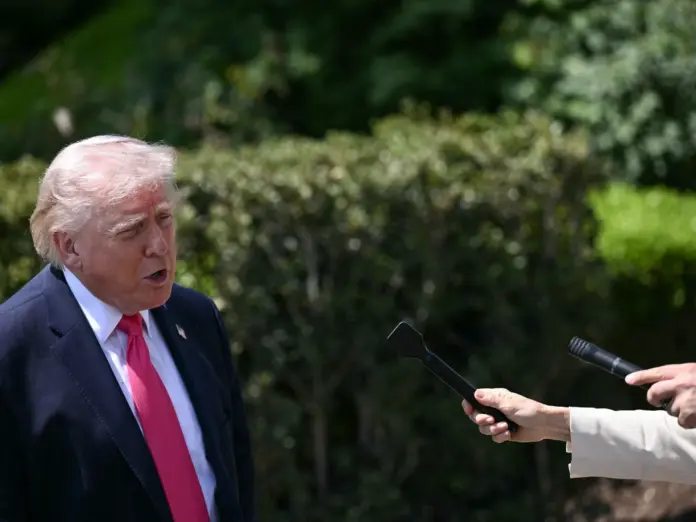
WASHINGTON / ISLAMABAD — President Donald Trump declared Thursday that the United States is on the verge of a landmark nuclear agreement with Iran, suggesting a deal could be finalised as soon as this weekend and raising the prospect of a historic signing ceremony in Islamabad. The announcement came as Pakistan’s army chief conducted an intensive round of shuttle diplomacy in Tehran, underscoring Islamabad’s emergence as the principal intermediary in one of the most consequential diplomatic negotiations in years.
Speaking at the White House, Trump said Iran had agreed to hand over its stockpile of enriched uranium — a claim that has not been confirmed by any Iranian official. Iran holds an estimated 440 kilograms, roughly 970 pounds, of highly enriched uranium. Trump also referenced US strikes conducted in June of the previous year using B-2 stealth bombers, a reminder of the military pressure underpinning the diplomatic push. He said he would consider travelling to Islamabad personally if an agreement were signed there.
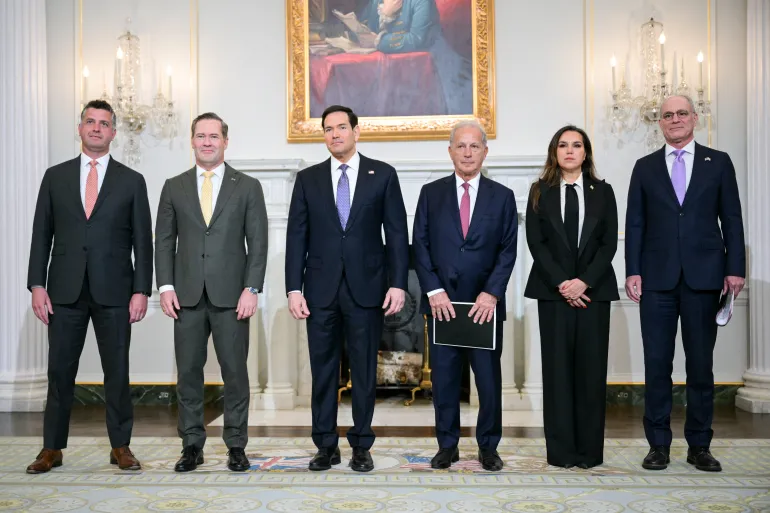
White House spokesperson Karoline Leavitt reinforced that framing, stating that any further in-person negotiations would most likely take place in the Pakistani capital.
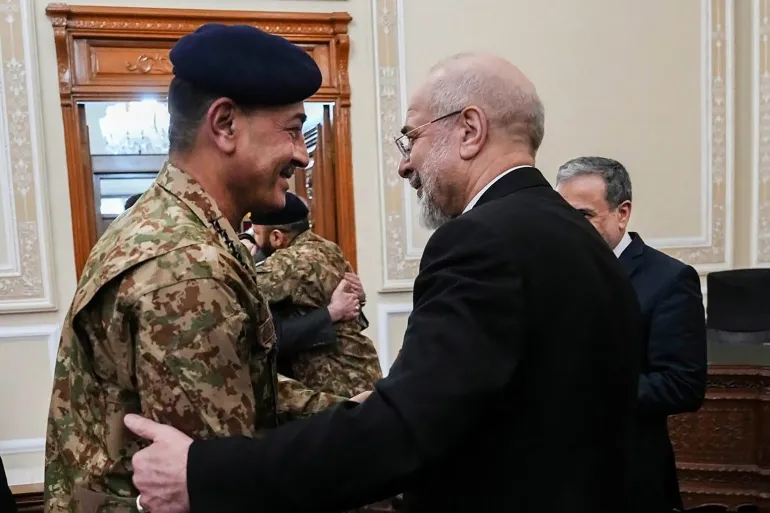
On the ground in Tehran, Field Marshal Asim Munir, Pakistan’s army chief, held a series of high-level meetings Thursday with Iranian Parliament Speaker Mohammad Bagher Ghalibaf, President Masoud Pezeshkian, and Major-General Ali Abdollahi. The meetings signal the depth of Islamabad’s involvement in brokering what could be a transformative agreement. Pakistan delivered a 15-point proposal to Tehran on March 25 calling for an end to Iran’s nuclear programme, curbs on its missile capabilities, the reopening of the Strait of Hormuz, and a halt to Iranian support for regional proxy groups.
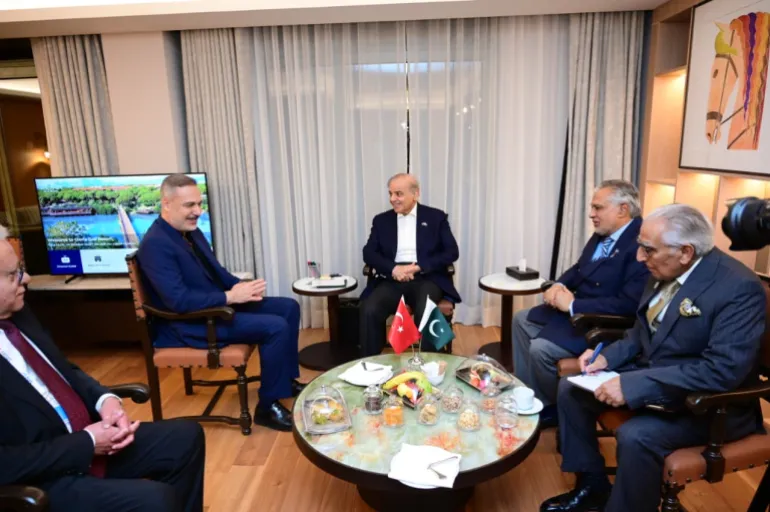
Simultaneously, Prime Minister Shehbaz Sharif was conducting his own diplomatic circuit, meeting Gulf leaders in Saudi Arabia and Qatar before arriving at Turkey’s Antalya Diplomacy Forum on Thursday evening — a coordinated effort to build regional consensus around a potential deal.
Despite Trump’s optimistic tone, Iran’s position remains considerably more guarded. Foreign Ministry Spokesperson Esmaeil Baghaei confirmed that messages were being exchanged through Pakistan but was explicit that Tehran’s negotiating posture had not shifted on a core issue. Iran, Baghaei stated, ‘based on its needs, must be able to continue enrichment.’ That stance stands in direct tension with Trump’s assertion that Iran has agreed to relinquish its enriched uranium.
The two sides also remain far apart on the duration of any enrichment freeze. The United States has proposed a 20-year moratorium on enrichment activity; Iran has countered with a five-year offer — a gap that negotiators would need to bridge before any agreement could be formalised.
Complicating the diplomatic picture further, Mohsen Rezaei, a former Islamic Revolutionary Guard Corps commander and military adviser to Supreme Leader Mojtaba Khamenei, publicly stated he does not support extending the current ceasefire, whose April 22 deadline is set to expire. His remarks reflect the hardline faction within Iran’s security establishment that views any concessions with deep suspicion.
On the military pressure front, Secretary of Defense Pete Hegseth made clear that the US naval blockade of Iranian ports would remain in place ‘as long as it takes,’ signalling that Washington intends to maintain its coercive leverage throughout the negotiating process.
A separate but related diplomatic development unfolded Thursday when Trump announced a 10-day ceasefire between Israel and Lebanon. Ghalibaf, who met with Pakistan’s army chief in Tehran, described a ceasefire in Lebanon as ‘as important to Iran as a ceasefire in Iran itself,’ suggesting Tehran views the Lebanese front as deeply intertwined with its own security calculus.
The current diplomatic effort takes place against a backdrop of prolonged nuclear tension. The Joint Comprehensive Plan of Action, the 2015 agreement between Iran and six world powers that placed limits on Tehran’s nuclear activities in exchange for sanctions relief, collapsed after the United States withdrew in 2018 during Trump’s first term in office. Iran subsequently accelerated its enrichment programme, bringing its stockpile to levels that have alarmed Western governments and regional neighbours alike.
The Nuclear Non-Proliferation Treaty, the foundational international framework aimed at preventing the spread of nuclear weapons while permitting peaceful nuclear energy, remains the legal backdrop against which any new agreement would be measured. Whether the current talks can produce a durable accord — one that satisfies Washington’s demand for verifiable denuclearisation while accommodating Tehran’s insistence on sovereign enrichment rights — remains deeply uncertain. The coming days will test whether the optimism emanating from the White House reflects genuine diplomatic progress or outpaces the reality on the ground.