The International Monetary Fund has cut its 2026 global growth forecast from 3.3 percent to 3.1 percent, citing the ongoing US-Israeli war on Iran and the shutdown of the Strait of Hormuz as the primary drivers of deteriorating economic conditions. In a worst-case scenario — one in which the conflict drags on without resolution — the IMF warned that global growth could collapse to just 2.5 percent, a threshold that would signal near-recessionary conditions for the world economy.
The Strait of Hormuz closure carries particular weight for Asia, which typically absorbs between 80 and 90 percent of the oil and gas that transits the waterway. The disruption has sent energy markets into turmoil and forced governments across the region to accelerate policy responses. South Korea, Thailand, India, Cambodia, Indonesia, Vietnam and the Philippines have all announced new renewable energy measures since the strait’s closure, a development that underscores how geopolitical shocks are increasingly functioning as catalysts for the clean energy transition.
That transition is gaining momentum on a global scale. The International Energy Agency reports that 150 countries now have active policies to advance renewable and nuclear deployment, while 130 have adopted energy efficiency and electrification frameworks. A further 32 countries have introduced policies specifically designed to build supply chain resilience across critical minerals and clean energy technologies. The S&P Global Clean Energy Transition Index has surged 70.92 percent year on year, reflecting investor confidence in the sector’s long-term trajectory.
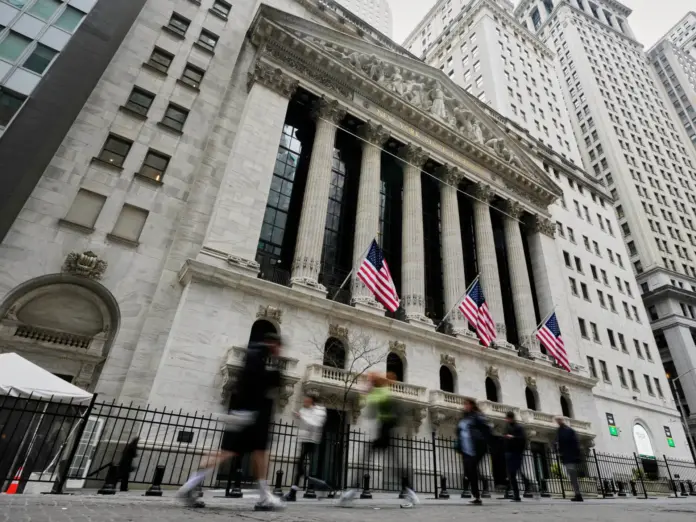
Despite the macroeconomic headwinds, Wall Street delivered a striking counternarrative in the first quarter of 2026. JP Morgan Chase posted earnings of $16.49 billion — a 13 percent increase year on year. Goldman Sachs reported a profit of $5.63 billion, up 19 percent, while Morgan Stanley earned $5.57 billion, a 29 percent jump. The results suggest that financial institutions are capitalising on heightened market volatility, elevated trading volumes, and robust deal activity even as the broader global outlook dims.
The defence sector has proven equally buoyant. The MSCI World Aerospace and Defence Index posted net returns of 32 percent year on year at the end of March, significantly outpacing the broader MSCI World Index, which returned 18.9 percent over the same period. The outperformance reflects a structural shift in government spending priorities: an April IMF report found that roughly half of the world’s countries have increased their military budgets over the past five years. NATO members have committed to raising defence expenditure to 5 percent of gross domestic product by 2035, a target that would represent a historic expansion of alliance-wide military investment.
Nowhere is the intersection of geopolitics and technology more visible than in Taiwan. The island recorded merchandise exports of $80.2 billion in March — a record-breaking figure representing a 61.8 percent increase year on year. Exports to the United States alone grew by 124 percent. Taiwan Semiconductor Manufacturing Company reported a net income of 572.8 billion New Taiwan Dollars, equivalent to $18.1 billion, for the first quarter of 2026, up 58 percent year on year. The figures reflect a global scramble to secure advanced chips as artificial intelligence investment accelerates and supply chain diversification becomes a strategic imperative.
The AI industry itself is on a trajectory that few sectors can match. The United Nations Trade and Development office projects the sector will expand from $189 billion in 2023 to $4.8 trillion by 2033. Two of its most prominent players, Anthropic and OpenAI, are both planning public listings in 2026, moves that could reshape capital markets and further concentrate investment in the technology space.
Prediction markets have also emerged as unexpected beneficiaries of global uncertainty. Polymarket, the decentralised forecasting platform, has earned more than $21 million in fees since April 1 alone — compared with $11.6 million for all of March and $6.23 million for all of February. The platform revised its fee structure on March 30 and has since been generating upwards of $1 million per day. If current trends hold, an analysis by DefiLlama suggests Polymarket could collect $342 million in fees over the full year. The platform’s growth has not been without scrutiny: a study analysing 70 million trades conducted between 2022 and 2025 found that the top 1 percent of users captured 84 percent of all trading gains, raising questions about market concentration and accessibility.
On the diplomatic front, US President Donald Trump announced a 10-day ceasefire in Lebanon, describing his conversations with relevant parties as ‘excellent.’ The announcement offered a rare moment of de-escalation amid a broader regional conflict that has rattled energy markets and strained international institutions. Whether the pause translates into a durable political settlement remains uncertain, but markets responded with cautious optimism to the news.
The convergence of military conflict, technological acceleration, and energy transition is rewriting the rules of global economic competition at a pace that is testing the adaptive capacity of governments, corporations, and international institutions alike. The IMF’s revised forecasts make clear that the costs of instability are real — but so, increasingly, are the opportunities being seized by those positioned at the intersection of defence, technology, and clean energy.