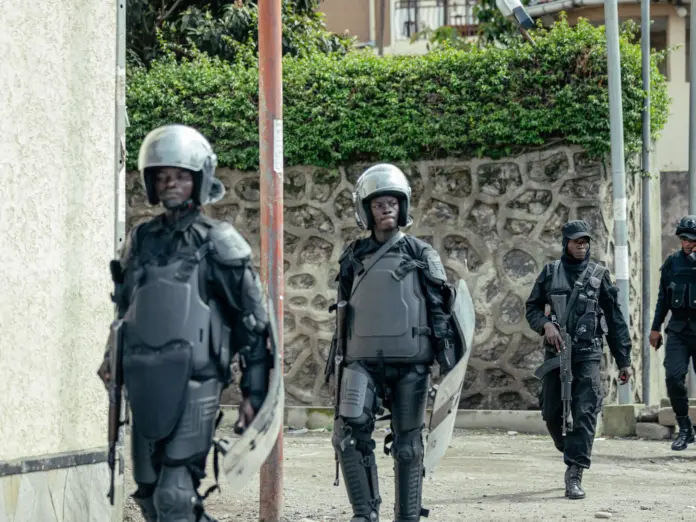
Negotiators from the Democratic Republic of the Congo and the AFC/M23 rebel coalition signed an interim peace monitoring mechanism in Switzerland on Monday, a tentative diplomatic step forward in a conflict that has already consumed two provincial capitals and displaced tens of thousands of civilians across eastern DRC.
The agreement, reached under joint mediation by the United States and Qatar, creates a formal body tasked with tracking ceasefire violations and monitoring both humanitarian and security developments on the ground. Representatives from the Congolese government and the armed group will sit on the mechanism together, with logistical and operational support provided by MONUSCO, the United Nations stabilisation mission in the country.
The signing marks a concrete, if fragile, outcome from talks that began this week in Switzerland — the latest in a series of diplomatic efforts that have so far failed to halt the advance of M23 forces. A peace and economic agreement was signed in Washington in December by Congolese President Felix Tshisekedi and Rwandan President Paul Kagame, yet fighting flared almost immediately after that deal was concluded. Separate Qatar-mediated talks between Kinshasa and M23 have also taken place in recent months, underscoring the multiplicity of diplomatic tracks that have struggled to translate into durable calm.
The scale of M23’s territorial gains since the start of 2025 has been striking. The rebel coalition seized Goma, the capital of North Kivu province and the economic hub of eastern DRC, before pushing south to capture Bukavu, the capital of South Kivu province. The fall of both cities represents a dramatic shift in the conflict’s geography and has left the Congolese state with sharply diminished control over its mineral-rich east.
The humanitarian consequences are severe. In the Minembwe area of South Kivu, thousands of civilians remain trapped between warring factions, unable to flee and cut off from aid. Human Rights Watch has accused parties to the conflict of deliberately blocking the delivery of humanitarian assistance in South Kivu’s highland areas and of preventing civilians from evacuating. Fighting has spread into those same highland zones, compounding an already dire situation for communities with little access to food, medicine, or protection.
Both the Congolese government and M23 have accused each other of violating previous ceasefire arrangements, a pattern that has eroded confidence in each successive agreement. The new monitoring mechanism is designed in part to address that credibility gap by providing a structured, jointly staffed body to document violations rather than leaving each side to make competing claims.
The international community’s engagement reflects the conflict’s regional dimensions. Rwanda has faced persistent accusations of backing M23 — allegations Kigali has consistently denied — and the involvement of Washington and Doha as co-mediators signals that major powers view the eastern DRC crisis as a threat to broader regional stability. The December Washington accord between Tshisekedi and Kagame was intended to address the Rwanda dimension directly, but its failure to stop the fighting has left that diplomatic framework under strain.
Whether the Switzerland monitoring mechanism can succeed where previous agreements have not remains deeply uncertain. The body’s effectiveness will depend on the willingness of both parties to grant monitors access to contested areas, to report violations honestly, and to refrain from military action while diplomatic channels remain open — conditions that have proved elusive throughout this conflict. For the civilians of eastern DRC, caught between advancing rebels, a weakened state military, and a humanitarian system under siege, the outcome of these talks carries consequences that are anything but abstract.