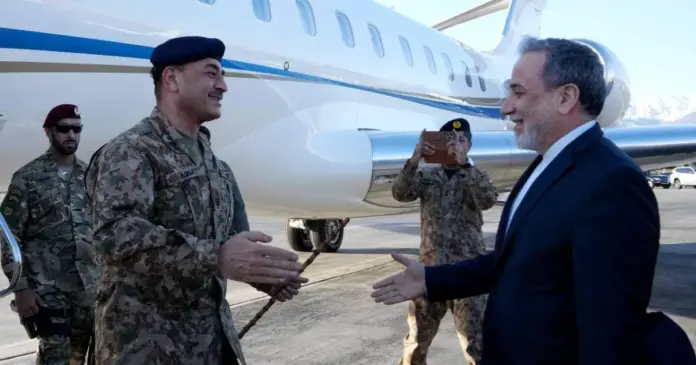
Pakistan has emerged as the pivotal diplomatic bridge in one of the most consequential geopolitical crises of the decade, with Army Chief General Asim Munir arriving in Tehran carrying a direct message from Washington to Iranian leadership — a mission Pakistani sources have described as a potential ‘major breakthrough’ in efforts to resolve the US-Iran conflict.
The high-level delegation was received by Iranian Foreign Minister Abbas Araghchi, with Munir tasked with laying the groundwork for a second round of negotiations between the two powers. The White House confirmed its optimism, with Press Secretary Karoline Leavitt stating that further talks would likely be held in Islamabad. The US Senate, meanwhile, voted down a Democratic-led resolution that sought to halt the war on Iran pending formal Congressional authorisation.
The conflict, launched by the United States and Israel on February 28, has killed more than 3,000 people in Iran and wounded at least 26,500 others. A ceasefire agreed on April 8 has halted direct attacks inside Iran and across the Gulf, and President Donald Trump declared late Tuesday that the war was ‘very close to over.’ Yet the path to a durable settlement remains treacherous.
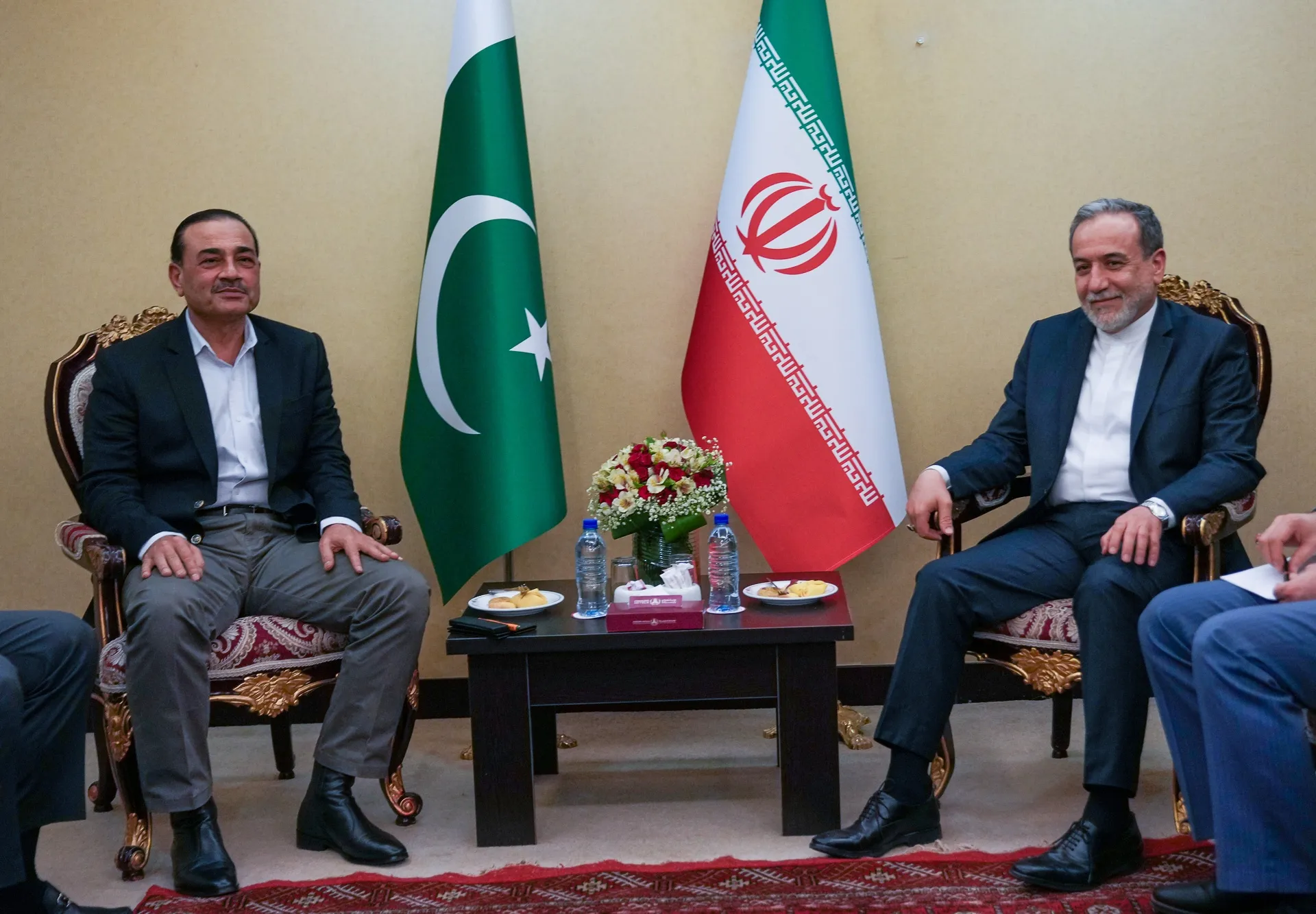
A senior Iranian official confirmed that fundamental differences persist between the two sides on the nuclear question. The central sticking point is the duration of any Iranian enrichment freeze — with Washington pushing for up to 20 years and Tehran unwilling to accept more than five — alongside the fate of Iran’s existing stockpile of 440 kilogrammes of highly enriched uranium. Talks held in Islamabad over the weekend concluded without an agreement. Mediators are pressing both parties to compromise on three core issues: Iran’s nuclear programme, control of the Strait of Hormuz, and compensation for wartime damages.
Iran has signalled it retains significant leverage. The Iranian military threatened to block commercial traffic in the Red Sea, the Gulf, and the Sea of Oman if the United States continues what Tehran characterises as a naval blockade of its ports. Adding to the pressure, Iran’s internet blackout — now in its 48th consecutive day — has inflicted an estimated economic toll of $1.8 billion, according to the digital watchdog NetBlocks.
Pakistani Prime Minister Shehbaz Sharif is conducting a parallel diplomatic tour across the region, having visited Saudi Arabia before arriving in Doha, where he is scheduled to hold a bilateral meeting with Qatar’s emir. His itinerary also includes a stop in Turkiye. The breadth of Islamabad’s regional engagement underscores Pakistan’s self-appointed role as an indispensable intermediary between Washington and Tehran.
While diplomats manoeuvre, the human cost of the broader conflict continues to mount. In Lebanon, Israeli strikes have not ceased despite the April 8 ceasefire. The Lebanese Health Ministry reports at least 2,167 people killed and more than 7,000 wounded since March 2. Four paramedics were killed and six others injured in an Israeli attack on the town of Mayfadoun, near Nabatieh in southern Lebanon. Sirens sounded in Israel’s western Galilee communities of Rosh HaNikra and Shlomi after the Israeli military detected a drone it said originated from Lebanese territory. In a potential diplomatic signal, a member of Israel’s security cabinet, Galia Gamliel, said Prime Minister Benjamin Netanyahu would soon speak with Lebanon’s President Joseph Aoun — the first direct talks between the two countries in more than 30 years.
In the West Bank, Israeli forces wounded a Palestinian man during a raid on Beit Duqqu, northwest of occupied East Jerusalem. Since the start of Israel’s war on Gaza, at least 1,150 Palestinians have been killed in the West Bank by Israeli forces and settlers, with more than 11,885 wounded and over 22,000 arrested. As of April 1, at least 9,560 Palestinians remain in Israeli detention, of whom 3,532 are held without charge. Israel has confirmed that at least 89 Palestinian prisoners have died in its custody. In northern Gaza, an Israeli drone strike near a school in Beit Lahiya killed at least two people.
The crisis has reverberated far beyond the immediate region. In Kashmir, residents donated gold and personal belongings to support Iranian civilians affected by the war. Australia announced its largest-ever defence investment — an additional 53 billion Australian dollars ($38 billion) in spending over the next decade — with its defence budget set to rise from 2.8 percent to 3 percent of GDP by 2033. The package includes a fleet of at least eight nuclear-powered submarines to be acquired through the AUKUS partnership with the United States and Britain. In the United Kingdom, the economy grew 0.5 percent in February, up from 0.1 percent in January, offering a modest counterpoint to the global uncertainty generated by the conflict.
With a ceasefire technically in place but Israeli military operations ongoing in Lebanon and Gaza, and nuclear negotiations at an impasse, the coming days of shuttle diplomacy — centred on Islamabad and Doha — will determine whether the fragile pause in hostilities can be transformed into something more lasting.