Israeli and Lebanese officials are set to meet at the US State Department on Tuesday in what would mark a historic diplomatic opening between two countries that share no formal relations, even as Israeli airstrikes continue to pound southern Lebanon and a broader regional ceasefire remains deeply contested.
The talks were confirmed after Israeli Ambassador Yechiel Leiter and his Lebanese counterpart held late-night discussions on Friday to finalise the arrangements. Leiter stated publicly that Israel had agreed to enter formal peace negotiations with Lebanon — a significant step given the two nations have never maintained diplomatic ties. He was equally unequivocal, however, that Israel would not discuss a ceasefire with Hezbollah, which it designates as a terrorist organisation, as part of those proceedings.
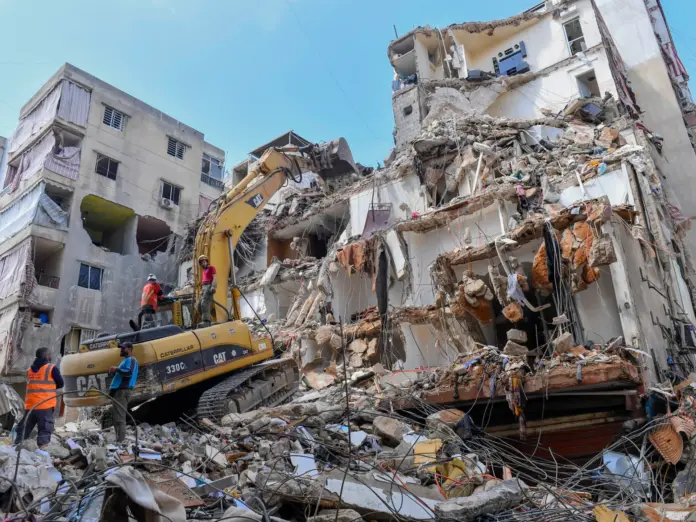
The announcement came against a backdrop of devastating violence. Lebanese authorities report that close to 2,000 people have been killed in recent weeks following Israel’s launch of a widespread bombardment and ground offensive in southern Lebanon. That offensive began on March 2, after Hezbollah launched a cross-border retaliatory attack — itself triggered by the start of a US and Israeli military campaign against Iran on February 28. A single day of strikes on Wednesday alone claimed more than 350 lives, with over 1,000 people killed or wounded in that large-scale assault. On Saturday, an Israeli airstrike destroyed a residential building in Mayfadoun in the Nabatieh district, killing three people.
Both the Lebanese government and the Trump administration had requested a temporary halt to Israeli hostilities ahead of Tuesday’s talks. President Donald Trump acknowledged asking Israeli Prime Minister Benjamin Netanyahu to scale back the bombardment, though Israeli military operations have shown no sign of abating. Trump was also explicit that Lebanon falls outside the parameters of the ceasefire arrangement his administration negotiated with Iran.
That distinction has become a central point of contention. Iran has insisted that the two-week pause in hostilities agreed with Washington encompasses an end to fighting between Israel and Hezbollah. Israel has flatly rejected that interpretation and pressed forward with its military campaign. In response, Tehran has kept the Strait of Hormuz closed — a move with severe consequences for global energy markets that has driven gas prices sharply higher and pushed US inflation to its highest level in two years.
The diplomatic pressure is now converging on Islamabad, where Vice President JD Vance, special envoy Steve Witkoff, and senior adviser Jared Kushner arrived for talks with Iranian representatives, with Pakistan serving as mediator. Vance issued a pointed warning to Tehran ahead of the negotiations, cautioning Iran not to "play" the United States.
Iran’s conditions for engagement remain demanding. Mohammad Bagher Ghalibaf, speaker of Iran’s Parliament, stated that Tehran would not enter substantive negotiations without a ceasefire in Lebanon and the release of frozen Iranian assets. The position places Washington in a difficult bind: pressing Israel to halt operations it has explicitly refused to suspend, while simultaneously trying to bring Iran to the table on terms acceptable to both sides.
The roots of the current crisis stretch back to a ceasefire between Israel and Hezbollah that took effect in November 2024. That agreement was violated hundreds of times before collapsing entirely following the February 28 escalation. The subsequent weeks have transformed southern Lebanon into one of the most active conflict zones in the region, with civilian casualties mounting daily.
The Tuesday talks at the State Department represent the most concrete diplomatic initiative to emerge from the crisis so far. Yet the gap between the parties remains vast — Israel insists on separating the Lebanon file from any broader Iran deal, while Tehran and Hezbollah’s backers demand a unified ceasefire as a precondition for any meaningful dialogue. Whether American officials can bridge that divide before the talks begin, or whether the violence will render the negotiations moot, remains the defining question of a rapidly escalating regional emergency.