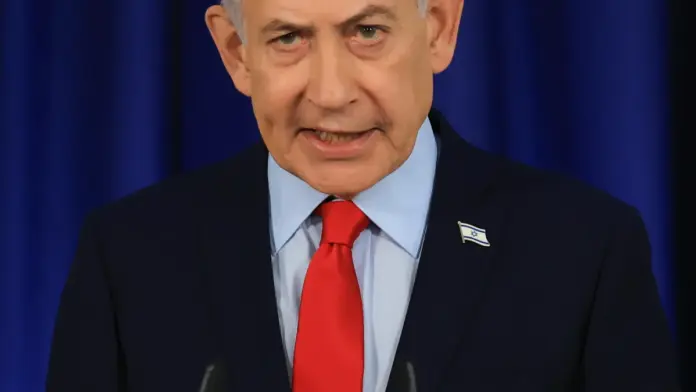
Jerusalem — Israeli Prime Minister Benjamin Netanyahu has ordered the expulsion of Spanish representatives from a US-led coordination centre overseeing the Gaza ceasefire, accusing Madrid of waging an active diplomatic war against Israel and defaming its military.
In a video statement posted to X on Friday, Netanyahu announced he had instructed the removal of Spain’s personnel from the Civil-Military Coordination Centre (CMCC), a hub established in Kiryat Gat as part of Donald Trump‘s 20-point plan to end the war in Gaza. The centre, set up in October, brings together military personnel and diplomats from partner nations to monitor the ceasefire and facilitate the flow of humanitarian aid into Gaza.
“Israel will not remain silent in the face of those who attack it,” Netanyahu declared, framing the expulsion as a direct response to what he characterised as sustained hostility from the Pedro Sanchez government in Madrid.
Foreign Minister Gideon Saar reinforced the prime minister’s position, accusing Spain of levelling blood libels at Israel and its army. Saar stated that Spain’s entrenched anti-Israel bias had stripped it of any capacity to serve a constructive role in implementing the US-backed peace framework.
The rupture reflects a relationship that has been unravelling since Israel launched its military campaign in Gaza following the October 2023 attacks. Spain, under Sanchez’s left-wing government, has been among the most vocal European critics of Israeli military conduct, repeatedly speaking out against what it described as the mistreatment of Palestinians in occupied territory. In the year following the outbreak of hostilities, Spain formally recognised the state of Palestine — a decision that drew sharp condemnation from Tel Aviv.
The friction intensified further when Spain opposed the United States-Israel military campaign against Iran, which began on February 28, and closed its airspace to American aircraft involved in those operations. The move was seen in Jerusalem as a direct act of political defiance, deepening Israeli frustration with the Sanchez administration.
The CMCC sits at the centre of international efforts to stabilise Gaza. Beyond monitoring the ceasefire, the centre is tasked with facilitating coordination between international personnel, Israel, and the US on both security and humanitarian matters. Its role has taken on added significance given that, despite the ceasefire agreement, Israel has continued near-daily military strikes across Gaza, and severe limitations on vital aid deliveries remain in place.
The International Monetary Fund has warned that the broader conflict with Iran risks permanently scarring the global economy even if a peace settlement is eventually reached, with US inflation already surging in March — a trend analysts have partly attributed to economic uncertainty generated by the ongoing hostilities.
Spain’s exclusion from the CMCC raises questions about the cohesion of the international coalition underpinning Trump’s Gaza peace framework. The centre was conceived as a multilateral mechanism, and the removal of a major European Union member state — particularly one that has been outspoken on Palestinian rights — could complicate efforts to present the process as broadly legitimate.
The EU’s role in the region is already under scrutiny, with new biometric border rules introduced across the bloc coinciding with a period of heightened geopolitical strain. European governments have been divided in their responses to both the Gaza conflict and the Iran campaign, with Spain positioning itself among the more assertive critics of US and Israeli policy.
Netanyahu gave no indication that Spain’s exclusion was temporary or subject to negotiation. His framing of the dispute as a diplomatic war suggested Israel views the relationship with the current Spanish government as fundamentally compromised, with little prospect of near-term repair while Sanchez remains in office.
For the CMCC, the immediate practical question is whether Spain’s absence will affect the centre’s capacity to coordinate humanitarian access — a function that has already been strained by ongoing Israeli military activity and aid restrictions inside Gaza.