French President Emmanuel Macron delivered a pointed rebuke of Donald Trump on Thursday, accusing the US president of generating dangerous confusion through contradictory statements about the war against Iran — a conflict now entering its second month with no clear end in sight.
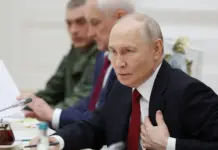
Speaking during a state visit to South Korea, Macron said Trump had undermined Western cohesion by creating ‘daily doubt’ about America’s commitments, both in the Middle East and within the NATO alliance. ‘The position changes every day,’ Macron said, pointing to Trump’s oscillating claims that a ceasefire was imminent, that the war had already been won, and that the United States would press on with military operations.
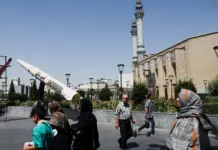
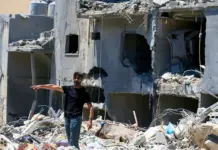
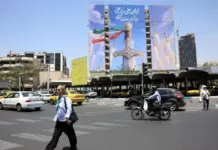
The war between the United States, Israel, and Iran began in February 2026, following US airstrikes in June 2025 that Trump said had ‘obliterated’ Iranian nuclear facilities. Trump framed the February offensive as the ‘last best chance to strike at Iran’s nuclear weapons programme.’ Tehran responded by closing the Strait of Hormuz, the narrow waterway through which roughly 20 per cent of the world’s oil and gas supply passes, dealing a severe blow to global energy markets.
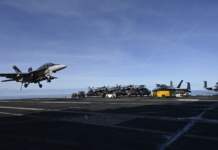
Despite Trump’s assertion that Iran’s navy and military have been destroyed, Iran has retained sufficient capability to throttle shipping through the strait. Tehran announced it would permit passage only to vessels from nations it deems ‘non-hostile’ — those that neither participate in nor support military action against Iran.
Macron flatly rejected calls for a military operation to force the waterway open. Such an effort would be ‘unrealistic,’ he said, warning that any vessel attempting to cross would face coastal threats from the Iranian Revolutionary Guards, who possess ballistic missiles and substantial military resources. Securing the strait by force would take an inordinate amount of time, he added, and could only ultimately be resolved through a ceasefire and a resumption of negotiations with Tehran. ‘Military action lasting a few weeks cannot permanently solve Iran’s nuclear problem,’ Macron said, arguing instead for international observers to monitor Iranian nuclear development as part of any diplomatic settlement.
Trump, who had issued a 48-hour ultimatum demanding Iran reopen the strait or face strikes on its energy infrastructure, subsequently delayed action by five days before extending the deadline further — a pattern Macron cited as emblematic of the broader inconsistency he finds troubling.
France and other European nations have offered limited support for some US operations in the region but have firmly resisted being drawn into the war. UK Prime Minister Keir Starmer stated plainly that ‘Iran is not our war,’ and Paris has ruled out direct participation in the conflict.
The transatlantic rift deepened further after Trump threatened to withdraw the United States from NATO, describing the alliance as a ‘paper tiger’ after European allies declined to back the Iran campaign. Trump said he had long harboured doubts about NATO’s credibility and that the US had spent ‘trillions of dollars’ on the alliance while receiving little in return. He later declared that pulling out of NATO was ‘beyond reconsideration.’ Macron said such statements created ‘daily doubt’ about American commitment to collective defence — doubt he characterised as deeply damaging to the alliance’s foundations.
The personal dimension of the Franco-American friction also surfaced this week. Trump mocked Macron at a private lunch on Wednesday by imitating a French accent and made disparaging remarks about Brigitte Macron, claiming she ‘treats him extremely badly’ — comments apparently referencing a 2025 video that showed Brigitte shoving the French president. Macron dismissed the remarks as ‘neither elegant nor up to standard.’ Manuel Bompard of the hard-left France Unbowed party, rarely an ally of the centrist president, nonetheless defended Macron against what he characterised as unacceptable personal attacks from Washington.
The broader strategic picture remains deeply uncertain. Trump has at various points suggested the conflict is nearly over, that victory has been achieved, and that the US must continue fighting — positions that have left allies and adversaries alike struggling to discern American intentions. Macron’s intervention from Seoul underscores the extent to which European capitals are now openly questioning not only Washington’s strategy in the Middle East, but its reliability as a partner in the institutions that have underpinned Western security for eight decades.