The Trump administration is weighing a military operation to seize Iran’s stockpile of highly enriched uranium, a mission that defence analysts describe as extraordinarily dangerous and logistically complex — one that could drag on for weeks and inflict heavy casualties on both sides.
The proposal, which gained traction after The Wall Street Journal reported that President Donald Trump was seriously considering it, centres on Iran’s approximately 440 kilograms of uranium enriched to 60 percent purity — a level at which the remaining steps to weapons-grade material become dramatically shorter. If further enriched to the 90 percent threshold required for a nuclear weapon, that stockpile would be sufficient to produce roughly 10 nuclear warheads.
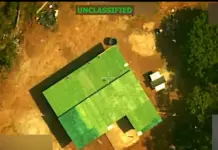
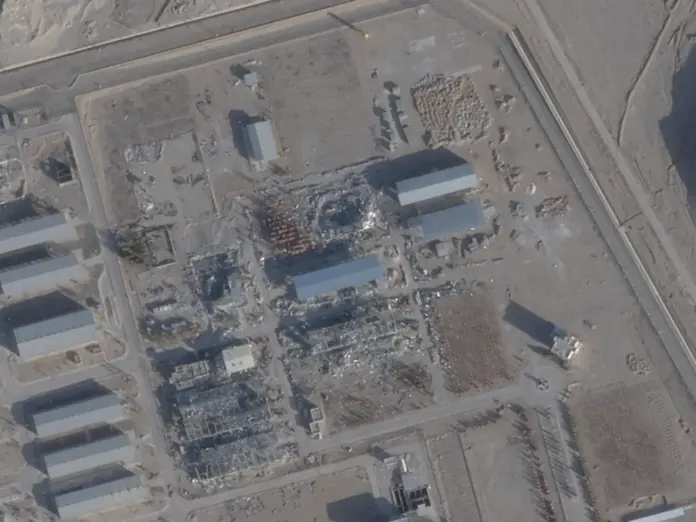
International Atomic Energy Agency chief Rafael Grossi confirmed that assessment in early March, telling Al Jazeera that Iran’s holdings were theoretically enough for more than a dozen warheads. Grossi added that almost half of the stockpile was likely still stored inside a tunnel complex beneath Iran’s Isfahan nuclear facility, with additional quantities believed to be held at the Natanz and Fordow sites. A satellite image analysed in June 2024 suggested at least a portion of the material had been moved into underground tunnels near Isfahan.
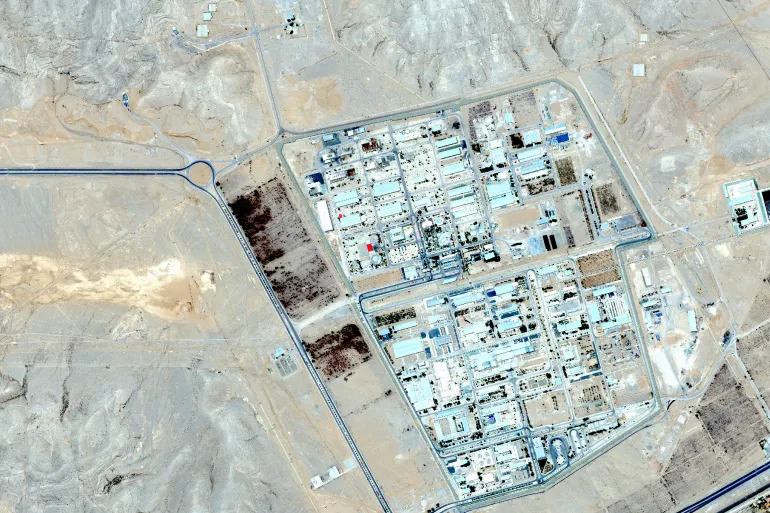
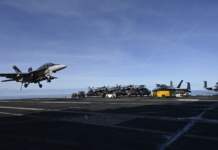
The geographic and physical challenges alone are formidable. Isfahan sits more than 480 kilometres inland from the nearest US naval vessels. The enriched uranium is most likely stored in the form of uranium hexafluoride gas, a compound that reacts violently with moisture to produce highly toxic and corrosive byproducts — a hazard that would complicate any extraction effort enormously. Cheryl Rofer, a former radiochemist at Los Alamos National Laboratory, has highlighted the severe handling risks posed by the material at that enrichment level.
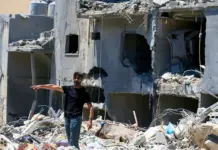
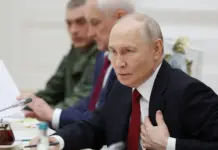
Secretary of State Marco Rubio signalled the administration’s intent in early March, telling Congress bluntly that people would have to go and physically retrieve Iran’s uranium. The remarks came as the US-Israeli war against Iran entered its second month, a conflict that has already seen strikes on Isfahan, Natanz, and Fordow. Trump claimed last year that Iran’s nuclear enrichment facilities had been ‘completely and totally obliterated,’ though Grossi’s statements and satellite imagery suggest significant quantities of enriched material remain.
Military planners would have historical precedent to draw on. In 1994, US forces conducted Project Sapphire, flying roughly 600 kilograms of weapons-grade uranium out of Kazakhstan in a coordinated operation with Kazakh authorities and the IAEA. Teams worked 12-hour shifts, six days a week, for four weeks to move the material from a metallurgical plant to a local airport. Grossi told CBS News in late March that the IAEA is considering a comparable arrangement for Iran’s stockpile. The US Army also maintains three specialised Army Nuclear Disablement Teams trained specifically to dismantle and destroy nuclear equipment and materials.
But experts are deeply sceptical that a Kazakhstan-style operation is replicable in a wartime environment against a hostile state. Emma Salisbury, a defence analyst, rated the mission’s danger level as ‘an absolute 10’ on a scale of one to ten, stressing that it could not be carried out by special forces slipping in undetected — it would require a substantial ground troop presence. The operation would need to unfold in multiple phases: sustained aerial bombardment, special forces deployment, military engineers locating dispersed stockpiles, and nuclear material specialists handling the extraction. The entire process would take several days at minimum and could extend over several weeks.
Coordination with Israel would be essential. Israel fields units expressly trained for special operations on Iranian soil, according to analyst Shahin Modarres, and any large-scale seizure mission would need to be synchronised with Israeli ground and air assets. Clive Jones, a Middle East security scholar, warned the operation would ‘likely incur large casualties on both sides,’ while suggesting that a successful raid could give Trump a political ‘off ramp’ to declare the war concluded.
Christian Emery offered a more sombre assessment, arguing that Trump’s broader Iran strategy has already unravelled because Tehran refused to capitulate and accept terms Washington could dictate. Even a successful seizure of the 60 percent enriched stockpile, Emery noted, would leave Iran in possession of its centrifuge infrastructure, its accumulated technical expertise, and potentially other uranium stocks enriched to 20 percent or below 5 percent — the full architecture of a reconstitutable nuclear programme.
Iran has consistently maintained that its nuclear activities are restricted to civilian energy purposes and has refused to dismantle the programme entirely, citing national sovereignty. Iranian officials have previously indicated openness to discussing reductions in enrichment levels during negotiations, but have drawn a firm line against full dismantlement.
The diplomatic backdrop is stark. The Joint Comprehensive Plan of Action, negotiated by the Obama administration in 2015, had constrained Iran’s enrichment activities and subjected the country to rigorous inspections. Trump withdrew the United States from that agreement during his first term, a decision that preceded Iran’s gradual escalation of enrichment levels to their current heights. Whether a military seizure of uranium — described by Emery as potentially ‘one of the most risky and difficult operations the US military has undertaken since the Second World War’ — can substitute for the diplomatic architecture that was dismantled remains the central question confronting Washington’s strategists.