A sweeping new investigation has found that more than 1,800 civilians have been killed in Burkina Faso since January 2023, with the country’s military junta and its allied civilian militias responsible for the majority of the deaths — a toll that Human Rights Watch says constitutes war crimes and crimes against humanity.
The report, released Thursday, documents at least 1,837 civilian deaths, including dozens of children, across 57 incidents spanning all 11 regions of the country between January 2023 and August 2025. Of those deaths, 1,255 — occurring across 33 separate incidents — are attributed to the Burkinabé armed forces and the Volunteers for the Defence of the Fatherland (VDP), a civilian militia recruited by the junta to bolster its campaign against jihadist groups. The remaining 582 deaths are linked to the al-Qaeda affiliate JNIM, the Group for the Support of Islam and Muslims, in 24 attacks.
The findings are based on the verification of open-source material — including photographs, videos, and satellite imagery — as well as interviews with more than 450 people across Burkina Faso, Benin, Ivory Coast, Ghana, and Mali.

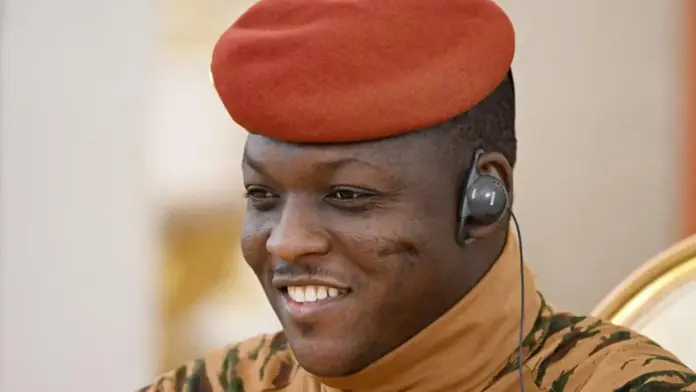
Human Rights Watch is calling on the International Criminal Court to open a preliminary examination into alleged crimes committed since September 2022, when Captain Ibrahim Traoré, now 37, seized power in a coup that ousted Paul-Henri Sandaogo Damiba, himself a military leader who had governed for only nine months. The organisation has named Traoré and six senior military commanders as potentially liable under the legal principle of command responsibility. Five jihadist leaders are also identified as potentially culpable, including JNIM supreme leader Iyad Ag Ghaly, his deputy Amadou Kouffa, and the group’s Burkina Faso country leader Jafar Dicko.
Among the most devastating single episodes documented is a series of attacks in December 2023, when Burkinabé military forces and VDP fighters killed hundreds of civilians across at least 16 villages and hamlets north of the town of Djibo, with the death toll in that operation exceeding 400. In August 2024, JNIM fighters descended on the town of Barsalogho, shooting dead at least 133 people and wounding more than 200 in an assault that lasted fewer than two hours.
Human Rights Watch accuses the junta of not only committing grave abuses but of actively suppressing information about them, blocking independent reporting and failing to hold any perpetrators to account. Burkinabé authorities have consistently dismissed previous allegations that their forces have killed civilians. Traoré himself has defended the military’s approach, including the forced conscription of civilians, arguing that individual freedoms cannot take precedence over national security.
The junta came to power pledging to do what its predecessors could not — defeat the jihadist insurgency that has ravaged the country for over a decade. Groups affiliated with both al-Qaeda and the Islamic State have caused thousands of deaths across the Sahel region, and the military cited the deteriorating security situation as justification for seizing control. Yet the Human Rights Watch findings suggest the campaign has inflicted enormous harm on the very civilian population it claimed to protect.
Burkina Faso’s trajectory since the coup has also reshaped its international alignments. The country has sharply curtailed its cooperation with France and other Western nations, pivoting instead toward Russia for military support — a shift mirrored by its neighbours Mali and Niger, both also now governed by military juntas. Human Rights Watch is urging Burkina Faso’s international partners and donors to impose targeted sanctions and suspend cooperation with the country’s armed forces until accountability measures are in place.
The named officials on the junta side include former defence minister and current ambassador to Washington Kassoum Coulibaly, Defence Minister Celestin Simpore, and army Major General Moussa Diallo. On the jihadist side, Ousmane Dicko, brother of Jafar Dicko and a JNIM operative, is also identified as potentially culpable.
The scale and pattern of the violence, Human Rights Watch argues, demand an international judicial response. Without external accountability mechanisms, the organisation warns, the cycle of atrocities against Burkina Faso’s civilian population is unlikely to end.