Iran’s cultural heritage ministry has recorded damage to at least 56 museums and historical monuments across the country since the outbreak of conflict with the United States and Israel on February 28, with officials warning that irreplaceable artefacts spanning millennia of civilisation may be permanently lost.
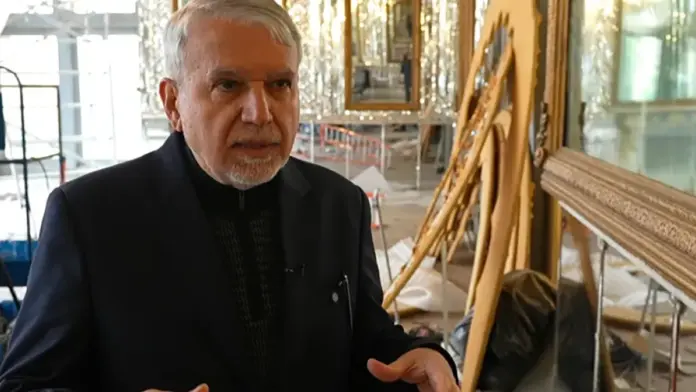
Cultural Heritage Minister Reza Salehi Amiri confirmed the toll in a formal statement, describing the destruction as a systematic assault on Iranian identity rather than incidental collateral damage. Among the sites struck are some of the most significant architectural and cultural landmarks in the Islamic world.
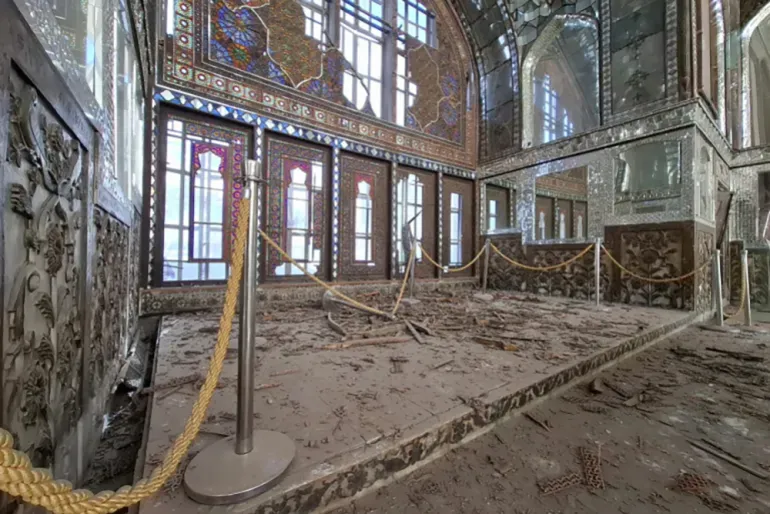
In Tehran alone, 19 locations have sustained damage, including the Grand Bazaar — a commercial and cultural hub that has operated continuously for centuries — and the former senate building. The Golestan Palace, a Qajar-era complex renowned for its intricate stonework and 19th-century mirrored ceilings, has suffered significant structural harm. Salehi Amiri estimated that restoring the palace alone will require at least two years of specialised labour.

The damage extends well beyond the capital. In Isfahan, two of Iran’s most celebrated historical structures have been hit. The Chehel Sotoun Palace, a 17th-century pavilion whose name translates as "Forty Columns," sustained damage, as did the Masjed-e Jame, Iran’s oldest Friday mosque, a structure whose foundations date back more than a thousand years. The mosque represents one of the most complete architectural records of Islamic design anywhere in the world.
The ministry has deployed more than 300 experts to assess the full extent of the destruction. Salehi Amiri offered a sobering assessment of what restoration can realistically achieve. "Restoration cannot return an artefact to its original state," he said, adding that some historical items might have been lost forever — a warning that carries particular weight given the age and fragility of many of the affected structures.
The minister characterised the pattern of strikes as a "deliberate and conscious attack" on Iranian identity, drawing a pointed contrast with the country’s experience during the 1980s war with Iraq, when historical monuments remained largely shielded from systematic destruction. The current conflict, he suggested, represents an unprecedented targeting of cultural patrimony.
Central to Iran’s legal argument is the 1954 Hague Convention for the Protection of Cultural Property in the Event of Armed Conflict, which obligates signatory states to refrain from acts of hostility directed against cultural property. Critically, the United States, Israel, and Iran are all parties to the convention. Salehi Amiri noted that UNESCO holds the precise geographical coordinates of all recognised heritage sites, making ignorance of their locations an implausible defence.
The United States and Israel have maintained that their strikes are directed exclusively at military targets. Neither government has publicly addressed the specific allegations regarding cultural sites.
The destruction of cultural heritage during armed conflict has drawn increasing international scrutiny in recent years. The deliberate targeting of historical sites has been prosecuted as a war crime before international tribunals, and the scale of damage now documented in Iran is likely to intensify calls for accountability.
The Golestan Palace, with its shattered mirrored ceilings and damaged stonework, has become a focal point for international concern. The complex, which served as the seat of Qajar royal power and is listed as a UNESCO World Heritage Site, embodies centuries of Persian artistic achievement. Its partial destruction, Salehi Amiri argued, cannot be undone regardless of the resources eventually committed to its repair.
As the conflict continues, Iran’s cultural institutions face the dual challenge of protecting what remains while cataloguing what has already been lost — a task that the minister acknowledged may ultimately prove incomplete.