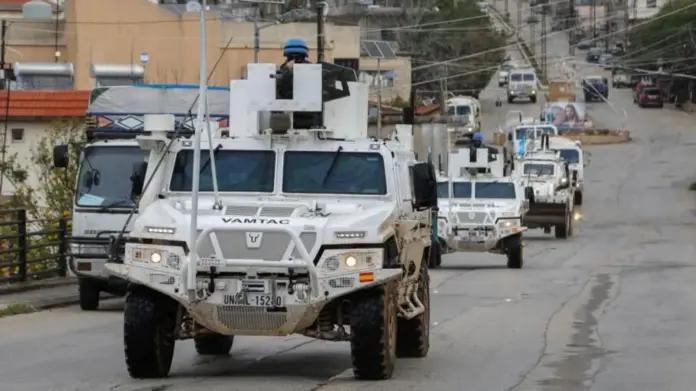
Three Indonesian soldiers serving with the United Nations Interim Force in Lebanon (Unifil) were killed in two separate attacks in southern Lebanon within a single 24-hour period, the UN confirmed, as fighting between Israeli forces and the Iranian-backed militia Hezbollah continues to ravage the region despite a ceasefire brokered just months ago.
The deadlier of the two incidents occurred on Monday near the village of Bani Hayyan, where a roadside explosion destroyed a peacekeepers’ vehicle, killing Captain Zulmi Aditya Iskandar and First Sergeant Muhammad Nur Ichwan. A third peacekeeper sustained severe injuries and a fourth was also hurt in the blast. UN peacekeeping chief Jean-Pierre Lacroix cited initial investigation findings pointing to a roadside explosion, while UN Secretary-General spokesperson Stéphane Dujarric said the deaths were ‘most likely’ caused by an improvised explosive device.
Less than 24 hours earlier, on Sunday, Chief Private Farizal Rhomadhon was killed when a projectile of unknown origin struck the position Indonesian peacekeepers were holding in Adchit Al Qusayr, also in southern Lebanon. Dujarric described that explosion as likely caused by an explosive that landed directly on the Indonesians’ position. Unifil has launched separate investigations into both incidents.
The Israel Defense Forces (IDF) denied involvement in Monday’s Bani Hayyan explosion, stating that its review concluded the blast was not caused by IDF activity, that no explosive device had been placed in the area by Israeli troops, and that no IDF personnel were present at the time. The IDF did acknowledge that both incidents occurred within an active combat zone and said it was working to clarify the full circumstances and determine responsibility.
The losses compounded an already bloody stretch for Israeli forces as well. Four Israeli soldiers were killed in combat in southern Lebanon early on Tuesday, with another severely wounded and a reservist moderately injured, according to the IDF.
Indonesia’s military, the TNI, reaffirmed its commitment to the peacekeeping mission following the Sunday killing. Major General Aulia Dwi Nasrullah publicly pledged that Indonesian forces would remain in Lebanon, underscoring the political weight Jakarta has placed on its participation in Unifil.
The attacks underscore the extreme danger facing the roughly 10,000 peacekeepers deployed along the Blue Line — the de facto border between Lebanon and Israel — where Unifil operates in collaboration with the Lebanese army. The force was established by the UN Security Council in 1978 to serve as a buffer between the two countries. Monday’s deaths bring the total number of peacekeepers killed since Unifil’s founding to approximately 339.
The violence unfolds against a backdrop of a deeply fractured ceasefire. A truce between Israel and Hezbollah was brokered in November 2024 following an escalation tied to the war in Gaza, but it has failed to hold in any meaningful sense. Israel has conducted near-daily strikes on Hezbollah targets, accusing the group of refusing to disarm and withdraw from southern Lebanon as required under the ceasefire’s terms. Hezbollah, for its part, has fired rockets into Israel in retaliation for ongoing US-Israeli strikes on Iran.
The human cost inside Lebanon has been staggering. Since the ceasefire took effect, more than 1,260 people have been killed across the country, according to the Lebanese health ministry — a toll that includes at least 124 children. The Israeli military has announced plans to intensify both ground and air operations against Hezbollah, signalling that the conflict shows no sign of abating.
For Unifil, the deaths of three peacekeepers in a single day mark one of the force’s darkest moments in recent memory, raising urgent questions about the safety of international personnel operating in a war zone where the lines of responsibility remain dangerously blurred.