A United Nations Development Programme report published Tuesday delivers a stark economic verdict on the ongoing conflict between the United States, Israel, and Iran: one month of war could strip the Middle East of between $120 billion and $194 billion in gross domestic product — a contraction equivalent to 3.7 to 6 percent of regional economic output.
The assessment, based on projections modelling a short but intense four-week conflict, warns that the fighting could eliminate approximately 3.7 million jobs and push four million additional people below the poverty line. The unemployment rate across the region could rise by four percentage points. Gulf Cooperation Council states and the Levant face the steepest losses, with each sub-region potentially shedding more than 5.2 percent of GDP.
"The economic consequences of this conflict extend far beyond the battlefield," said Abdallah Al Dardari, UN assistant secretary-general and director of the UNDP Regional Bureau for Arab States. The report flags risks to strategic maritime corridors, warning of cascading effects on inflation, trade flows, and global supply chains.
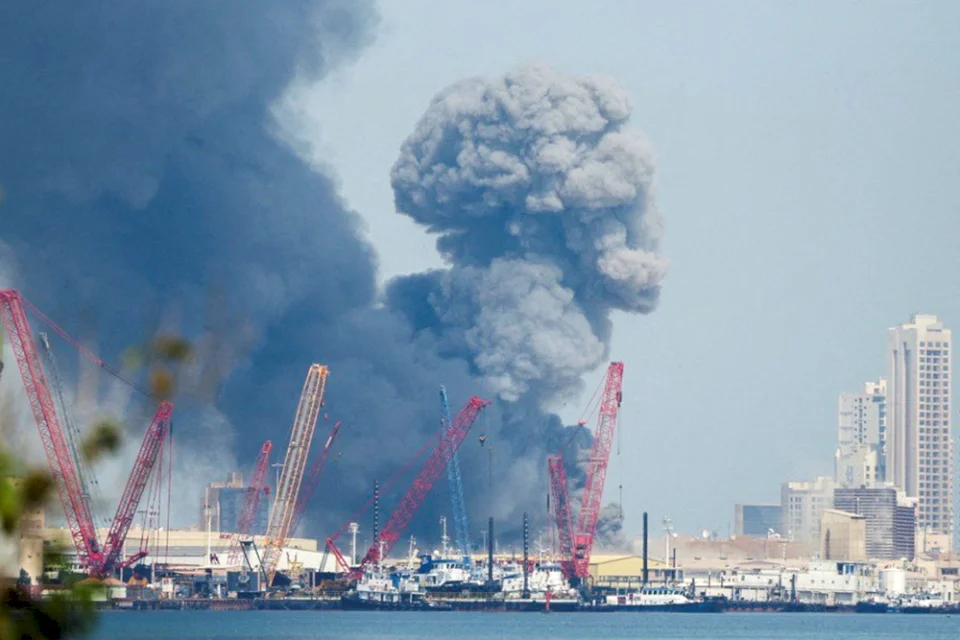
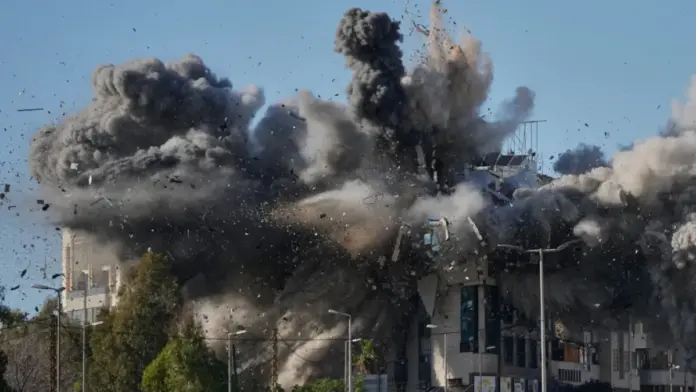
The conflict ignited on February 28, when the United States and Israel launched coordinated strikes on Iran that killed Supreme Leader Ayatollah Ali Khamenei along with approximately 40 senior Iranian military officials. Tehran responded swiftly and forcefully — firing missiles at Israel, shelling US military installations in Bahrain, Qatar, Kuwait, and the United Arab Emirates, and deploying drones that struck infrastructure and residential areas across Arab nations.
Critically, Iran moved to strangle energy flows through the Strait of Hormuz, the narrow waterway through which roughly one-fifth of the world's oil exports — tens of millions of barrels per day — normally transit. The halt in tanker traffic sent Brent crude futures surging 4.7 percent to more than $118 per barrel. By March 9, global oil prices had topped $100 a barrel for the first time in nearly four years.
On March 8, Mojtaba Khamenei, the son of the slain supreme leader, was elected as the new ayatollah, signalling continuity in Iran's clerical leadership even as the country absorbed the shock of decapitation strikes against its military command.
Lebanon has emerged as one of the most severely affected countries in the region. The UNDP report documents widespread destruction of residential areas, transport infrastructure, and public services, alongside large-scale displacement of civilians. Hezbollah struck Israel in retaliation for the killing of Khamenei, drawing further Israeli air strikes and evacuation orders that have compounded the humanitarian toll.
The report singles out Sudan and Yemen as the fragile states most exposed to poverty increases, given their already precarious baseline conditions. Poverty rate increases are concentrated most heavily across the Levant and these conflict-affected nations, where interconnected economies have little buffer against external shocks of this magnitude.
Amid the destruction, diplomatic channels have opened. Donald Trump announced on March 30 that Iran had agreed to the majority of demands contained in a 15-point peace framework, which he described as having been initiated by Tehran. The proposed agreement would require Iran to limit its defence capabilities, end support for regional proxy groups, restore shipping through the Strait of Hormuz, and hand over highly enriched uranium to the United States. One clause, however, stipulates that Iran will not relinquish its nuclear weapons — a significant carve-out that is likely to complicate final negotiations.
Washington suspended strikes on Iranian energy facilities until April 6 to allow talks to proceed. Whether that pause holds will depend heavily on progress toward a formal agreement, with the global economy watching oil markets and the Strait of Hormuz as the most immediate barometers of whether diplomacy can contain a conflict that has already inflicted enormous damage on one of the world's most strategically vital regions.