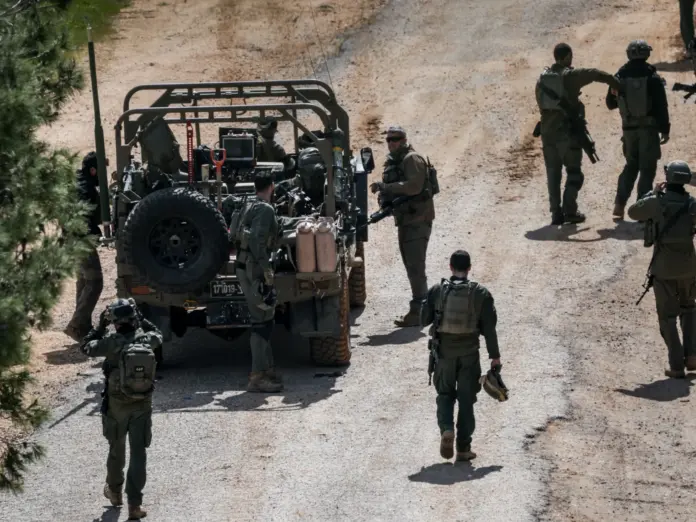
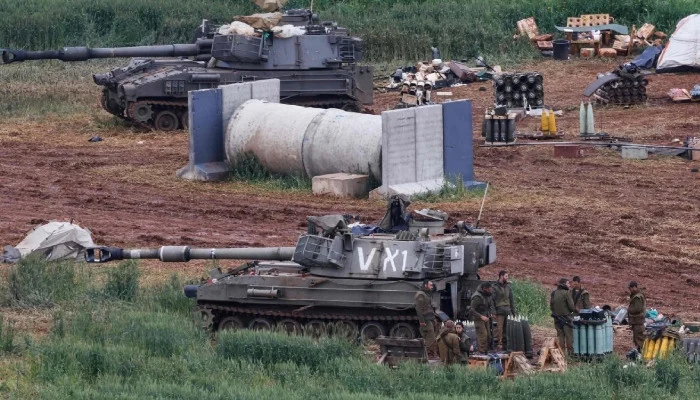
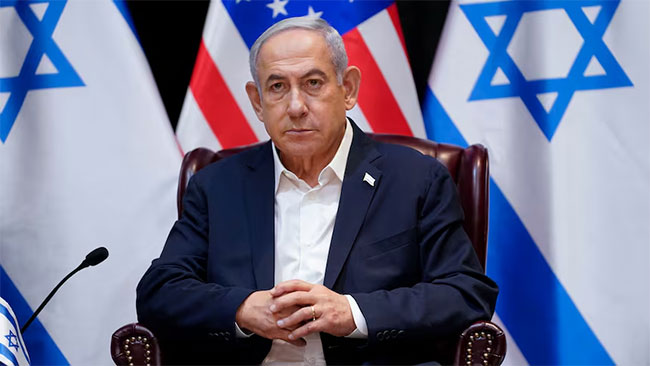
SOUTHERN LEBANON — Israeli Prime Minister Benjamin Netanyahu ordered his military on Sunday to expand its security buffer zone in southern Lebanon, delivering the directive in a video statement recorded at Israel’s Northern Command. Israeli forces are now advancing toward the Litani River, with troops already reaching a tributary of the waterway south of the town of Qantara on the eastern front near al-Muhaysibat — just a few hundred metres from the river itself.
"I have just instructed to further expand the existing security buffer zone," Netanyahu said. "We are determined to fundamentally change the situation in the north." He cited persistent rocket attacks by Hezbollah as the primary justification for the escalation. Defence Minister Israel Katz separately stated that Israeli forces would control the remaining bridges and the security zone extending to the Litani, which flows into the Mediterranean Sea roughly 30 kilometres north of Israel’s northern border.
The precise scope of the expansion remains ambiguous. Israeli authorities had signalled last week their intention to push the buffer zone toward the Litani, but it is unclear whether Netanyahu’s directive refers to that previously announced perimeter or signals a broader plan involving the occupation of additional territory deeper inside southern Lebanon. No further operational details have been released by the prime minister’s office, and the proposal has yet to be formally reviewed or debated within Israel’s security cabinet.
The military push comes amid a rapidly worsening humanitarian crisis. Lebanon’s Health Ministry reports at least 1,238 people killed since the country was drawn into the wider conflict on March 2, among them 124 children. More than 3,500 people have been wounded. The United Nations estimates that over 1.2 million people have been displaced across the country. On Saturday and Sunday alone, 49 people were killed, including 10 rescue workers.
Among the dead are three journalists killed in an Israeli air strike on the southern town of Jezzine on Saturday. Ali Shoeib, a correspondent for Hezbollah’s Al-Manar TV; Fatiman Ftouni, who worked for the pro-Hezbollah channel Al Mayadeen; and her brother Mohammad Ftouni, a cameraman, were all killed in the strike. Their funerals were held Sunday in Choueifat, south of Beirut, where they were buried in a temporary graveyard established because of the ongoing war.
Israel’s military claimed Shoeib was a Hezbollah intelligence operative but offered no supporting evidence. The assertion drew sharp international condemnation. French Foreign Minister Jean-Noel Barrot stated unequivocally that journalists operating in war zones must never be targeted. The Committee to Protect Journalists has documented at least 11 killings of Lebanese journalists and press workers by Israeli forces since hostilities between Israel and Hezbollah began in 2023. In the Gaza Strip, the same organisation has recorded 210 Palestinian journalists and media workers killed by the Israeli military.
The current phase of the Lebanon conflict began on March 2, when Hezbollah launched retaliatory attacks on Israel following the killing of Iranian Supreme Leader Ayatollah Ali Khamenei in strikes carried out by the United States and Israel targeting Iranian positions. More than 400 Hezbollah fighters have been killed since the group entered the broader Iran war. The Iran-backed militant organisation’s involvement has transformed what had been a simmering border conflict into a full-scale front in a wider regional confrontation.
A ceasefire agreed in November 2024 between Israel and Hezbollah has been repeatedly violated. Similarly, an October 2025 ceasefire that ended Israel’s war against Hamas in Gaza — a conflict that began in October 2023 — has also been breached on multiple occasions, underscoring the fragility of diplomatic efforts to contain the region’s interlocking crises.
With Israeli troops now within striking distance of the Litani and Netanyahu publicly committing to a fundamental shift in the north, the prospect of a deeper and more prolonged Israeli military presence in southern Lebanon appears increasingly likely — raising urgent questions about civilian protection, international law, and the viability of any future ceasefire arrangement.