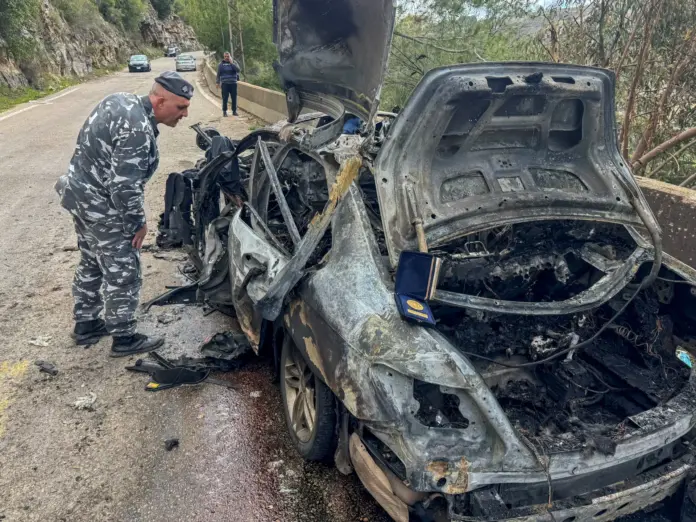
An Israeli air strike on a clearly marked press vehicle killed three journalists on the Jezzine Road in southern Lebanon on Saturday, March 28, 2026, deepening a crisis over the targeting of media workers in one of the world’s most dangerous conflict zones.
The journalists killed were Fatima Ftouni and Mohammed Ftouni, correspondents for the Lebanese satellite channel Al Mayadeen, and Ali Shuaib, a veteran war correspondent for Al-Manar TV. Fatima and Mohammed were siblings. Footage from the scene showed the vehicle bore prominent ‘PRESS’ markings. Al Mayadeen reported that four precision missiles struck the car. A paramedic was also killed when ambulances responded to the scene.
The Israeli military acknowledged killing Shuaib but declined to comment on the deaths of the other two journalists. In a statement, Israeli officials alleged Shuaib was embedded within an intelligence unit of Hezbollah‘s Radwan Force, claiming he had been tracking Israeli troop positions in southern Lebanon and distributing Hezbollah propaganda. Al-Manar rejected the characterisation, describing Shuaib as one of its most prominent war correspondents, a journalist who had spent decades covering Israeli military operations in Lebanon.
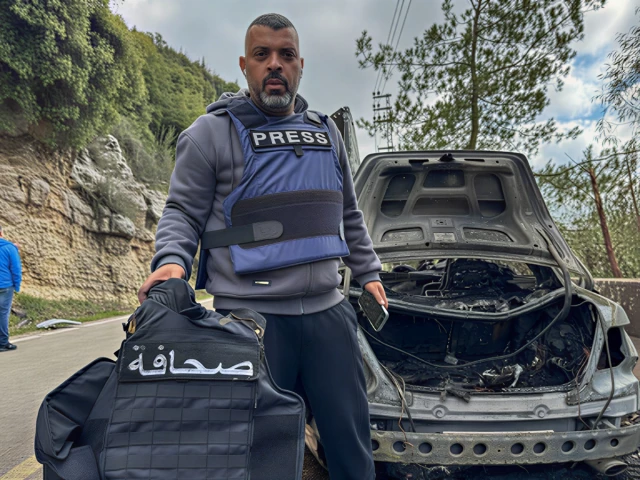
Lebanese President Joseph Aoun condemned the strike as ‘a blatant crime,’ invoking the 1949 Geneva Conventions and UN Security Council Resolution 1738, which specifically prohibits attacks on journalists in conflict zones. Prime Minister Nawaf Salam called the attack a flagrant violation of international humanitarian law.
The deaths compounded a devastating toll on Al Mayadeen’s staff. The network has now lost six journalists since hostilities escalated, including Farah Omar, Rabih Me’mari, Ghassan Najjar, and Mohammad Reda. The grief surrounding Saturday’s strike carries a particularly painful dimension: earlier this month, Fatima Ftouni’s uncle and his entire family were killed in a separate Israeli strike.
Al-Manar has also suffered significant losses. Mohammad Sherri, the channel’s political programmes director, was killed in an Israeli assault on central Beirut earlier in March.
Saturday’s strike was part of a broader Israeli military operation that targeted 42 towns, cities, and areas across Lebanon since dawn, concentrated largely in the south. Israeli troops have continued advancing toward the Litani River, and a separate air raid in Deir al-Zahrani killed one Lebanese soldier. The Lebanese Ministry of Health reported that Israeli attacks since March 2 — when the current offensive began — have killed 1,142 people and wounded more than 3,315 others.
The killing of journalists in Lebanon forms part of a broader and historically unprecedented pattern. The Committee to Protect Journalists recorded 129 journalist deaths globally in 2025, with Israel responsible for approximately two-thirds of that total. Israel has now killed more journalists than any other nation in the organisation’s three decades of record-keeping. In Gaza alone, Israeli strikes have killed more than 270 journalists since hostilities began.
The attack on the Jezzine Road has intensified calls from press freedom organisations and governments for accountability, as Lebanon’s civilian and media infrastructure continues to absorb the weight of an offensive now entering its fourth week.