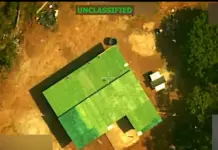
Israel struck targets across Iran overnight in a fresh escalation of a conflict now entering its second month, hitting the Khandab heavy water research reactor in Arak for the second time since the war began. The facility, located in central Iran, was first struck during a 12-day campaign in June. Israeli Defence Minister Israel Katz vowed to intensify the bombing campaign further, while Israel’s military maintained that all targeted sites served military purposes.
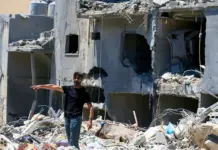
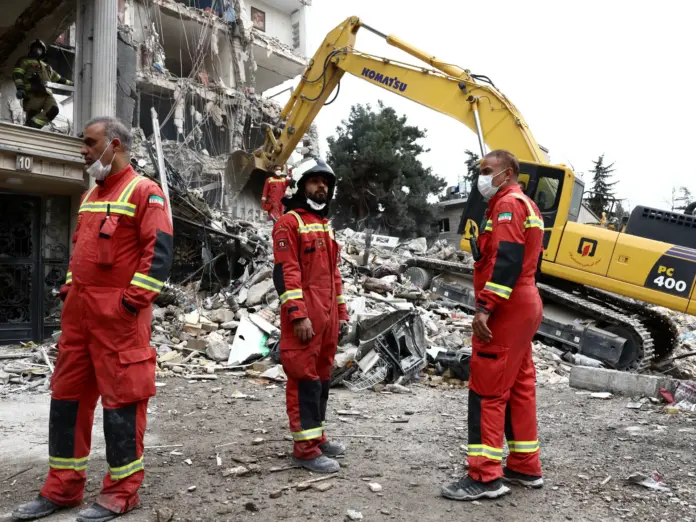
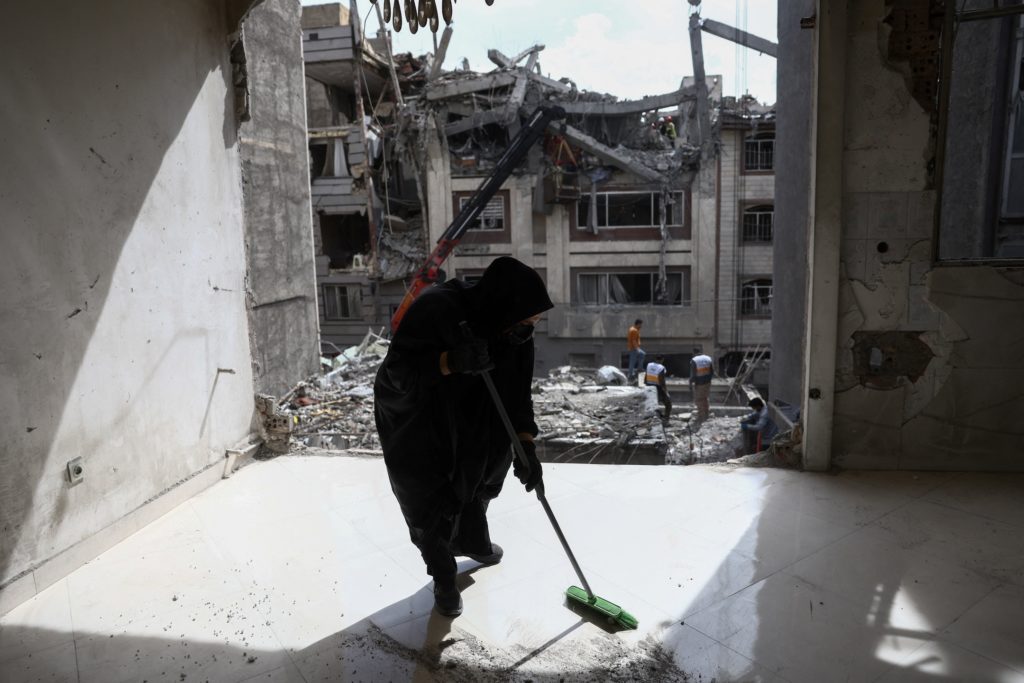
The renewed assault drew sharp condemnation from Pirhossein Kolivand, head of the Iranian Red Crescent Society, who described the strikes as an attack on civilian infrastructure. The organisation reported staggering damage across the country: more than 20,399 commercial units destroyed or damaged and 290 medical centres struck since hostilities began. The figures underscore the widening humanitarian toll of a conflict that has now stretched approximately one month.
The crisis took on a sharper global dimension as Iran’s Revolutionary Guard Corps (IRGC) navy announced the formal closure of the Strait of Hormuz, one of the world’s most critical maritime chokepoints, declaring that shipping to and from ports of U.S. and Israeli allies is prohibited. Three oil tankers were turned away in the strait, signalling that Tehran intends to enforce the blockade. Roughly a fifth of global oil supplies transits the waterway, and the move sent immediate shockwaves through energy markets and diplomatic capitals.
European alarm was swift. French Foreign Minister Jean-Noel Barrot stated unequivocally that a closure of the Strait of Hormuz was unacceptable to Europe, reflecting broader anxiety among U.S. allies about the economic and strategic consequences of a prolonged blockade. The United Nations responded by announcing a new task force focused on reopening the strait, with its primary mandate centred on developing technical mechanisms to ensure humanitarian shipments can continue to flow. Iran’s ambassador to the UN offered a partial concession, stating that Tehran had decided to facilitate safe passage for humanitarian cargo — a signal that the door to negotiated arrangements remains at least partially open.
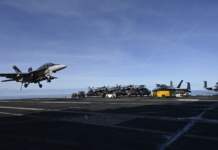
On the diplomatic front, Secretary of State Marco Rubio briefed his G7 counterparts on the state of the conflict, framing the American campaign in notably measured terms. Rubio said the United States could achieve its objectives in Iran without deploying ground troops, and suggested the campaign was expected to conclude within weeks rather than months. Thousands of Marines are already positioned in the Persian Gulf, and additional U.S. personnel could be deployed to the region in the near term.
Washington has presented Tehran with a 15-point plan, and Iran has signalled a limited willingness to engage through back-channel messages and exchanges. However, a senior regional diplomatic source confirmed that no agreement exists between the two countries on direct talks or on a venue for such negotiations, leaving the diplomatic track fragile and undefined.
The combination of sustained Israeli air strikes, an IRGC naval blockade, and the absence of a formal diplomatic framework has created a volatile and fast-moving situation. With the Khandab reactor — a facility long associated with Iran’s nuclear programme — struck a second time, and Israeli officials promising further escalation, the conflict shows little sign of reaching a natural ceiling. The UN task force on the Strait of Hormuz represents the most concrete multilateral effort to contain the fallout, but its mandate is narrowly humanitarian rather than political, leaving the underlying military confrontation unaddressed.
The coming days are likely to test whether Iran’s conditional offer on humanitarian shipping can be translated into a broader ceasefire framework, or whether the cycle of strikes and counter-measures will continue to deepen a crisis with consequences far beyond the region.