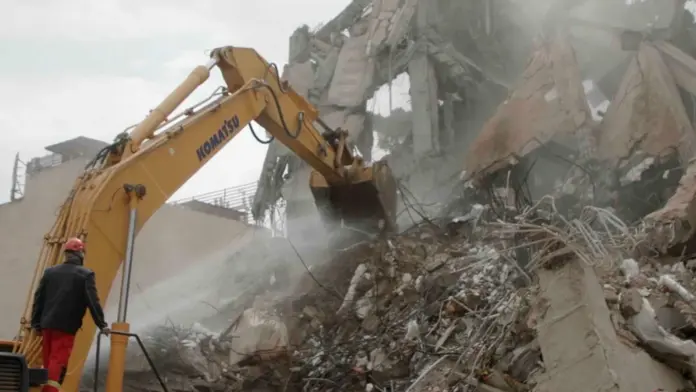
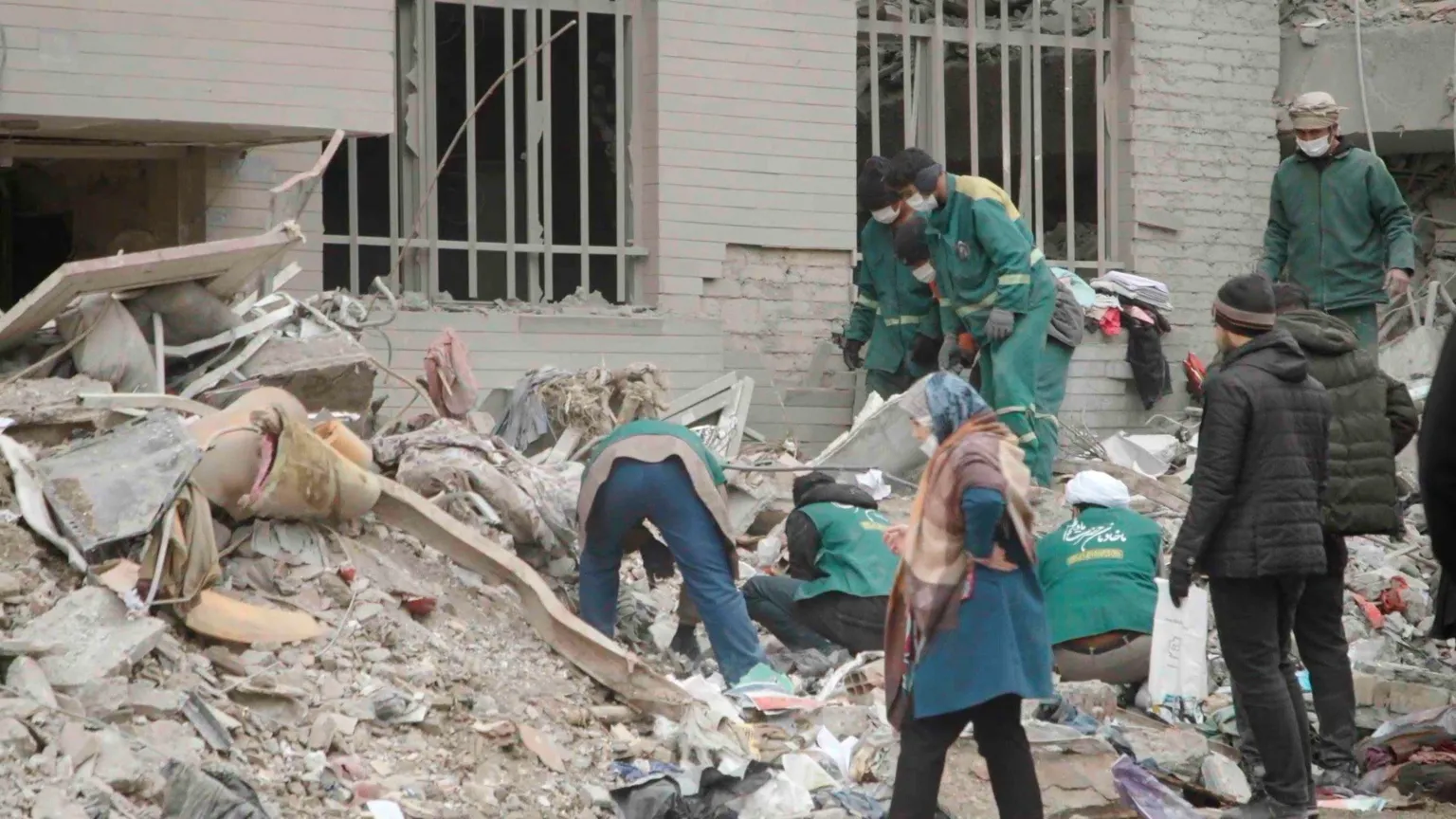
A mother and her young daughter were pulled from the rubble of their apartment building in eastern Tehran days after an Israeli air strike reduced the block to dust. The husband survived. Dozens of their neighbours did not.
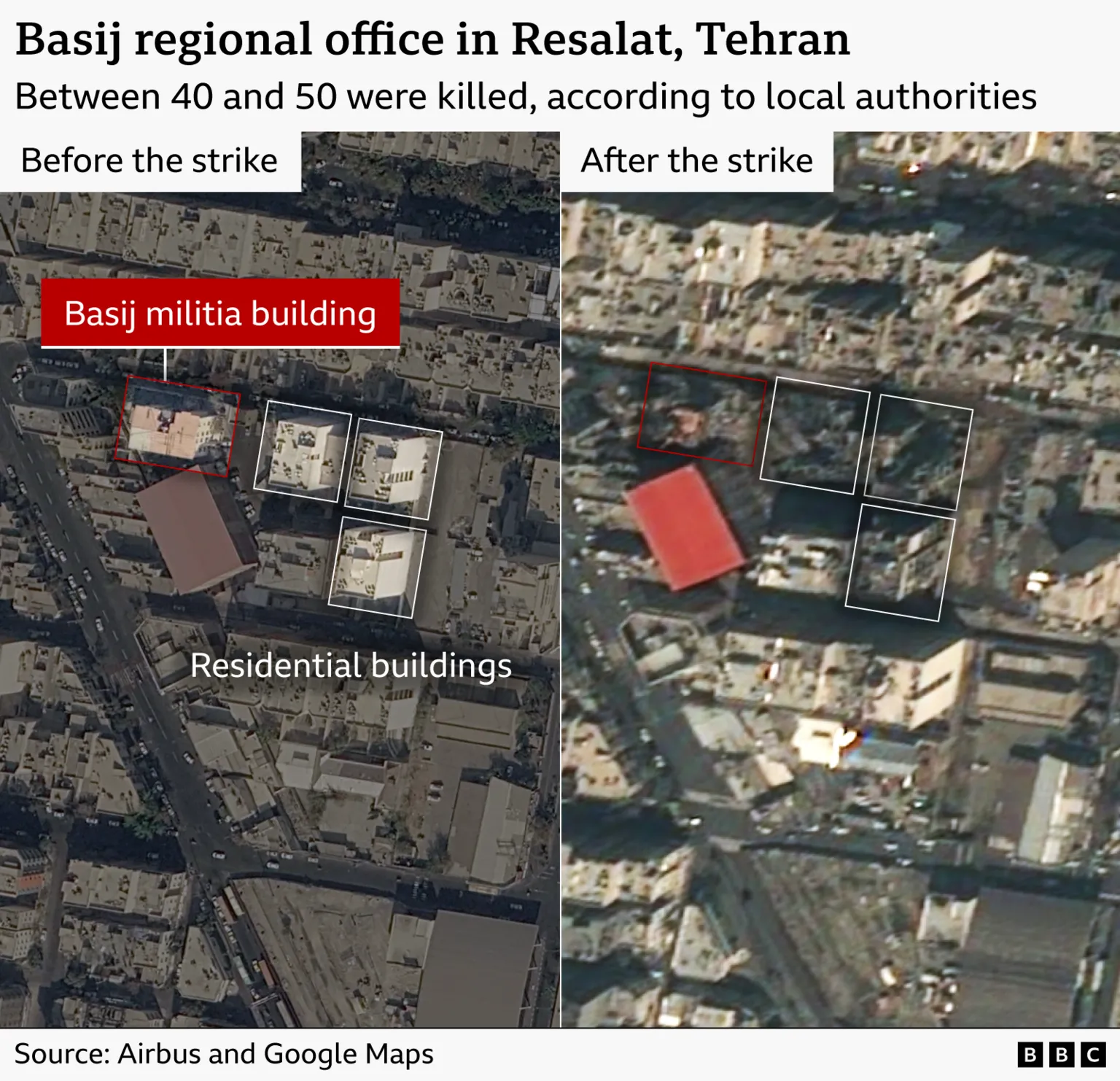
The 9 March strike on the Resalat district of Tehran killed between 40 and 50 people, according to local authorities and residents — one of the deadliest single attacks in a conflict now entering its second month. Satellite imagery confirms that at least four buildings were destroyed in rapid succession, with structures standing as far as 65 metres from the primary impact point suffering severe blast damage.
The Israel Defense Forces stated the strike targeted a military building used by the Iranian Basij, a paramilitary force subordinate to the Islamic Revolutionary Guard Corps. But the scale of destruction in a densely populated residential neighbourhood has drawn sharp scrutiny from legal and military analysts.
Military experts examining the blast pattern say the Israeli air force most likely deployed Mark 80 series munitions, with the Mark 84 — a 2,000-pound bomb — consistent with the extent of the damage observed. Two international humanitarian law specialists told investigators that deploying such a heavy munition in a crowded urban area would constitute a disproportionate use of force and could be unlawful under the laws of armed conflict. The United Nations has previously called on all parties to wars to refrain from using powerful bombs in heavily populated zones.
The Resalat strike was not an isolated incident. On 1 March, an Israeli strike hit the Abbasabad police station near Niloufar Square — a location where families had gathered in the evening after breaking their Ramadan fast. Eyewitnesses described seeing at least 20 people killed in that attack. The IDF confirmed responsibility for the Abbasabad strike as well.
The cumulative toll across Iran is staggering. The Human Rights Activists News Agency (HRANA) documented 1,464 civilian deaths, including at least 217 children, within the first month of the conflict. The IDF reported dropping more than 12,000 bombs across Iranian territory since hostilities began, with 3,600 of those falling on Tehran alone. US Central Command separately stated that American forces have struck more than 9,000 targets inside Iran.
For Tehran’s residents, the bombardment has unfolded without warning. No public sirens sounded before strikes hit their neighbourhoods. No civil defence guidance has been issued by Iranian authorities on evacuation routes or shelter locations. An ongoing internet blackout has further isolated the city’s population, cutting off access to information at a moment of acute danger.
‘We didn’t know where to go,’ residents reported. ‘There was nothing — no alarm, no instruction, nothing.’
The Iranian government has not publicly detailed any nationwide civil defence protocols in response to the attacks, leaving millions of urban residents to navigate the bombardment without institutional support.
Iran has not confined its military actions to its own territory. During the course of the war, Iranian forces have struck civilian infrastructure and residential buildings in neighbouring countries, including airports and hotels in Gulf states aligned with Washington, broadening the conflict’s humanitarian footprint across the region.
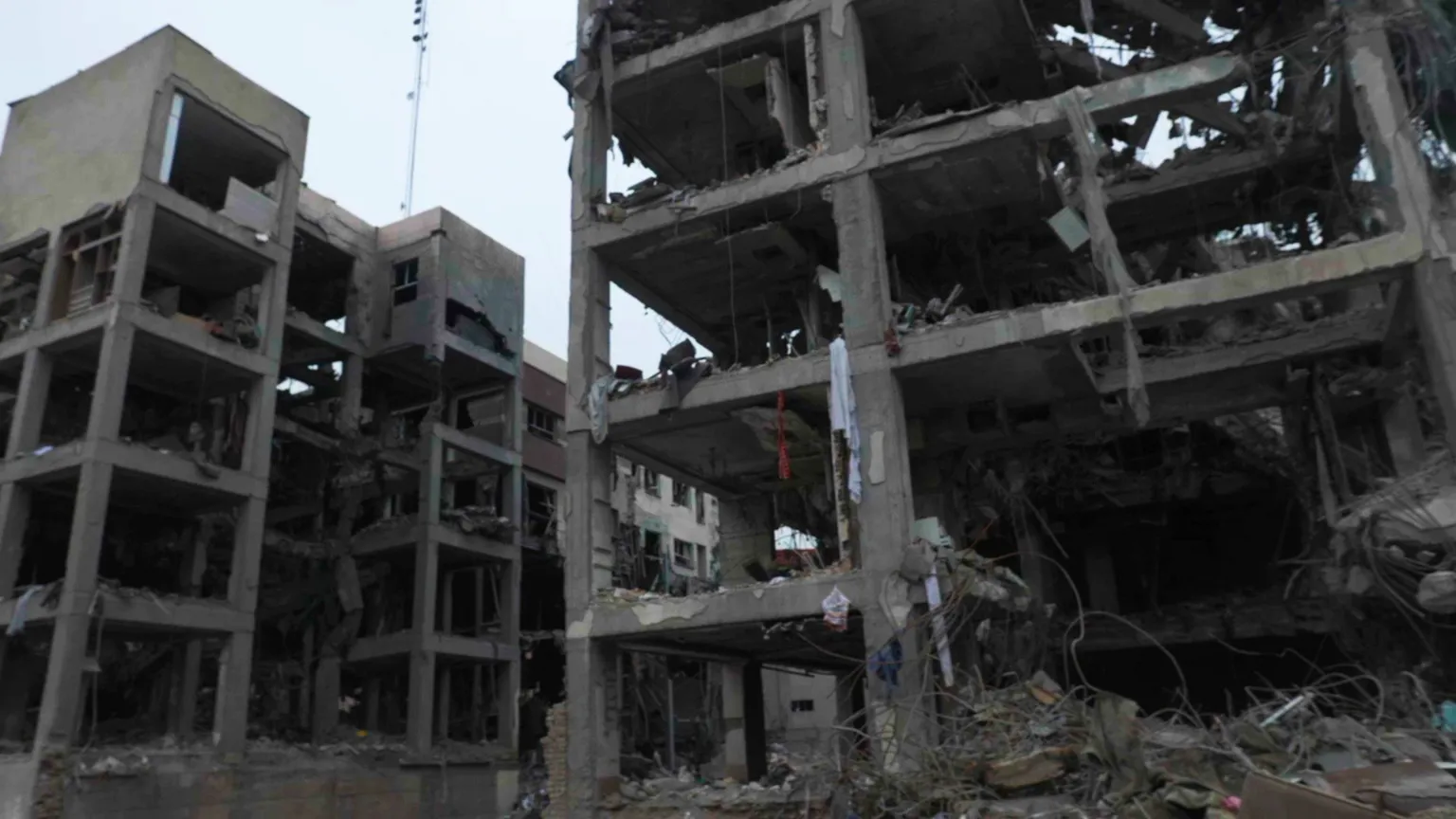
Access to Iran for independent verification remains severely restricted. An internet blackout continues to hamper communication from within Tehran, and journalists have been denied entry since the war began. Exclusive footage gathered by independent journalists operating inside the capital has provided some of the only visual documentation of conditions on the ground.
The legal implications of the strikes are likely to intensify as casualty figures mount. The use of large-yield munitions in residential urban environments sits at the heart of longstanding debates over proportionality in modern warfare — debates that now centre squarely on Tehran’s shattered apartment blocks and the families buried beneath them.