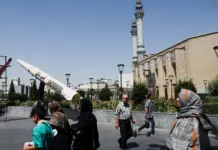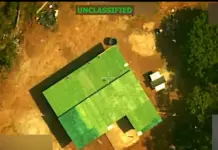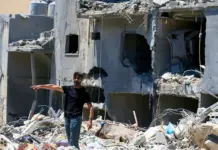
A sweeping humanitarian catastrophe is unfolding across Iran and Lebanon as a US-Israeli military campaign, now in its 27th day, has killed more than 1,500 people in Iran, displaced 3.2 million — over three percent of the country’s entire population — and left tens of thousands of civilian structures in ruins.
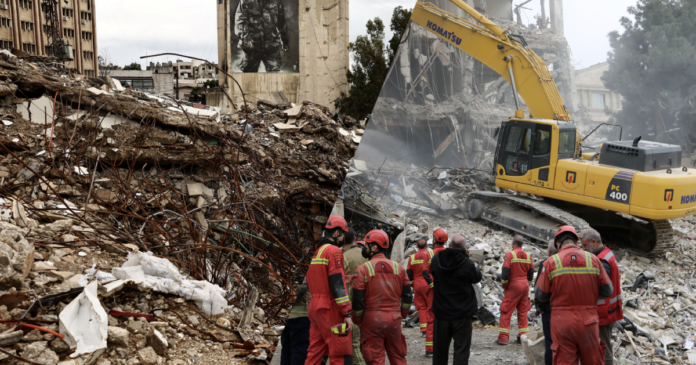
Strikes on Iran began on February 28, following approval by US President Donald Trump less than 48 hours before the operation commenced. Israeli Prime Minister Benjamin Netanyahu had advocated for a joint operation that would include the killing of Supreme Leader Ali Khamenei. Since that first strike, the scale of destruction inside Iran has been staggering: 85,176 civilian sites have sustained damage, including 282 healthcare facilities, 600 schools, and 64,583 homes.
In the capital Tehran alone, nearly 14,000 residential units have been damaged, according to city administration figures. Municipal authorities have accommodated at least 6,000 displaced residents in hotels as emergency shelter. The UN refugee agency UNHCR confirmed the 3.2 million displacement figure, while 324 children have been killed across Iran and Lebanon combined since the conflict began. A small but growing number of Iranians — 325 nationals — have crossed into neighbouring Iraq, citing the ongoing crisis.
The destruction of civilian infrastructure has drawn particular alarm from international observers. UNICEF Deputy Executive Director Ted Chaiban highlighted the toll on children, with schools and healthcare facilities among the hardest-hit categories of damaged sites. Iran’s military spokesman, meanwhile, issued a stark warning that Tehran maintains full control over the Persian Gulf, Oman’s territorial waters, and the Strait of Hormuz, vowing to preserve that control by any means necessary — though Iran stated it sees no current need to deploy mines in the waterway.
The strategic importance of the Strait of Hormuz has drawn international diplomatic attention. A draft UN resolution introduced by Bahrain explicitly condemns attacks and threats against commercial vessels in the strait, underscoring the potential impact on international trade, energy security, and the global economy. As of March 10, the tanker Callisto remained anchored in the strait amid sharply reduced maritime traffic.
The crisis extends well beyond Iran’s borders. In Lebanon, Israeli military operations have forced more than one million people from their homes over the past two weeks, with the International Organization for Migration registering 1,049,328 displaced individuals. Of those, 132,742 are sheltering in collective facilities. More than 250,000 people have left Lebanon entirely — a 40 percent increase compared with the final two weeks of February.
By March 17, more than 125,000 people had crossed from Lebanon into Syria, nearly half of them children. Approximately 7,000 Lebanese nationals were among those making the crossing, with Syrian nationals comprising the majority of the flow.
Israeli Defence Minister Israel Katz ordered the military to destroy all crossings over the Litani River and demolish homes near the border. Israeli forces have since struck six bridges in southern Lebanon: the Qasmiyeh Bridge, the Coastal Highway Bridge, al-Qantara Bridge, Khardali Bridge, al-Dalafa Bridge, and the Zaraiya-Tirseflay Bridge. Lebanese President Joseph Aoun condemned the bridge strikes as a deliberate attempt to sever the geographical connection between the southern Litani region and the rest of Lebanese territory.
Forced evacuation orders now cover more than 1,470 square kilometres — roughly 14 percent of Lebanon’s total territory — stretching from the Litani River northward to beyond the Zahrani River, approximately 40 kilometres from the Israeli border. More than 100 towns and villages fall within the evacuation zone, and nearly one in five Lebanese — 18 percent of the population — have been displaced in the past two weeks alone.
Israeli ground operations in Lebanon have also intensified. IDF troops conducted raids targeting Hezbollah infrastructure, capturing fighters and discovering armed Radwan Force operatives positioned at an anti-tank missile launch point. The IDF subsequently destroyed Radwan Force infrastructure in the area.
The conflict’s regional ripple effects are multiplying. In western Iraq’s Anbar province, airstrikes killed six fighters from Shi’ite Popular Mobilization Forces. Rockets launched from Iraqi territory struck a Syrian Army base in Hasakah, with Iranian-backed militias suspected of responsibility for the cross-border attack.
US force deployments in the region are continuing as planned. A rally in support of President Trump and Prime Minister Netanyahu was held in Sydney on March 14, drawing attention to the conflict’s global political dimensions even as the humanitarian toll inside Iran and Lebanon continues to mount.