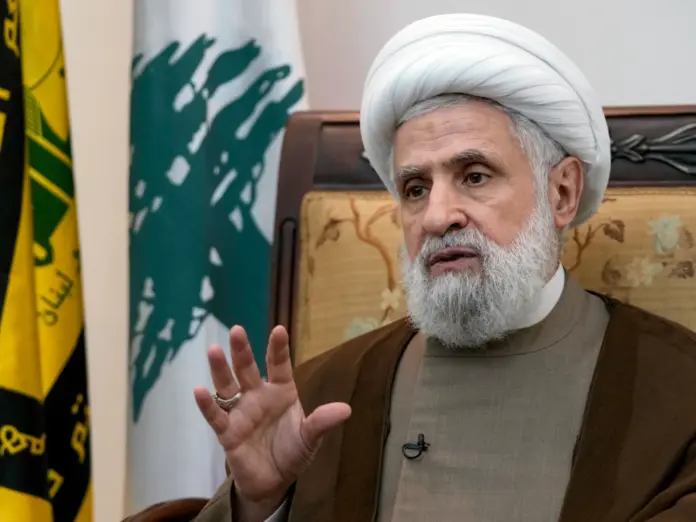
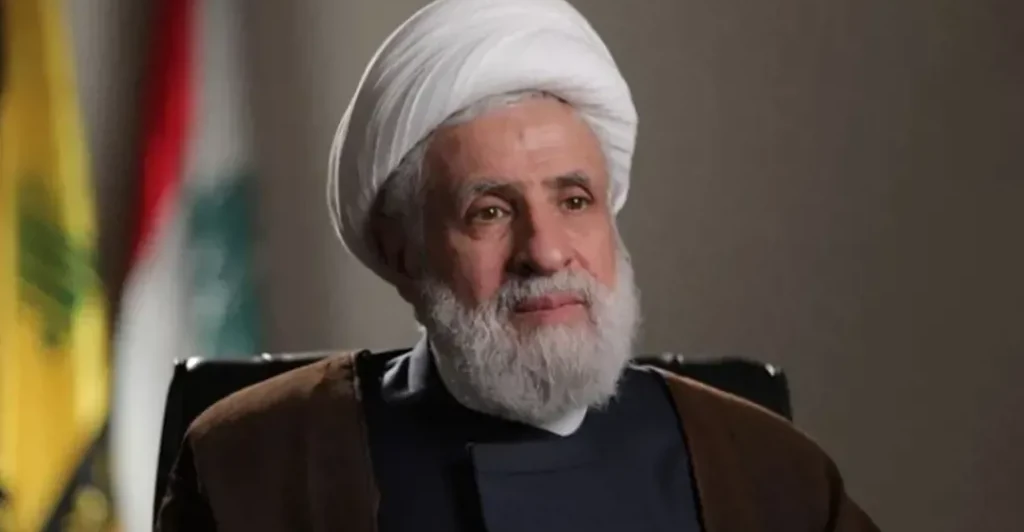
BEIRUT — Hezbollah Secretary-General Naim Qassem rejected any negotiations with Israel on Wednesday, warning that engaging in diplomacy while Lebanese territory remains under bombardment would constitute an act of surrender, as the death toll from weeks of intensified Israeli strikes climbed past 1,072.
In a televised address broadcast on a Hezbollah-affiliated station and read on his behalf, Qassem framed the conflict in stark terms, telling his audience that Lebanon faces precisely two paths: capitulation or resistance. "Negotiating under fire amounts to imposing surrender," he declared, insisting that any diplomatic process must wait until Israeli aggression has fully ceased.
Qassem called for national unity against what he described as Israeli aggression, vowing that Hezbollah fighters would continue their campaign "without limits." He also argued that Hezbollah had deliberately chosen the timing of its military response — launched on February 28 following the start of the US and Israeli war on Iran — specifically to deny Israel the element of surprise. The group has since continued firing rockets into northern Israel while clashing with Israeli ground forces inside Lebanese territory.
The speech amounted to a direct rebuff of diplomatic overtures that have been gaining momentum internationally. French President Emmanuel Macron has been among the most vocal advocates for a negotiated end to the violence, and the Lebanese government itself has expressed willingness to engage in direct talks with Israel — a notable position given that Beirut has formally outlawed Hezbollah military activity on its soil.
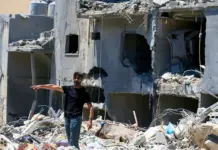
Israeli operations have shown no sign of slowing. The military launched its ground invasion into southern Lebanon with the stated objective of rooting out Hezbollah fighters, and Israeli Defence Minister Israel Katz made clear this week that displaced residents of southern Lebanon will not be permitted to return to their homes until the security situation in northern Israel is deemed safe. More than 1.2 million people have been uprooted by the fighting since hostilities intensified in early March.
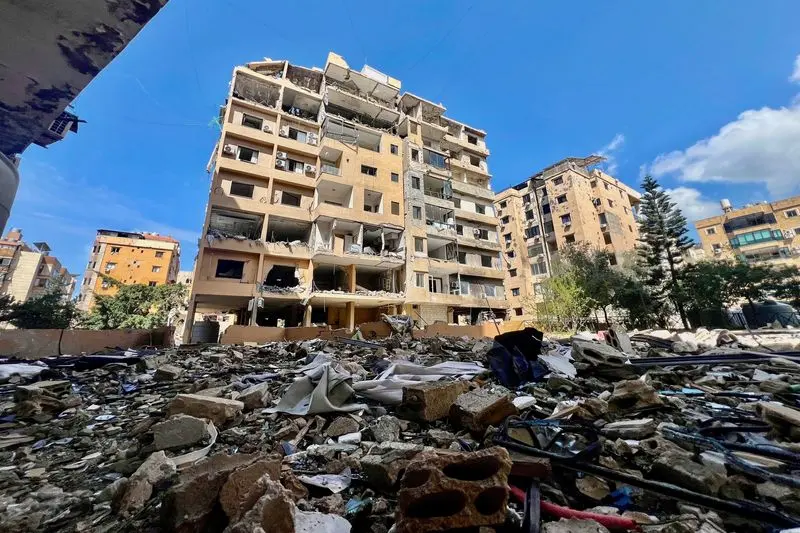
The humanitarian toll has sharpened international pressure on both sides. Global condemnation of the escalating violence has grown louder, yet the Israeli government has given no indication it intends to scale back its military campaign. Complicating the diplomatic picture further, far-right members of the Israeli government have used the conflict to advance maximalist territorial ambitions. Finance Minister Bezalel Smotrich and other hardline lawmakers have publicly called for the annexation of southern Lebanon — a position that has itself drawn sharp rebukes from foreign capitals.
Qassem also addressed the question of disarmament, warning that any effort to restrict Hezbollah’s weapons would threaten Lebanon’s future security. He argued that entering negotiations while hostilities continue would fundamentally undermine the group’s capabilities and, by extension, Lebanon’s ability to resist. The remarks signal that Hezbollah is prepared for a prolonged confrontation regardless of the battlefield pressure it faces from Israeli ground and air operations.
The broader regional context has added further volatility to an already combustible situation. Hezbollah’s initial rocket salvos on February 28 were explicitly tied to the opening of the US-Israeli military campaign against Iran, drawing Lebanon directly into a wider arc of conflict stretching across the Middle East. That linkage has made a contained, bilateral resolution between Israel and Hezbollah considerably more difficult to achieve.
With Hezbollah ruling out talks, the Lebanese government seeking them, Israel pressing its offensive, and international mediators struggling to find traction, the path toward de-escalation remains deeply uncertain. For the more than one million Lebanese already displaced, the prospect of a swift resolution appears increasingly remote.