Two drones flying from Russian airspace breached the borders of Estonia and Latvia on Wednesday, striking a power station in northeastern Estonia and crashing in a southeastern Latvian district, in incidents that have sharpened anxiety across the Baltic region about the spillover risks of the war in Ukraine.
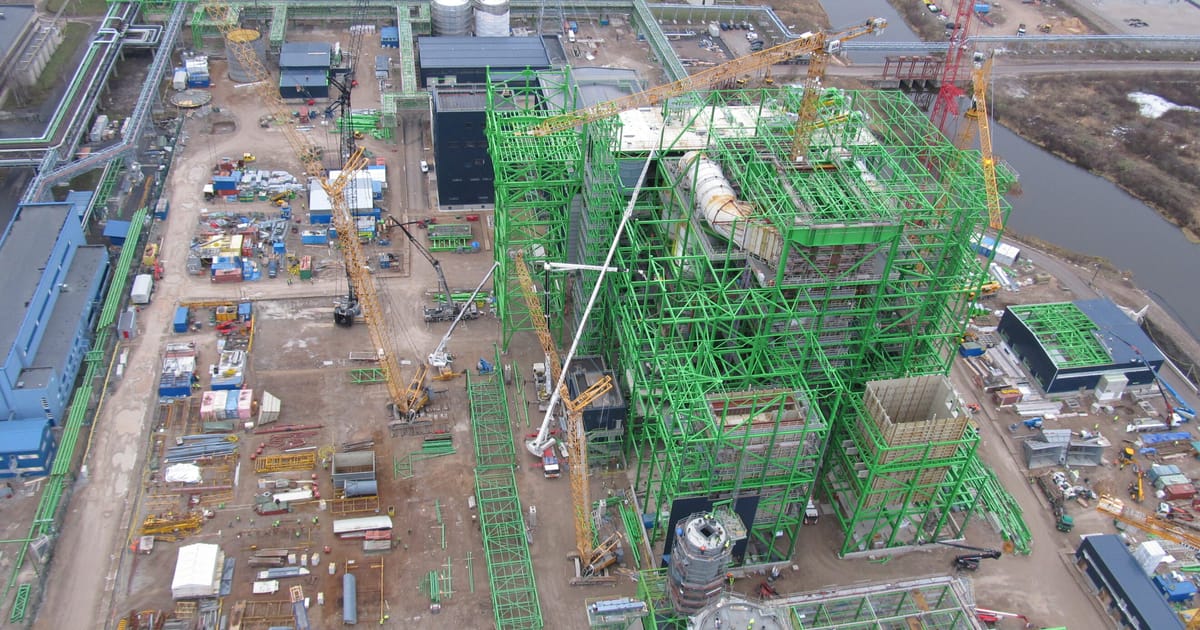
Estonia’s Internal Security Service confirmed that an unmanned aerial vehicle hit the chimney of the Auvere power station in Ida-Viru County, close to the Russian border. The damage was limited and will not affect Estonia’s energy grid. No casualties were reported. Investigators did not immediately identify the drone as Russian or Ukrainian, and military and emergency services were deployed to the site to collect and examine debris.
Estonian Foreign Minister Margus Tsahkna was unequivocal in his assessment of the broader context, even while noting the drone was not deliberately aimed at Estonia. ‘This is a concrete consequence of Russia’s full-scale war of aggression,’ he said, framing the incursion as an unavoidable byproduct of the conflict raging across the border rather than a targeted act against his country.
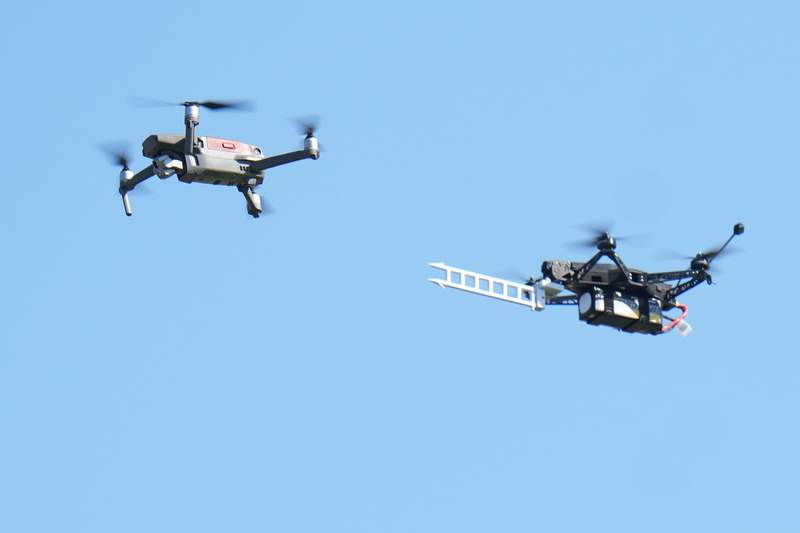
Across the border to the south, Latvia’s Air Force tracked a separate unmanned aerial vehicle that entered Latvian airspace from Russia and came down in the Kraslava region in the country’s southeast. No injuries occurred and no civilian infrastructure was damaged. An initial investigation led Latvian Prime Minister Evika Siliņa to suggest the drone may be Ukrainian in origin — a finding consistent with a large-scale Ukrainian overnight offensive that targeted Russian energy and military assets in the Leningrad region.
The timing is significant. Ukraine carried out extensive drone strikes against Russia on Wednesday, including attacks on the major port of Ust-Luga on the Gulf of Finland, home to one of Russia’s largest gas plants. Ukraine’s Unmanned Systems Forces commander Robert Browdi claimed responsibility for the Ust-Luga strike, stating that units from the 1st and 413th divisions conducted the operation. Kyiv also confirmed strikes in the broader Leningrad region and announced a successful attack on Russia’s oil hub at Primorsk, a Baltic Sea port. Ukraine’s Army General Staff separately reported hitting a Russian combat icebreaker at the Vyborg shipyard. Russia’s defence ministry, meanwhile, said its forces shot down 389 Ukrainian drones flying over Russian territory on Wednesday.
Latvia and Estonia lie along a plausible flight trajectory for drones targeting the area around Saint Petersburg, making both countries vulnerable to errant munitions during large-scale Ukrainian offensive operations. The geography has turned the two NATO members into inadvertent frontline observers of a conflict they have vocally and materially supported.
The political response was swift. Latvian Defence Minister Andris Spruds, who was on a working visit to Ukraine when the incident occurred, cut his trip short and returned home. Prime Minister Siliņa said she intended to raise the drone incursion at the Joint Expeditionary Force summit held in Helsinki on Thursday — a multilateral defence cooperation framework led by the United Kingdom of which Latvia is a member. Latvia announced a formal investigation into the crash.
Neither incident stands in isolation. Lithuania reported a drone crashing in its territory earlier in the week, and last week Estonian authorities summoned the Russian chargé d’affaires after a Russian fighter jet violated Estonian northern airspace — the first such breach of the year. Baltic states bordering Russia have repeatedly seen drones enter their airspace since Moscow launched its full-scale invasion in February 2022.
The pattern has prompted discussion at the European Union level about constructing a so-called ‘drone wall’ along the bloc’s eastern flank to intercept aerial intrusions. No formal decision on such a barrier has been announced, but Wednesday’s dual incidents are likely to reinvigorate that debate. Both Estonia and Latvia are staunch allies of Ukraine and members of the coalition of willing nations providing Kyiv with military and political support.
Authorities in both countries stressed there was no danger to the public, even as investigators worked to determine the precise origin and nature of each drone. The incidents serve as a stark reminder that the consequences of the war in Ukraine do not stop at Russia’s borders — and that Europe’s eastern edge remains exposed to its unpredictable reach.