A drone launched from Lebanon by the Iranian-backed militia Hezbollah struck RAF Akrotiri, Britain’s sovereign airbase on the southern tip of Cyprus, punching a hole in a hangar and triggering a wave of protests demanding an end to the UK’s military presence on the island. British military officials attributed the attack to Hezbollah, and the strike came just two days after US-Israeli operations against Iranian missile sites began — a sequence that has sharpened questions about Cyprus’s entanglement in a widening regional conflict.
The attack prompted an immediate security response. The UK Ministry of Defence announced it was deploying a warship and two Wildcat helicopters to Cyprus to bolster drone defences around the base. Dozens of flights in and out of Cyprus were cancelled in the aftermath, dealing a blow to an island economy where tourism accounts for roughly 14 percent of GDP.
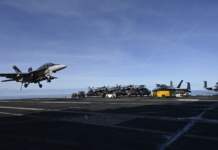
The Ministry of Defence defended the bases as essential infrastructure, stating they play a crucial role in supporting the safety of British citizens and allies across the Mediterranean and Middle East. UK Typhoon and F-35 fighter jets have flown sorties in the region shooting down Iranian drones, and the government confirmed that Prime Minister Keir Starmer authorised the use of British bases for US defensive strikes on Iranian missile sites — though officials were careful to specify that Akrotiri and Dhekelia were not among the facilities used for those particular operations, and that the UK has not participated in any direct attacks on Iran itself.
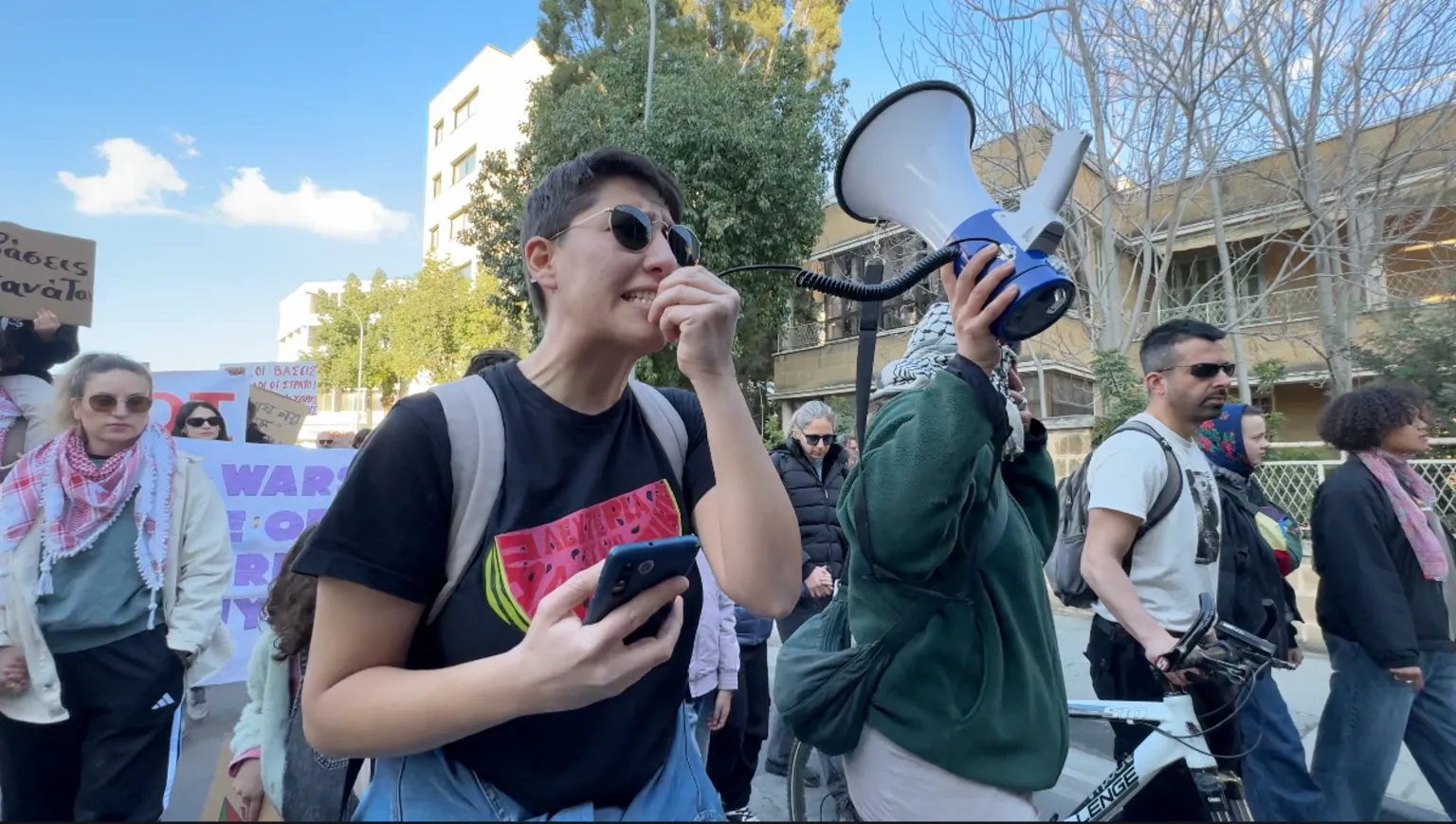
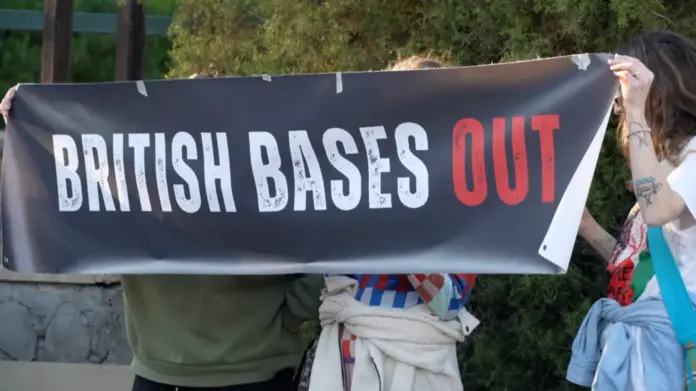
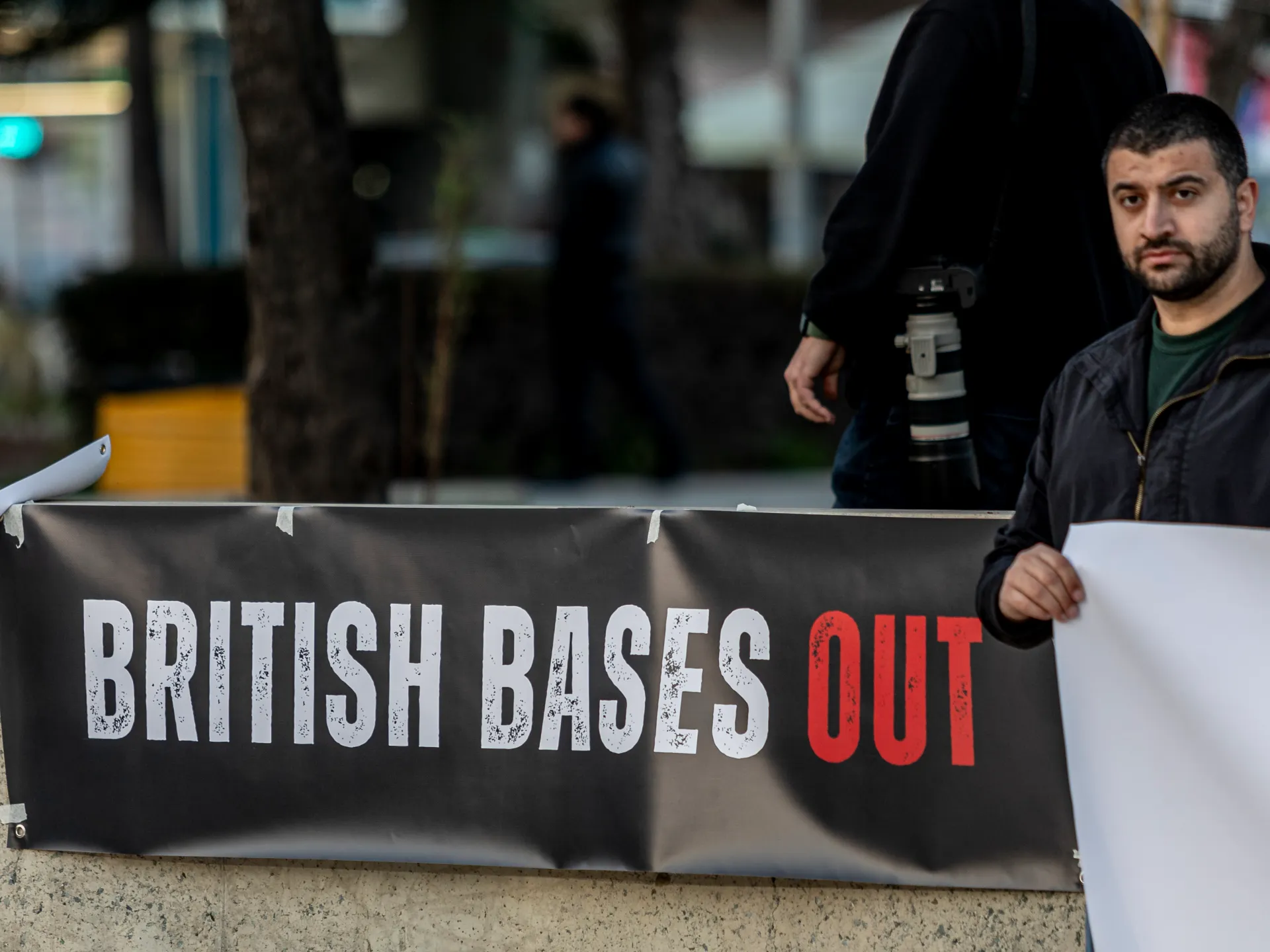
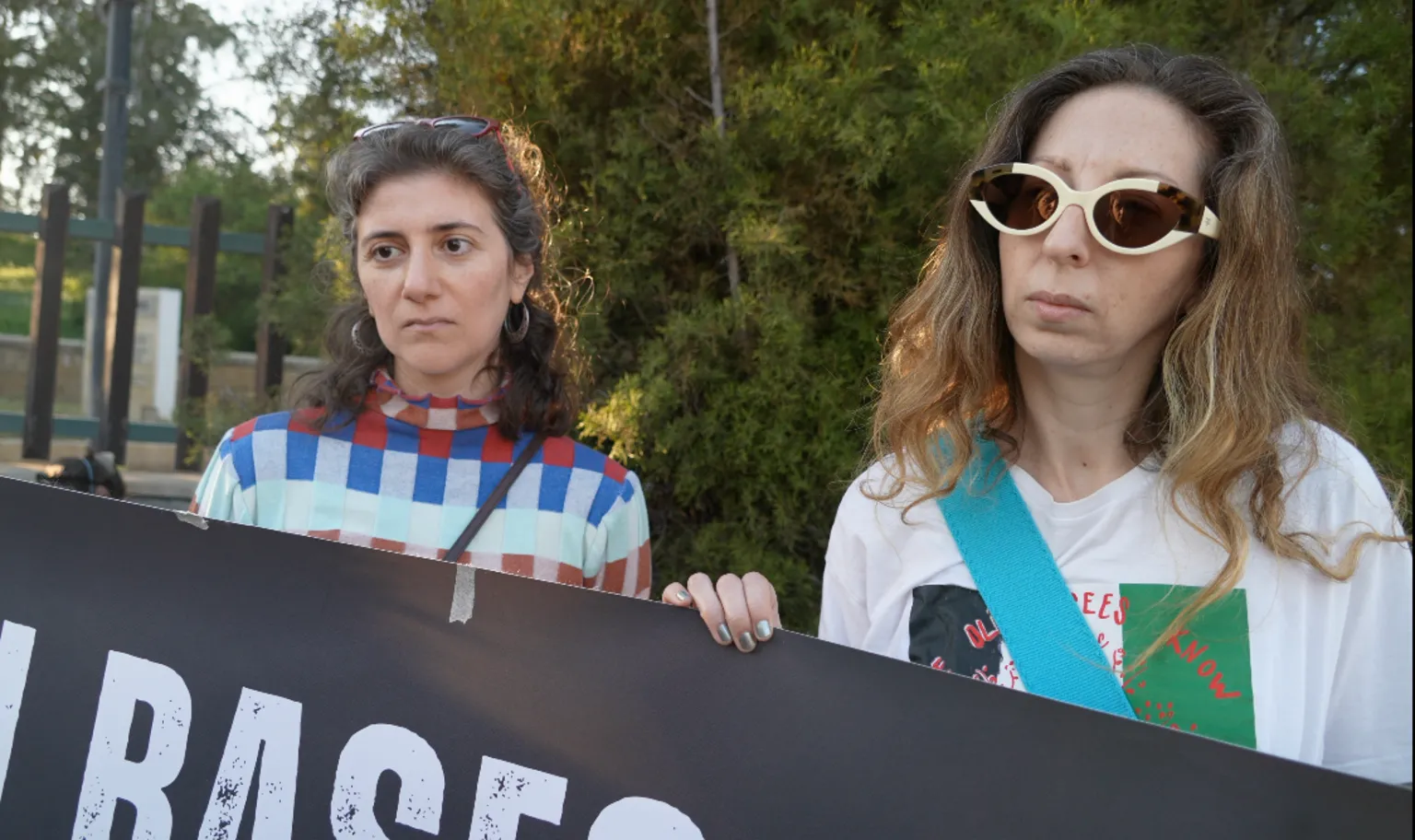
That distinction has done little to satisfy protesters. Approximately 200 to 300 demonstrators marched on Saturday outside the presidential palace in Nicosia, carrying banners reading ‘British Bases Out’ alongside pro-Palestine messages and signs critical of the United States and Israel. Separate protests with similar chants erupted in Limassol. Local business owner Natasha Theodotou was among those holding banners at the Nicosia demonstration, as were Shona Muir and Stephanos Stavros, the latter expressing frustration over what he described as a lack of transparency about activities conducted at the bases.
That opacity has become a central grievance. RAF Akrotiri has been used by American U-2 spy planes and has supported military campaigns in Iraq and Libya. More than 600 surveillance flights linked to Israel’s war on Gaza took off from Cyprus during the first two years of that conflict, according to monitoring data. A US military contractor hired by the UK conducted surveillance above the Nuseirat refugee camp in northern Gaza the night before an Israeli bombing on December 12, 2024, that killed more than 30 Palestinians. More than 70,000 people have been killed in Gaza since the conflict began.
Cyprus’s Foreign Minister Constantinos Kombos acknowledged that the question of the British bases had been ‘on the agenda’ for a long time, a measured statement that nonetheless signals growing political pressure on an arrangement that dates back more than six decades.
The UK Sovereign Base Areas — Akrotiri in the southwest and Dhekelia in the east — were established under the 1960 treaty that granted Cyprus its independence. Britain retained the two territories, which together cover approximately 98 square miles, or roughly three percent of the island. Several Cypriot villages lie within or partly within those boundaries, and the areas are patrolled by a dedicated special police force. Unlike British bases in the Gulf, which operate through leases or host-nation agreements, the sovereign base areas are effectively permanent British-controlled territories — a colonial-era arrangement with no automatic expiry.
The history of Cyprus itself complicates any renegotiation. In 1974, a Greek-backed coup seeking union with Greece triggered a Turkish military intervention that left Turkey in control of the island’s northern third. Nicosia, sometimes described as the world’s last divided capital, remains split by a UN-patrolled buffer zone known as the Green Line. Any revision of the base agreements would require the consent of the UK, Greece, Turkey, and representatives from both the Greek and Turkish Cypriot communities — a diplomatic labyrinth that has historically made change difficult.
Financial arrangements that accompanied the original 1960 deal, under which the UK provided payments to Cyprus, ended in the mid-1960s amid unrest on the island. What remains is the military footprint itself, now drawn into a conflict that stretches from Gaza to Tehran — and whose consequences, as the hole in a hangar at RAF Akrotiri makes plain, are no longer confined to the Middle East.