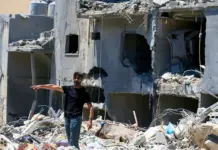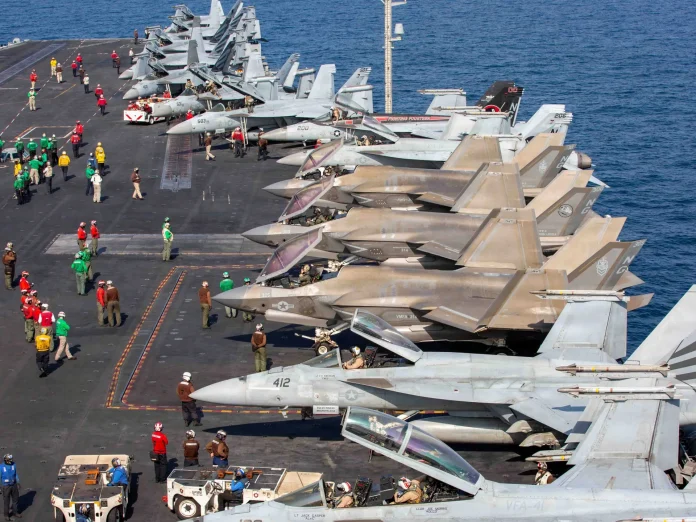
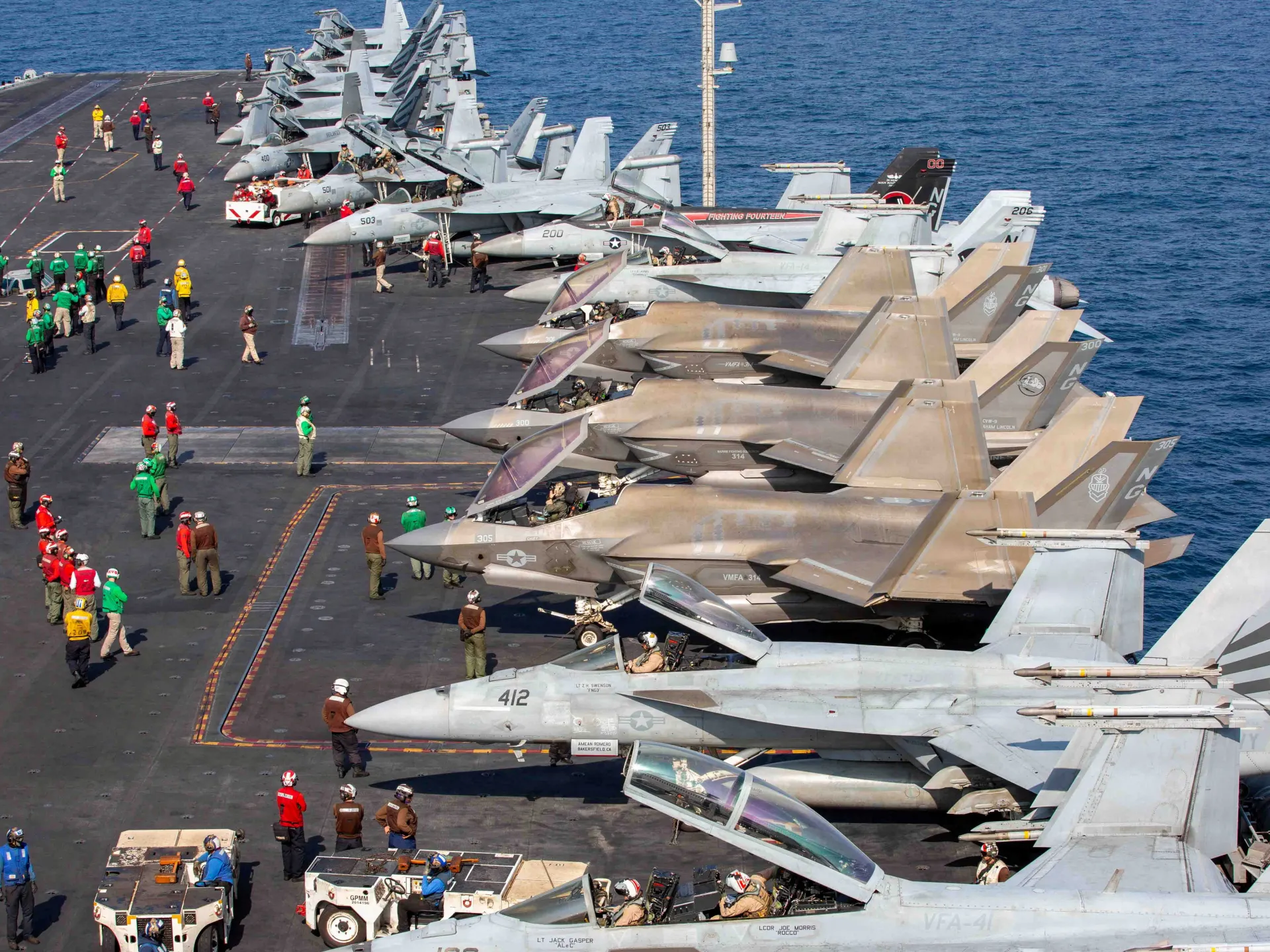
The United States and Israel launched a sweeping bombing campaign against Iran on Saturday, killing Supreme Leader Ali Khamenei, several senior Iranian officials, and hundreds of civilians in strikes that rapidly ignited a broader regional conflagration. President Donald Trump described the operation as ‘massive and ongoing’ and acknowledged it could cost American lives, warning early Saturday morning that ‘the lives of courageous American heroes may be lost, and we may have casualties — that often happens in war.’
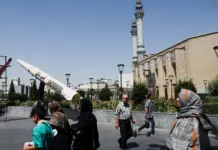
Iran responded with drone and missile attacks targeting US assets, energy infrastructure, and civilian sites. Hezbollah in Lebanon entered the conflict amid reports that Israel was planning a ground invasion of the country’s south, while Iran-aligned groups in Iraq claimed drone strikes against US-affiliated targets. The conflict, which began with a single bombing campaign, spread rapidly across the Middle East within hours.
Trump told the Iranian people their ‘moment of freedom’ was at hand following the opening strikes, and later told a reporter that ‘all I want is freedom for the people.’ He suggested the campaign could last four to five weeks — or ‘far longer’ — while simultaneously claiming the US was ahead of schedule in completing its mission.
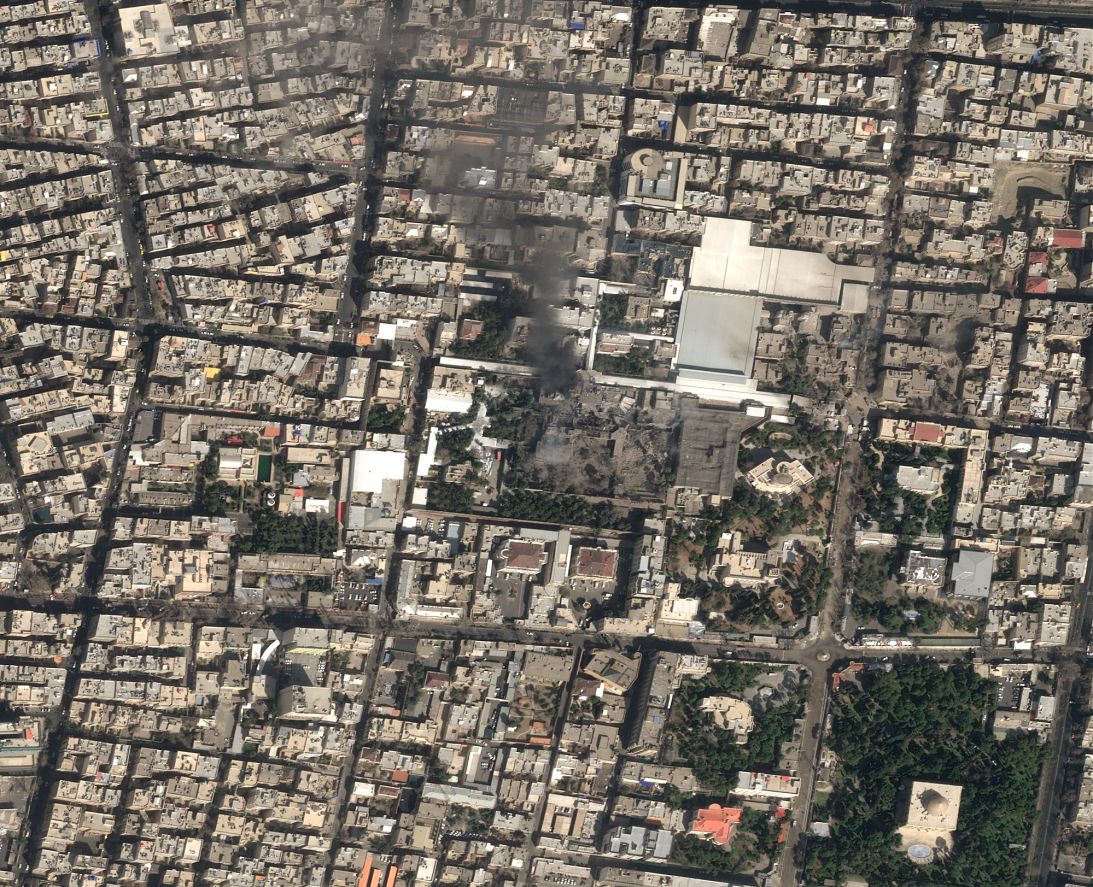
Secretary of State Marco Rubio outlined ambitious objectives: the destruction of Iran’s nuclear and drone programmes and the dismantling of its navy. Rubio argued that Tehran had been assembling a vast missile and drone arsenal specifically to achieve immunity from foreign attack. Defense Secretary Pete Hegseth insisted the campaign would not become a ‘forever war,’ echoing a pledge he made in a December speech that his department would ‘not be distracted by democracy-building interventionism, undefined wars, regime change.’
Yet analysts warn that the administration’s stated goals may be unachievable through air power alone. Kelly Grieco, a senior fellow at the Stimson Center, and other defence experts note that achieving regime change in Iran would be extraordinarily difficult — if not impossible — without a substantial ground force. No meaningful armed faction currently appears capable of challenging the Islamic Republic’s internal security apparatus. The Libya precedent, where a NATO-led air campaign in 2011 succeeded in dislodging Muammar Gaddafi only because Libyan rebel forces led the ground offensive, illustrates the limits of airstrikes without a complementary land component.
Democratic Senator Richard Blumenthal expressed alarm following a classified congressional briefing, warning that the US may be drifting toward a ground operation in Iran. Senator Elizabeth Warren released a video statement characterising the war as illegal and launched without any imminent threat to the United States, arguing the Trump administration entered the conflict without a coherent plan. Republican Senator Lindsey Graham, by contrast, predicted the Iranian regime would collapse, citing a call with Israeli Prime Minister Benjamin Netanyahu.
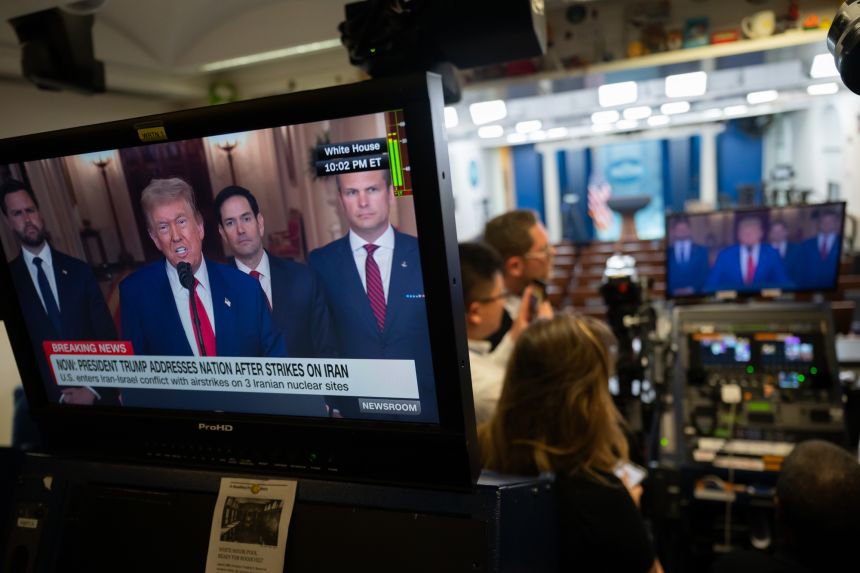
Matthew Duss, executive vice president at the Center for International Policy, and other foreign policy critics have pointed to a striking contradiction at the heart of the operation. Trump built a significant portion of his political identity on opposition to Middle Eastern military entanglements. At the 2016 Republican National Convention, he declared: ‘We must abandon the failed policy of nation-building and regime change.’ In 2019, he posted that ‘going into the Middle East is the worst decision ever made’ and pledged to replace ‘our policy of never-ending war, regime change, and nation-building’ with ‘the clear-eyed pursuit of American interests.’
The 2024 Republican campaign leaned heavily on an anti-war message. Vice President JD Vance authored a 2023 op-ed titled ‘Trump’s Best Foreign Policy? Not Starting Any Wars.’ Senior adviser Stephen Miller posted that a vote for the Democratic ticket was ‘a vote for war, war and more war,’ while Tulsi Gabbard — now Trump’s director of national intelligence — declared that ‘a vote for Donald Trump is a vote to end wars, not start them.’
The irony was not lost on Tehran. Iranian Foreign Minister Abbas Araghchi shared a 2012 Trump social media post — in which Trump had accused then-President Barack Obama of planning to attack Iran to boost his poll numbers — and described Saturday’s strikes as ‘wholly unprovoked, illegal, and illegitimate.’
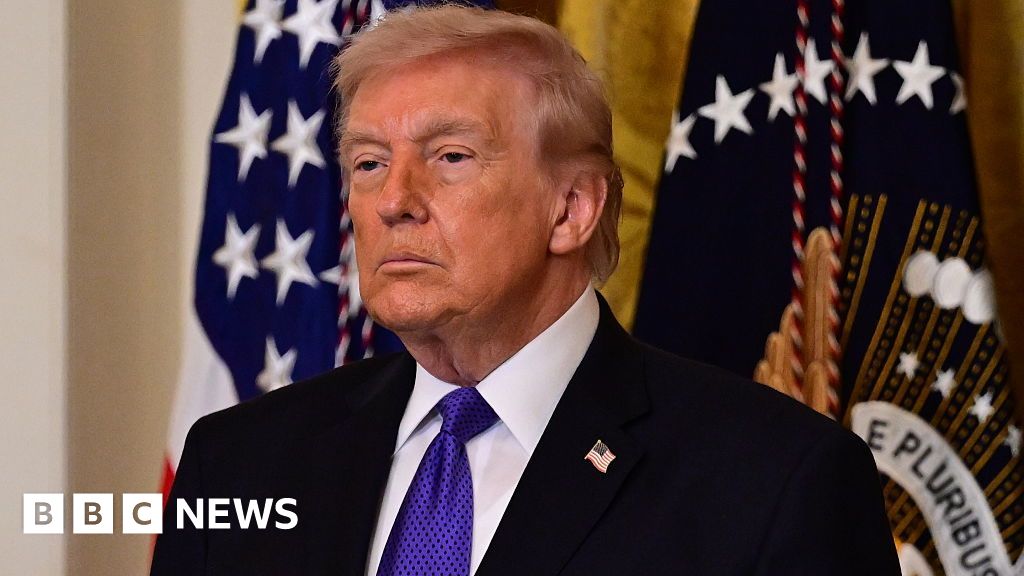
Domestic support for the conflict is notably weak. A recent Reuters survey found that only roughly one-quarter of Americans back the war with Iran — a stark contrast to the more than 55 percent who supported the 2003 invasion of Iraq at its outset. Trump has nonetheless pressed forward, having already struck Iran’s nuclear facilities in June 2025 and claimed those strikes ‘obliterated’ the programme, before launching the current, far larger campaign alongside Israel.
The administration’s trajectory fits a broader pattern of aggressive unilateral action. Since taking office, Trump has launched strikes against seven countries, authorised the extrajudicial killing of more than 150 people on alleged drug-trafficking vessels, floated territorial claims over the Panama Canal, Canada, and Greenland, and pursued regime change in Venezuela. The Iran campaign, however, represents by far the most consequential military gamble of his presidency — one whose outcome, analysts caution, remains deeply uncertain.